Vintage Tools Worth Money: 2026 Reseller Price Guide
Learn how to identify old tools worth money, evaluate condition, spot maker's marks, and research live market values for your vintage tool finds.
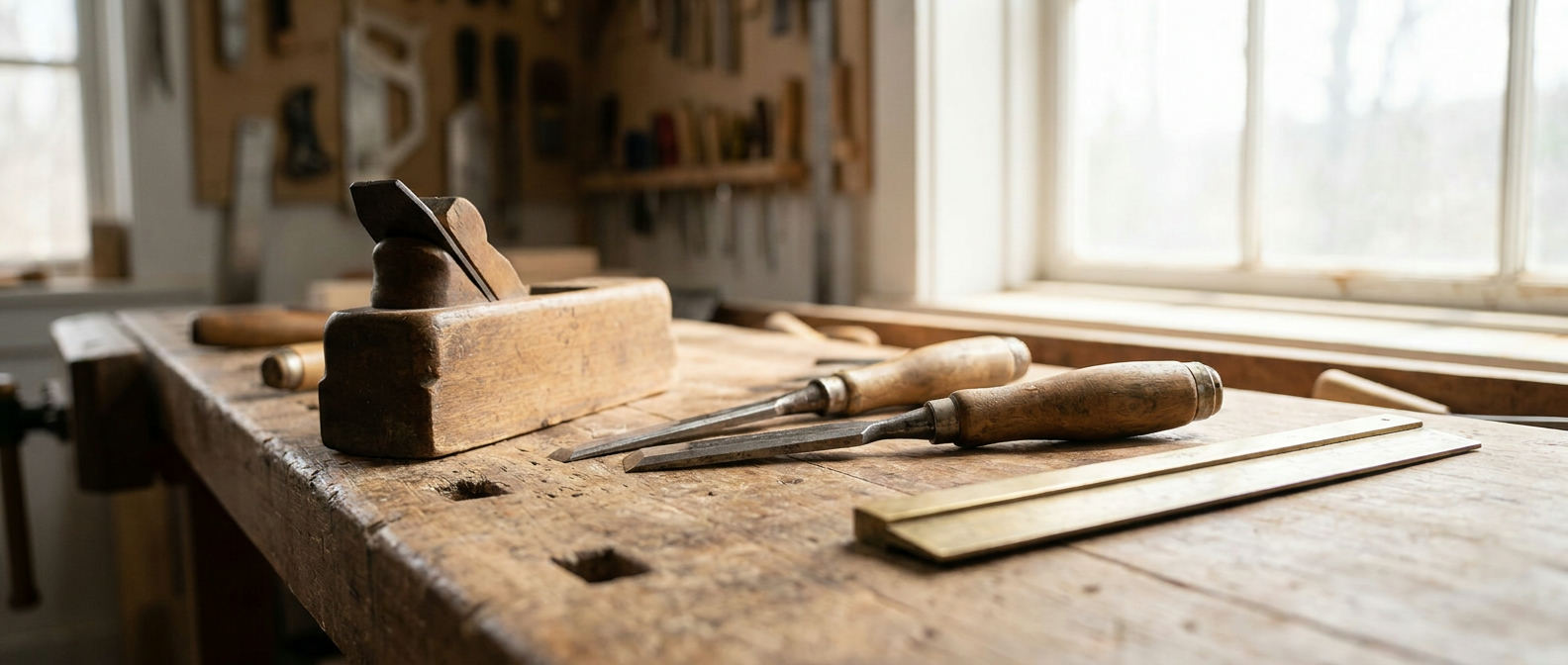
Are you wondering which vintage tools worth money are sitting unnoticed in basement workshops, dusty barns, or estate garage benches? When clearing out old estates or scouring flea market tables, resellers frequently encounter heavy iron and hardwood implements that look like scrap metal to the untrained eye. In reality, collectible woodworking planes, specialty machinist gauges, and pre-war wrenches regularly fetch between $30 and several hundred dollars from craftspeople and collectors. Before you toss an oxidized tool aside or donate a rusted toolbox, taking a moment to inspect maker markings and use a modern reselling price app can reveal substantial value hidden beneath decades of patina.
Related reading: Vintage Clothing Brands Worth Money in 2026 · Vintage Style Dresses — What They're Really Worth in 2026 · Rummage Sale Pricing: What to Pay and What to Skip (2026)
Quick answer
Most common vintage hand tools—such as mass-market claw hammers, standard flathead screwdrivers, or mid-century utility pliers—generally trade between $5 and $15 in typical secondhand markets. However, specialized vintage tools worth money command significantly higher sums. Standard cast-iron bench planes from respected manufacturers typically range from $40 to $125 depending on model and completeness, while specialized joinery planes, such as combination or plow planes with complete sets of cutters, frequently command $150 to $450. Early wooden molding planes bearing clear maker stamps usually bring $20 to $60 for simple profiles, but complex complex-molding profiles can exceed $100 to $250 each.
High-end collectible pieces reach well into the four-figure range. Rare patented metallic planes produced during the late 19th century by makers like Leonard Bailey, Ohio Tool Company, or early Stanley productions can sell between $500 and $2,500. Precision machinist instruments from Starrett or Brown & Sharpe in fitted wooden cases often command $80 to $300. Blacksmithing equipment, particularly solid cast-steel anvils manufactured by Peter Wright, Trenton, or Hay-Budden, regularly trade between $4 and $9 per pound, meaning an intact 150-pound shop anvil routinely commands $600 to $1,200. Understanding these baseline tiers helps you quickly separate routine garage clutter from genuine historical treasures.
Why the price varies
Understanding antique hand tools value requires examining several physical factors: maker stamps, type studies, material composition, and preservation state. Resellers evaluating old tools worth money look first at the maker's mark. Stamped logos on iron blades, brass adjustment nuts, and lateral adjustment levers reveal the manufacturer and estimated manufacturing window. A plane marked with Stanley's distinctive sweetheart emblem ("SW") stamped onto the cutter dates the tool between 1920 and 1935, a window prized by woodworkers for exceptional metallurgical quality.
The specific stanley plane value depends heavily on its "type" classification. Tool historians divide long-running tools like the Stanley Bedrock series (such as models 604, 605, or 607) or Bailey patterns (numbers 1 through 8) into distinct types based on minor manufacturing changes over the decades. A standard Bailey No. 4 smoothing plane might sell for $45, while a rare Bedrock No. 604 with a flat top can command $200 or more in comparable working condition. A Stanley No. 1, the smallest bench plane made, is notoriously rare and regularly commands over $1,000 even with moderate cosmetic wear.
Condition is paramount, but condition in vintage tools differs from modern consumer goods. Original factory finishes, intact japanning (the black baked-enamel coating on cast iron bodies), and crisp wooden handles (totes and front knobs) made of rosewood dramatically increase collector interest. Hairline cracks in cast-iron soles, chipped cutter mouths, missing depth-adjustment nuts, or snapped wooden horns quickly reduce market appeal by 50% or more. Severe pitting from rust can render precision edges unusable, whereas light surface oxidation that preserves clean metal underneath remains highly desirable.
How to research comparable items
Evaluating vintage tools requires methodical inspection before consulting online marketplaces. Start by cleaning away loose dirt with a soft dry brush to locate any incised patent dates, model numbers, or foundry stamps. On vintage planes, check the iron iron blade, the brass adjuster dial, the casting behind the frog, and the side cheeks. For wrenches, look along the forged steel shank for brand names like Coes, Billings & Spencer, or Crescent, along with forged patent dates.
Once you record the manufacturer, model number, and physical condition, cross-reference active listings on resale marketplaces. Be mindful that asking prices reflect what a seller hopes to receive, not necessarily an established market baseline. To understand broader collector discussions and spot unusual tool variants, resellers often browse active discussions on community forums like the Reddit Flipping community, where experienced pickers share identification pointers for unusual trade implements.
When searching online catalogs, examine exact sub-variants rather than general descriptions. A tool described simply as an "old wooden plane" may sit unnoticed, while one cataloged as a "double-boxed beechwood round plane by Sandusky Tool Co." connects directly with motivated specialty buyers. Note whether comparable listings include original boxes, instruction pamphlets, auxiliary fences, or spare cutters, as complete boxed sets consistently command top-tier pricing compared to loose or orphaned parts found during an estate sale tool hunt.
Best platform to sell it
Choosing the right sales channel depends on the tool's weight, rarity, and audience. eBay remains the primary marketplace for antique and vintage hand tools because it hosts a global audience of dedicated collectors, specialty tool dealers, and traditional woodworkers. According to official fee schedules, eBay charges a final value fee of 13.6% of the total sale up to $7,500, plus 2.35% on the portion over $7,500 for most categories, as well as a per-order fee of $0.30 for orders of $10.00 or less, or $0.40 for orders over $10.00 (as of October 2026, verified on the official eBay selling fees schedule). The platform offers initial sellers up to 250 free listings per month before a $0.35 per-listing fee applies.
For decorative antique tools, primitive farm implements, and rustic workshop display pieces, Etsy provides an engaged customer base seeking authentic vintage decor and handcrafted heritage supplies. As of October 2026, selling on Etsy involves a $0.20 listing fee and a 6.5% transaction fee, plus payment processing fees, as outlined on the official Etsy fees policy.
Extremely heavy items—including 100-pound blacksmith anvils, post vices, heavy cast-iron drill presses, and massive wooden workbenches—are expensive and difficult to ship safely. For these items, local channels like Facebook Marketplace avoid shipping logistics entirely. For orders arranged with local pickup and paid off-platform, no digital transaction fees apply. However, for orders shipped and processed directly through Facebook, the platform charges a selling fee of 10% (or an $0.80 minimum per order) as of October 2026. Managing your inventory across multiple venues using proven reseller listing strategies ensures you capture the right audience without stranding bulky inventory in storage.
Where FlipAI fits
Evaluating an unfamiliar workshop haul item by item can be time-consuming, especially when dealing with dozens of unmarked chisels, weathered planes, and specialty drawknives. FlipAI lets you take a photo of any item or scan its barcode to see live eBay asking prices plus an AI estimate. It is a starting point, not an appraisal or a guaranteed value.
When you encounter an intriguing tool at an estate sale, you can photograph the piece directly. FlipAI processes the visual details—such as handle shape, metallic casting contours, and visible maker marks—to surface active eBay listings for similar models alongside an AI valuation estimate. This allows you to quickly assess whether an item merits detailed historical research or offers enough margin after purchase and platform fees.
Beyond initial identification, FlipAI simplifies listing across your selling accounts. The platform posts directly to eBay and Amazon, while Etsy and Shopify integrations are coming soon. For multi-channel sellers utilizing other venues, FlipAI automatically prepares copy-ready listing titles, descriptions, and condition notes for Facebook Marketplace, Poshmark, Mercari, and Vinted, allowing you to manually paste your listing details quickly into each channel.
Tips to get the best price
To maximize your return when listing vintage tools, follow these best practices:
- Never use harsh cleaning methods: Avoid wire wheels, aggressive wire brushes, or harsh acid baths. Aggressive rust removal strips original japanning and damages collector value. Instead, use a light coat of mineral oil or paste wax on a soft cloth to stabilize dry iron surfaces without altering original factory patina.
- Photograph all critical stamps and components: Provide clear, close-up images of maker stamps, patent dates, sole flatness, blade thickness, and handle joints. Highlight any hairline cracks in iron castings or chips in wooden handles honestly.
- Detail mechanical functionality: State clearly whether brass adjustment wheels turn freely, depth screws engage properly, and locking levers seat firmly. Woodworkers want to know whether a plane can be tuned into a functional user tool.
- Include precise measurements: Provide exact sole length, cutter blade width, and total weight. Woodworking collectors classify bench planes by precise sole dimensions (for example, a No. 4 is 9 inches long with a 2-inch cutter).
- Package heavy iron securely: Vintage cast iron is brittle. Wrap heavy tool bodies in thick bubble wrap, secure wooden handles against shifting, and use rigid double-walled boxes to prevent drops from cracking irreplaceable castings during transit.
Try it free
Sorting through boxes of antique hand tools value does not have to involve hours of manual catalog searching. Whether you are walking through an early-morning yard sale or cataloging an inherited tool chest in your garage, having instant access to live market context helps you identify high-margin treasures right away. Check live asking prices and draft your sales listings efficiently so your inventory moves quickly.
Frequently Asked Questions
Does FlipAI show sold prices for vintage tools?
No, FlipAI shows live eBay asking prices plus an AI estimate. It displays currently active marketplace listings to give sellers visibility into current asking prices and market supply, rather than reporting historical completed sales or confirmed checkout figures.
What brands of vintage tools are most sought after by collectors?
Resellers commonly seek early cast-iron hand planes by Stanley (especially Bedrock lines), Ohio Tool Co., Millers Falls, and Sargent. In precision measurement, L.S. Starrett and Brown & Sharpe command solid interest. For blacksmithing tools, Peter Wright and Trenton anvils are highly prized by working craftsmen.
Should I clean rust off old tools before listing them for sale?
You should generally avoid heavy rust removal. Aggressive cleaning with wire wheels, sandpaper, or acid baths removes original japanning and ruins collector value. Lightly wiping away loose debris with mineral oil and a soft rag is usually the safest method to preserve natural patina.
How do I determine the age and type of a vintage Stanley plane?
Dating a vintage Stanley plane involves examining specific design changes over time, known as a type study. Key dating indicators include patent date stamps cast behind the frog, the presence or absence of raised casting rings under the front knob, brass versus steel adjusters, and trademark stamps on the iron.
Where is the best place to sell heavy antique tools like anvils?
Heavy equipment and large blacksmith anvils are best sold locally on platforms like Facebook Marketplace to eliminate substantial freight costs. For lighter collectible hand tools like specialty planes and gauges, eBay offers the widest national reach to reach dedicated woodworking and tool collectors.