Vintage Clothing Brands Worth Money in 2026
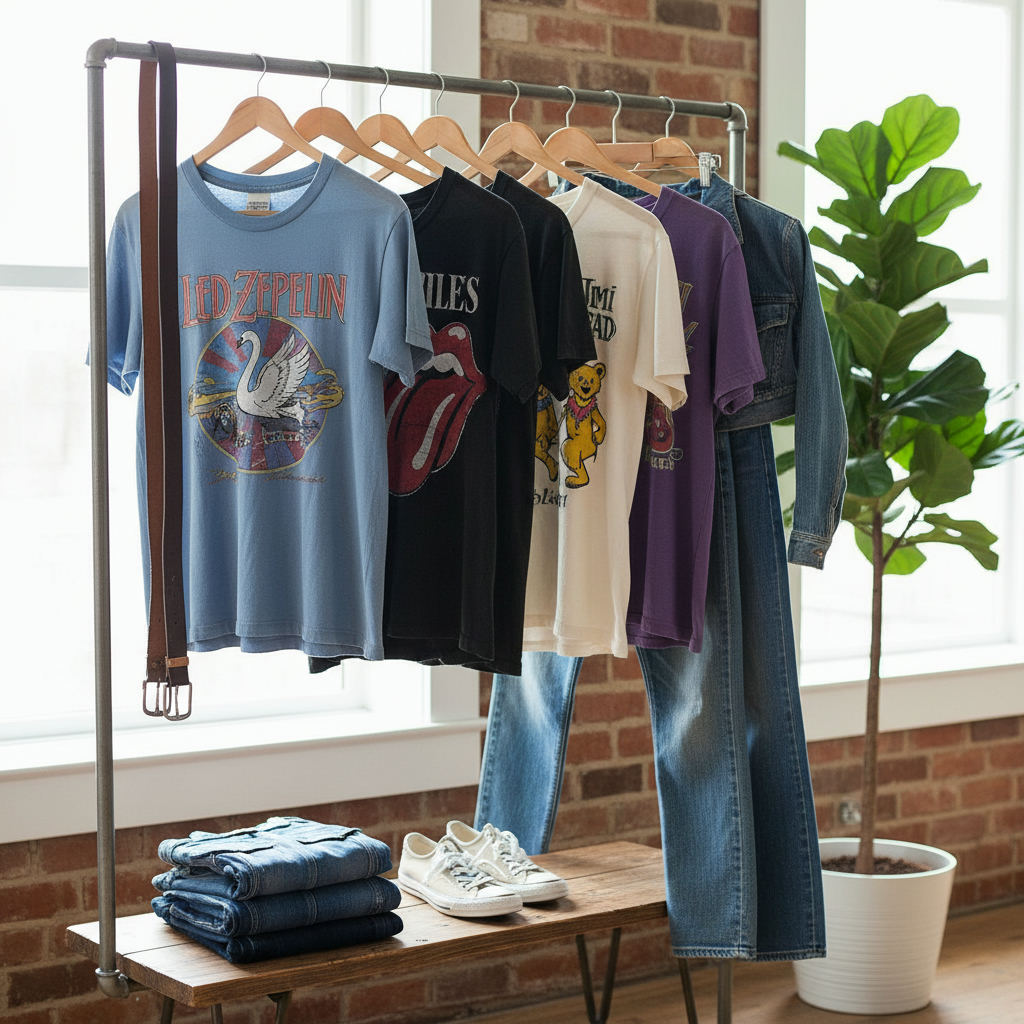
When it comes to unearthing hidden treasures, knowing which vintage clothing brands worth money in 2026 is your ultimate superpower for turning thrift store finds into serious cash. It's not just about age; it's about history, rarity, and iconic design, and savvy resellers are consistently finding pieces that fetch anywhere from $50 to over $1,000. This guide will walk you through the most profitable categories, how to spot them in the wild, and exactly how to maximize your profits!
Related reading: Clothing Brands Worth Money at Thrift Stores in 2026 · How to Shop Vintage Clothing Stores Without Overpaying (2026) · Vintage Levi's Jeans Value — What Your Pair Is Really Worth in 2026
Quick answer
The most profitable categories in vintage clothing reselling are authentic band tees, specific era Levi's denim, and iconic sportswear from brands like Nike and Adidas. Savvy resellers can realistically achieve profit margins ranging from $40 to $500 per item, with highly sought-after pieces exceeding $1,000 in profit. The key is knowing what brands and styles command premium prices and having the tools to quickly assess value.
Why this is profitable right now
Let me tell you, friends, the vintage clothing market is on fire right now, and it shows no signs of cooling down in 2026! We're talking about a multi-billion dollar industry that's driven by a powerful trifecta: sustainability, unique style, and nostalgia. People are consciously moving away from fast fashion, seeking out high-quality, long-lasting garments that tell a story. This isn't just a fleeting trend; it's a fundamental shift in consumer behavior. Young buyers, especially Gen Z and millennials, are flocking to vintage for its individuality and smaller environmental footprint. They don't want to look like everyone else, and they love the thrill of finding something truly one-of-a-kind. And for those of us who grew up in the 80s and 90s, there's a deep-seated longing for the styles of our youth – hence the massive demand for 80s and 90s vintage sportswear and graphic tees.
Think about it: a quality vintage piece often outlasts its modern counterpart. The construction, the fabric, the attention to detail – it’s often superior. Plus, there's the thrill of the hunt! Finding a rare piece isn't just about money; it's about the excitement of discovery. The supply of true vintage is finite, which naturally drives up demand and, consequently, prices for desirable items. This market is a dream for resellers because you're tapping into a consistent, passionate buyer base that's willing to pay for authenticity and style. Whether it’s a perfectly faded band tee or a pair of classic denim, the value isn't just in the material; it's in the history and the unique aesthetic. This sustained interest means that if you know your stuff, you can make some serious coin from vintage clothing brands worth money.
What to look for
Alright, let's get down to the nitty-gritty of what makes specific vintage clothing brands worth money. It’s all about knowing the identifiers, the eras, and the specific pieces that collectors and fashionistas are hunting for. This isn't just about finding old clothes; it's about spotting wearable history!
Iconic Denim: The Holy Grail of Vintage
- Levi's: This is where the real money is. Look for pre-1971 Levi's with the 'Big E' red tab. These are incredibly rare and can fetch hundreds, even thousands. Selvedge denim (identified by a clean, finished edge on the inside seam, often with a red line) is another huge indicator of quality and value. Specific models like 501s, 505s, and trucker jackets from the 60s-80s are goldmines. Check the care tags – older Levi's often had less detailed tags or even no tags beyond the red tab.
- Wrangler & Lee: While not usually as high-value as Levi's, certain vintage Wrangler (especially blue bell era) and Lee (riders) pieces, particularly denim jackets and workwear from the 50s-70s, have a dedicated following.
Timeless Tees: Graphics That Pop
- Band Tees: This is a massive category. Original concert tees from classic rock bands (Led Zeppelin, Pink Floyd, The Rolling Stones, Metallica, Iron Maiden) are highly coveted. Look for single-stitch construction (a sign of pre-1990s manufacturing) and faded graphics. The tour dates, location, and artwork all play a role in value. These can easily go for $100-$500, with some ultra-rare ones hitting four figures.
- Harley Davidson: Specific Harley tees from the 80s and 90s, especially those with city-specific graphics or unique designs, are consistently strong sellers. Look for local dealership tees.
- Sportswear Graphics: Vintage Nike, Adidas, Champion, and Starter tees and sweatshirts with bold, often embroidered logos or unique graphics from the 70s-90s are hot. Think collegiate wear, Olympic designs, or iconic branding.
- Pop Culture/Movie Tees: Original tees from classic movies (Star Wars, Jaws, E.T.), TV shows, or even old advertising campaigns can be incredibly valuable.
Sportswear Legends: Beyond the Tee
- Nike & Adidas: Beyond tees, look for vintage tracksuits, windbreakers, sweatshirts, and sneakers. Original Air Jordans from the 80s, especially in deadstock condition, are collector's items. Think specific lines like Nike ACG or Adidas's Trefoil logo items from the 70s-90s.
- Champion: Reverse weave sweatshirts, particularly those with embroidered logos (especially those with college names or team logos), are consistently popular.
- Starter Jackets: NFL, NBA, NHL, and MLB Starter jackets from the late 80s and 90s are experiencing a huge resurgence. Puffer jackets and pullovers can fetch $80-$300+.
Designer & Workwear Gems
- High-End Designer Vintage: Think pre-2000s pieces from brands like Chanel, Dior, Yves Saint Laurent, Versace, Gucci, Hermes. These are harder to find in thrift stores but can yield enormous profits. Focus on unique construction, quality fabrics, and signature details.
- Vintage Workwear: Carhartt (especially older 'Made in USA' pieces, specific duck canvas jackets), Dickies, and other heritage workwear brands are highly desired for their durability and classic aesthetic.
When you're out there, remember the mantra: Condition, Rarity, Desirability. A rare item in poor condition might still sell, but one in excellent condition will always command top dollar. Keep your eyes peeled for those tell-tale signs, and you'll be well on your way to spotting profitable vintage clothing brands worth money.
How to spot value quickly
Okay, you're on the hunt, your eyes are scanning the racks, and you need to make quick decisions. How do you, an expert reseller, instantly gauge if something is a gem or just another forgotten garment? It’s all about developing a keen eye for details and knowing the key indicators of value.
The Tag Test: Your First Line of Defense
- Brand Name: This is obvious, but some brands are instant green lights. We just talked about them: Levi's, Harley Davidson, older Nike/Adidas, Champion, specific designer labels. Learn to recognize these tags instantly.
- Manufacturing Location: "Made in USA" is often a huge indicator of true vintage and quality, especially for denim, workwear, and sportswear from before the 2000s. Other countries like Japan or Canada can also indicate quality depending on the brand and item.
- Tag Style: Older tags often have a different font, material, or logo design. For example, a single-sided Nike tag, specific variations of Levi's care tags, or the 'Black Tag' on Harley Davidson tees. Familiarize yourself with how these evolved over time.
- RN Numbers: While not exclusive to vintage, looking up RN (Registered Identification Number) numbers on the Federal Trade Commission website can sometimes provide clues about the manufacturer and age.
Construction & Fabric Clues
- Single Stitching: For t-shirts, this is a massive indicator of pre-1990s production. Look at the hems of the sleeves and the bottom hem – if they're sewn with a single line of thread, you likely have a true vintage piece. Double stitching became standard around the late 80s/early 90s.
- Material Quality: Vintage fabrics often feel different – denser cotton, higher quality wools, unique blends. Pay attention to the drape and texture.
- Hardware: Zippers (YKK, Scovill, Talon, Ideal, Crown), buttons, and rivets can all provide clues to age. Older zippers often look and feel different, and specific brands were prevalent in certain eras.
- Selvedge Denim: Again, that finished edge on the inseam of jeans (often with a colorful thread) is a strong sign of premium, older denim.
Graphics & Print Style
- Fading & Cracking: Authentic vintage graphics often have a natural, even fade and cracking that's hard to replicate. This isn't damage; it's character and proof of age.
- Print Technique: Older screen prints often feel thicker and sometimes have a slightly uneven quality. Puff prints, plastisol prints, and flocked prints were common in different eras.
- Copyright Dates: Many graphic tees, especially band or movie tees, will have a small copyright date printed near the graphic. This is a definitive way to date the item.
Condition Assessment
While mint condition is always ideal, don't shy away from pieces with minor flaws. A perfectly faded tee with a small hole can still be highly desirable, especially if it's rare. However, assess major damage (large stains, rips, broken zippers) against the potential value. Sometimes, a professional repair can justify the cost, but often, it's best to pass if the damage is extensive on less valuable items. By honing these skills, you’ll be a lightning-fast vintage detective, zeroing in on those incredible vintage clothing brands worth money.
Average profit margins for this category
Let's talk numbers, because that's what we resellers love, right? The profit margins in the vintage clothing category can be incredibly rewarding, often far exceeding what you might see in other niches. It's not uncommon to hit 100%, 200%, or even 500% profit on a single item. This is primarily because your sourcing costs can be astonishingly low – we're talking about picking up items for $5-$20 that can sell for $50-$200 or more. My own experience consistently shows that this category offers some of the juiciest returns in reselling.
Real-World Examples of Profit
- The $8 Harley Davidson Tee: I once found an 80s Harley Davidson graphic tee, single-stitch, with a unique local dealership graphic, for $8 at a local thrift store. After cleaning it up, I listed it on eBay and it sold for $120. Even after eBay's final value fee of around 13.25% (roughly $16) and shipping costs ($5), my profit was close to $91. That's over a 1000% return on investment!
- The $15 Levi's Jacket: A vintage Levi's trucker jacket (from the late 70s, identified by the orange tab) cost me $15 at an estate sale. It was in great condition with perfect fading. I sold it on Poshmark for $150. Poshmark takes a 20% commission on sales over $15 (so $30), leaving me with $120. My profit was a cool $105, a 700% ROI.
- The $20 Band Tee: I scored a legitimate 1990s Metallica 'Pushead' design band tee at a flea market for $20. It had some natural cracking on the graphic but no major flaws. This bad boy went for $350 on Etsy. After Etsy's transaction fee (6.5% of $350 = $22.75), payment processing fee (3% + $0.25 = $10.75), and listing fees (a few cents), plus shipping ($5), my net profit was around $310. Now that's what I call a flip!
- Vintage Nike Windbreaker: Picked up a colorful 90s Nike windbreaker for $10 at a charity shop. Listed it on Depop for $80. Depop charges 10% commission ($8) and PayPal/Depop Payments takes a small fee, bringing my profit to around $65.
Factors Influencing Margins
- Sourcing Cost: The lower your initial investment, the higher your potential margin. Thrifting, garage sales, and flea markets are goldmines for low-cost finds.
- Rarity & Desirability: Ultra-rare pieces with high demand will always command premium prices and thus, higher margins.
- Condition: While some wear is acceptable and even desirable for vintage, items in excellent condition will sell faster and for more money.
- Platform Fees: Each selling platform has different fees. For instance, Mercari charges a flat 10% selling fee plus a payment processing fee. Understanding these helps you price accurately and calculate your true profit.
- Shipping Costs: Don't forget to factor in shipping materials and postage. Offering free shipping can sometimes increase sales, but ensure it's built into your pricing.
By focusing on these profitable vintage clothing brands worth money and understanding your costs, you can consistently achieve incredible profit margins in this exciting niche. It's truly a category where a little knowledge goes a long, long way!
Check value before you buy
Alright, superstar reseller, you’ve got a keen eye, you've spotted a potential goldmine – a perfectly faded 80s band tee, a pristine pair of vintage Levi's, or an iconic Starter jacket. But before you whip out your wallet, how do you *know* it's actually worth what you think? This is the critical step, the one that separates the guessing game from guaranteed profit. You need to instantly verify the true market value, not just guess or hope.
This is where my secret weapon, FlipAI, comes into play. I'm telling you, it's a game-changer. Imagine this: you're at a crowded flea market, holding what looks like a super rare vintage tees value through the roof, but you're not 100% sure. Do you buy it for $25 and risk it, or do you leave it and potentially miss out on a $200 flip?
With FlipAI, that dilemma is gone. FlipAI lets you take a photo of any item or scan its barcode to instantly see current eBay asking prices (live listings, not sold prices) plus an AI estimate. No guessing. No Googling. Just point your camera at anything and know what it is actually worth in about 10 seconds. I use FlipAI's AI vision feature constantly, especially for clothing where barcodes are rare. I just snap a pic of the tag, the graphic, or the overall item, and boom – I'm seeing comps. It gives me immediate confidence in my buying decisions.
Knowing the precise sold prices for similar items means you can negotiate better, too. If the seller wants $40 for that vintage denim value, and FlipAI shows you it consistently sells for $75, you know your maximum profitable buy-in price. If FlipAI shows it consistently sells for $200, you're getting a steal! This tool is invaluable for preventing overpays and ensuring every purchase is a smart one. It’s like having an experienced appraiser right in your pocket. Before FlipAI, I definitely made a few regrettable purchases, but now, I rarely make a mistake. It helps me focus on buying only vintage clothing brands worth money, maximizing my time and profit.
Where to sell what you find
Finding those incredible vintage clothing brands worth money is only half the battle; the other half is knowing where to list them to get the best price and connect with the right buyers. The beauty of reselling today is the sheer number of platforms available, each with its own niche and fee structure. You'll want to diversify your selling channels to reach the widest audience and maximize your profits.
Online Marketplaces
- eBay: This is my go-to for high-value, rare, or collectible vintage items. With its massive global audience and auction format, you can often achieve premium prices, especially for those hard-to-find vintage tees value pieces. eBay charges a final value fee that typically hovers around 13.25% (for most clothing categories, including shipping), but can vary. It's perfect for items like 'Big E' Levi's, rare band tees, and designer vintage.
- Poshmark: Excellent for more fashionable, accessible vintage. Poshmark has a highly engaged community, and its social selling aspect means your items can get a lot of exposure. It's fantastic for vintage dresses, sportswear, denim, and even some designer pieces. Poshmark's fee structure is straightforward: 20% commission on sales over $15, and a flat $2.95 for sales under $15. Their flat-rate shipping is also a huge plus for buyers and sellers.
- Depop: Very popular with younger buyers (Gen Z) and strong for unique, edgy, or Y2K-era vintage. Think street style, graphic tees, vintage sportswear, and unique denim. Depop charges a 10% commission on sales, plus PayPal or Depop Payments fees. The demographic here is often willing to pay a premium for unique, trending items.
- Etsy: If your vintage items lean more towards curated, handmade-adjacent, or truly antique (20+ years old to meet their definition), Etsy is a fantastic platform. It's known for its global reach for unique items. Fees include a listing fee, transaction fee (6.5%), and payment processing fee (3% + $0.25). This is great for unique dresses, vintage accessories, or high-quality heritage pieces.
- Mercari: A user-friendly platform for a wide variety of items, including clothing. It's often seen as a place for quicker sales at slightly lower price points than eBay, but still very viable for general vintage. Mercari charges a 10% selling fee plus a payment processing fee (2.9% + $0.50).
- Facebook Marketplace & Groups: Great for local sales to avoid shipping, but also has a broad reach. There are numerous vintage-specific Facebook groups where you can list items directly to interested buyers. No selling fees here, but you're responsible for secure payment and meeting up.
- TikTok Shop: a growing option for video and live sellers; check TikTok's current seller fees before listing.
In-Person Selling
- Vintage Markets/Fairs: Setting up a booth at a local vintage market can be incredibly profitable. You meet buyers face-to-face, who are often dedicated vintage enthusiasts willing to pay top dollar.
- Consignment Stores: If you have high-end designer vintage, a local consignment store might be a good option, though they take a significant cut (often 40-60%).
No matter where you choose to sell, strong photography, detailed descriptions, and accurate measurements are absolutely crucial. And remember, with FlipAI's crosslisting tool">crosslisting tool, you can efficiently list your items across multiple platforms without the headache, saving you tons of time and getting your items seen by more potential buyers. Diversifying your selling strategy is key to turning those finds into maximum profit.
Get started
So, there you have it, fellow resellers! The world of vintage clothing brands worth money in 2026 is wide open and incredibly lucrative for those with a keen eye and the right tools. We've covered everything from identifying those invaluable Levi's 'Big E' jeans and single-stitch band tees to the specific platforms where you can turn your finds into substantial profit. Remember, the key to success in this game is constant learning, diligent sourcing, and smart pricing. Don't be afraid to dive into those dusty racks; that next five-dollar treasure could be a $500 flip just waiting for you.
It’s all about embracing the thrill of the hunt and then strategically turning that excitement into income. With the rising demand for unique, sustainable fashion and the finite supply of true vintage, this niche offers consistent opportunities for impressive returns. Keep honing your knowledge of eras, brands, and construction, and you'll be well on your way to becoming a vintage clothing guru.
And when it comes to making sure you're always making the smartest buying decisions and never leaving money on the table, FlipAI is your indispensable partner. Don't just guess; scan, verify, and profit. I promise you, once you start using its power to instantly check sold prices, your confidence in sourcing will skyrocket. Ready to transform your thrifting trips into profitable ventures? Start your 5-day free trial and flip smarter today.
Frequently Asked Questions
What are some of the most profitable vintage clothing brands to look for?
Some of the most consistently profitable vintage clothing brands include specific eras of Levi's (Big E, selvedge denim), Harley Davidson (especially 80s/90s graphic tees), certain Nike and Adidas pieces from the 70s-90s, band tees, and designer labels like Dior, Chanel, or Versace from their archival collections. Condition and rarity are key factors influencing value.
How can I quickly identify valuable vintage clothing while thrifting?
To quickly spot valuable vintage clothing, focus on distinct graphics, unique construction details (like single-stitch hems on t-shirts), older tags, and material quality. Look for iconic logos, specific manufacturing locations (e.g., 'Made in USA'), and signs of true vintage wear rather than modern reproductions. Familiarize yourself with key brand indicators for different eras.
What kind of profit margins can I expect when reselling vintage clothing?
Profit margins in vintage clothing can vary wildly, but they are often quite high due to low sourcing costs. It's common to see margins of 100% to 500% on well-sourced items. For instance, buying a vintage band tee for $10 and selling it for $100 after fees yields an impressive profit. High-end, rare pieces can command even larger returns, sometimes turning a $20 investment into several hundred dollars.
Where are the best places to sell vintage clothing for maximum profit?
The best places to sell vintage clothing depend on the item. For high-value, rare pieces, specialized online marketplaces or curated vintage shops can yield top dollar. General platforms like eBay, Etsy, and Depop are excellent for a wide range of vintage items. Poshmark and Mercari are great for more accessible, everyday vintage. TikTok Shop and Facebook Marketplace can also connect you with specific buyers.
Are 'vintage' items always old, and how does that affect their value?
While 'vintage' generally refers to items at least 20 years old, it's not just about age; it's about style, quality, and cultural significance. A 30-year-old t-shirt with a unique graphic might be more valuable than a 50-year-old generic dress. The value is often tied to trends, rarity, condition, and the story behind the piece. Newer items with a retro aesthetic are 'vintage-inspired' but don't hold the same collector value.