Sterling Silver Flatware Value Guide for Sellers in 2026
Learn how to determine sterling silver flatware value by checking hallmark stamps, silver weight, collectible patterns, and market trends.
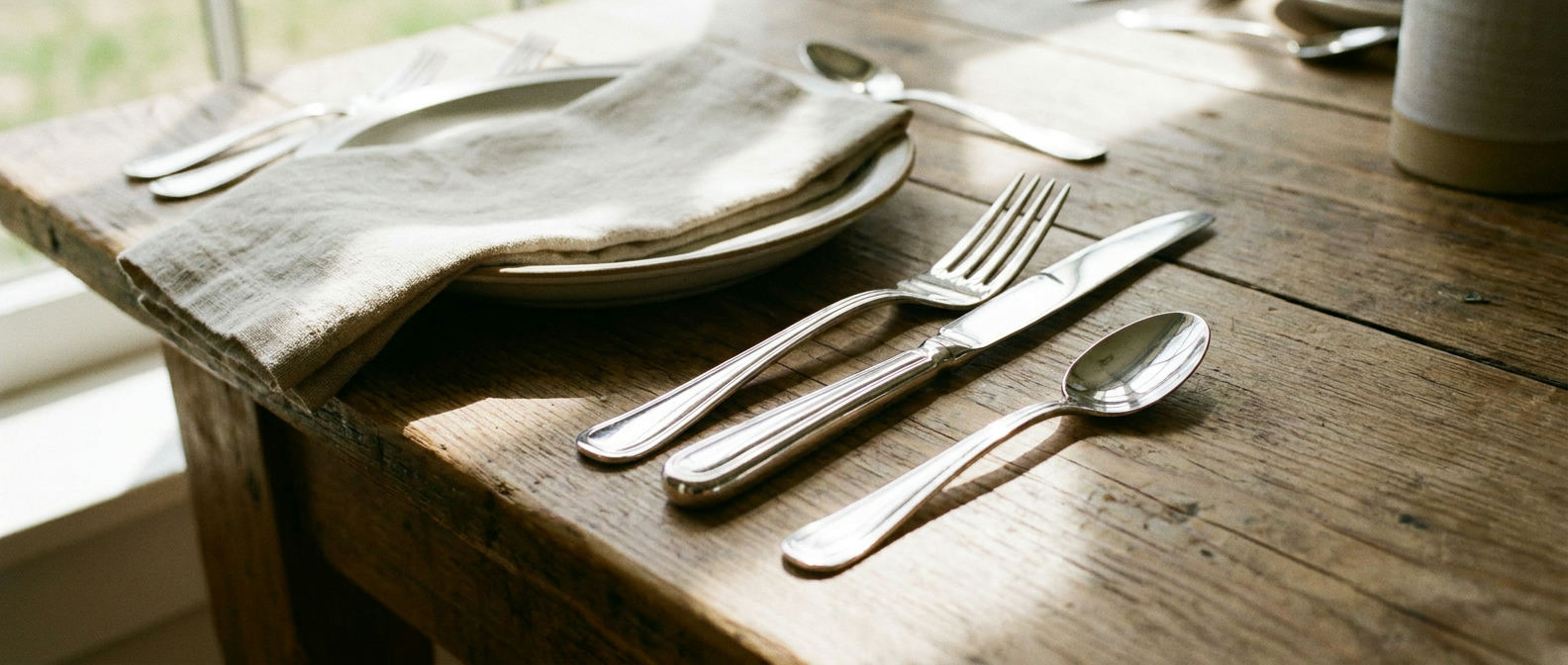
Your sterling silver flatware value depends primarily on whether the pieces sell for their raw precious metal content or as collectible tableware from a sought-after silversmith. Most genuine sterling silver flatware pieces sell anywhere from $25 to $75 per utensil based purely on melt weight, while desirable complete services from makers like Tiffany & Co., Gorham, or Wallace can command between $1,200 and $4,500 or more on secondary marketplaces. Before deciding whether to scrap, consign, or list your collection, checking current sterling silver flatware value indicators will help you identify whether you are holding scrap bullion or fine antiques.
Related reading: Rummage Sale Pricing: What to Pay and What to Skip (2026) · Silver Coin Value in 2026 — Melt vs Collector Premium · Vinyl Record Value in 2026 — Pressings, Condition and Real Prices
Quick answer
In 2026, the baseline value of genuine sterling flatware is tied directly to the spot price of silver, which provides an absolute floor for what your pieces are worth. Sterling silver consists of 92.5% pure silver and 7.5% copper or other trace alloy metals. A typical sterling teaspoon weighs between 25 and 35 grams, giving it a baseline melt worth between $20 and $35 depending on market fluctuations. Dinner forks and tablespoons contain more silver, often weighing between 45 and 70 grams, which places their baseline metal worth in the $35 to $65 range per piece.
Hollow-handle pieces like dinner knives, carving sets, and pie servers are evaluated differently because their blades are crafted from stainless steel for durability, and their hollow handles are filled with cement, pitch, or plaster to secure the blade. A standard dinner knife typically yields only 10 to 15 grams of actual sterling silver casing, meaning its scrap metal return is often $10 to $18, even though a buyer seeking a replacement knife might pay $40 to $80 for that exact piece. A standard 32-piece set containing service for eight usually holds roughly 30 to 45 troy ounces of weighable silver, generating a melt floor around $900 to $1,400. If the set features an iconic, highly collectible design, that same flatware value can easily rise to $2,000 to $3,500 among antique collectors.
Why the price varies
The price of silver tableware fluctuates based on four main criteria: purity verification, maker prestige, aesthetic condition, and whether you sell individual replacements or complete sets. The most important initial check is confirming authentic sterling silver marks. Genuine pieces manufactured in the United States after the 1860s will almost always carry the word "Sterling", ".925", or "925/1000" stamped on the back of the handle. British and continental European silverware uses official assay hallmarks, such as the British walking lion passet mark, an anchor or crown indicating the city of manufacture, and an annual date letter. If an item is stamped with "Silver Plate", "EPNS" (Electroplated Nickel Silver), "Triple Plate", or "IS" (International Silver plated lines), it contains merely a microscopically thin coating of silver over base brass and possesses negligible metal resale value.
Maker reputation dramatically influences secondary market interest. Renowned silversmiths like Tiffany & Co., Georg Jensen, Reed & Barton, and Towle command substantial collector premiums well above precious metal value. For instance, iconic patterns such as Gorham's Chantilly, Wallace's Grande Baroque, and Reed & Barton's Francis I consistently attract buyers looking to replace lost family pieces. Condition also plays a massive role. Pieces with crisp decorative details, unbent fork tines, and original patina command top dollar, whereas pieces with deep disposal scratches, heavy pitting, monograms, or bent bowls often trade close to melt scrap value.
How to research comparable items
When you research silver tableware, avoid assuming that every online price tag reflects genuine collector demand. Many sellers mistakenly consult asking prices on general retail sites or specialty antique portals that carry inventory for years at inflated rates. To build a realistic pricing strategy, you need to understand the distinction between active asking figures and confirmed market transactions. You can study collector discussions on forums like the Reddit Flipping community to see how veteran resellers navigate shifting collector preferences.
Start by identifying the exact maker stamp and pattern name on your flatware. Online pattern-identification archives and replacement catalogs allow you to match handle shapes, floral scrollwork, and shoulder shoulders against historical patterns. Once the pattern is verified, review how active sellers present their inventory on public marketplaces. Take note of whether sellers group items into complete place settings, offer five-piece bundles, or sell individual teaspoons and butter spreaders as replacement stock. Sellers should independently verify completed transactions on marketplace websites to see what buyers have historically paid for similar conditions. Keep in mind that asking prices on active listings merely represent seller expectations, not completed trades or certified appraisals.
Best platform to sell it
Choosing where to sell silverware depends on your goals: whether you want rapid liquidation at metal value or maximum return through individual retail sales. Local coin and bullion shops, estate liquidators, and scrap jewelers provide fast payment, but they typically offer 70% to 85% of spot melt value to cover their refining margins. If your collection consists of damaged, mismatched, or heavily monographed utensils, a local precious metal buyer provides immediate closure without online shipping risks.
If you possess clean, identifiable pieces from famous silversmiths, major online platforms offer access to nationwide antique enthusiasts. Online marketplaces take fees that you must factor into your pricing. On eBay, standard selling fees in most categories are 13.6% of the total sale up to $7,500, then 2.35% on the portion over $7,500, plus a per-order fee of $0.30 for orders of $10.00 or less, or $0.40 for orders over $10.00, as of October 2026. For vintage handmade or pre-1990 collections, Etsy charges a $0.20 listing fee and a 6.5% transaction fee, plus payment processing fees, as of October 2026. When managing broader inventory across venues, utilizing tools for crosslisting your inventory allows you to reach both casual buyers and dedicated antique restorers across multiple platforms.
Where FlipAI fits
FlipAI lets you take a photo of any item or scan its barcode to see live eBay asking prices plus an AI estimate. It is a starting point, not an appraisal or a guaranteed value. When you encounter unfamiliar tableware at an estate sale, antique market, or consignment shop, FlipAI helps you evaluate active marketplace interest without tedious manual typing.
- Open the FlipAI app on your mobile device.
- Take a photo of any item or scan its barcode, capturing clear angles of the handle design and maker stamps.
- FlipAI analyzes the visual characteristics against active listings to display live eBay asking prices plus an AI estimate.
- Review the suggested details, adjust your preferred price, and post directly to eBay or Amazon.
- For alternative venues, FlipAI generates copy-ready listings formatted for Facebook Marketplace, Poshmark, Mercari, and Vinted, allowing you to copy and paste the details manually.
Using FlipAI allows resellers to quickly gauge current listing volume while browsing estate sale shopping opportunities, helping you make informed decisions before purchasing heavy silverware collections.
Tips to get the best price
To maximize your return when listing silver flatware, proper presentation and transparent descriptions are essential. First, never use harsh chemical dips, automated dishwashers, or abrasive scouring pads to polish antique silver. Severe dipping strips away the natural oxidization in deep relief carvings, destroying the aged contrast that collectors cherish. Instead, use a gentle silver cream formulated with tarnish inhibitors, applying it softly with a damp flannel cloth, then buffing it dry with a microfiber towel.
Accurate weighing is equally critical. Weigh your weighable hollowware, forks, and solid spoons on a digital scale calibrated in grams or troy ounces, and state this weight clearly in your item specifics. Explicitly note that dinner knives feature stainless steel blades and hollow handles so buyers understand the metal composition. Take close-up, sharp photographs in indirect natural light showing the hallmarks, pattern engravings, and any monogrammed letters. If pieces have signs of wear, such as nicked tines or minor heel wear on spoon bowls, disclose them honestly. Transparency builds trust with discerning antique buyers who pay premium rates for reliable condition descriptions.
Try it free
Evaluating fine silver requires understanding metal purity, distinguishing historical silversmith patterns, and knowing what comparable items ask on modern marketplaces. Whether you inherited a set of vintage teaspoons or browse local thrift shops for hidden treasures, having mobile pricing data at your fingertips simplifies every resale decision. FlipAI enables you to identify items rapidly, compare live asking prices on eBay, and prepare listings without unnecessary manual entry.
Frequently Asked Questions
Does FlipAI show sold prices or past auction sale records?
No, FlipAI shows live eBay asking prices plus an AI estimate. It does not show historical sold prices, completed transaction comps, or verified amounts paid by previous buyers. Asking prices represent what current sellers hope to receive, while an AI estimate provides an informational starting figure for your valuation research.
How can I tell if my flatware is genuine sterling or silver plated?
Check the reverse side of the handle for stamped marks. Authentic American sterling silver made after the mid-19th century is marked with "Sterling", ".925", or "925/1000". British and European silverware carries official assay marks such as a lion passant. Markings like "Silverplate", "EPNS", or "Triple Plate" indicate base metal covered in thin silver plating.
Are monogrammed sterling silver flatware pieces worth less?
Yes, personalized monograms generally reduce collector appeal because buyers prefer unblemished patterns or their own family initials. While monogrammed pieces still retain their full precious metal melt value based on silver weight, they typically sell for 20% to 40% less than non-monogrammed pieces on the collector replacement market.
Why do sterling silver dinner knives have lower scrap value?
Sterling silver dinner knives feature stainless steel blades for cutting strength, joined to hollow sterling handles filled with cement, pitch, or plaster. The actual sterling silver shell weighs only 10 to 15 grams per knife, making their scrap metal yield significantly lower than solid silver forks or spoons of comparable size.
Which sterling silver flatware patterns are worth the most money?
Elaborate, ornate patterns from renowned makers command the highest premiums above melt value. Highly sought-after designs include Wallace's Grande Baroque, Gorham's Chantilly, Reed & Barton's Francis I, and Tiffany & Co. patterns like Audubon and Olympian. Rare mid-century modernist designs by Georg Jensen also achieve substantial collector interest.