Vintage Pyrex Value: The 2026 Reseller Price Guide
Wondering what your vintage Pyrex is worth? Explore realistic price ranges, key patterns, condition grades, and smart reseller tips for 2026.
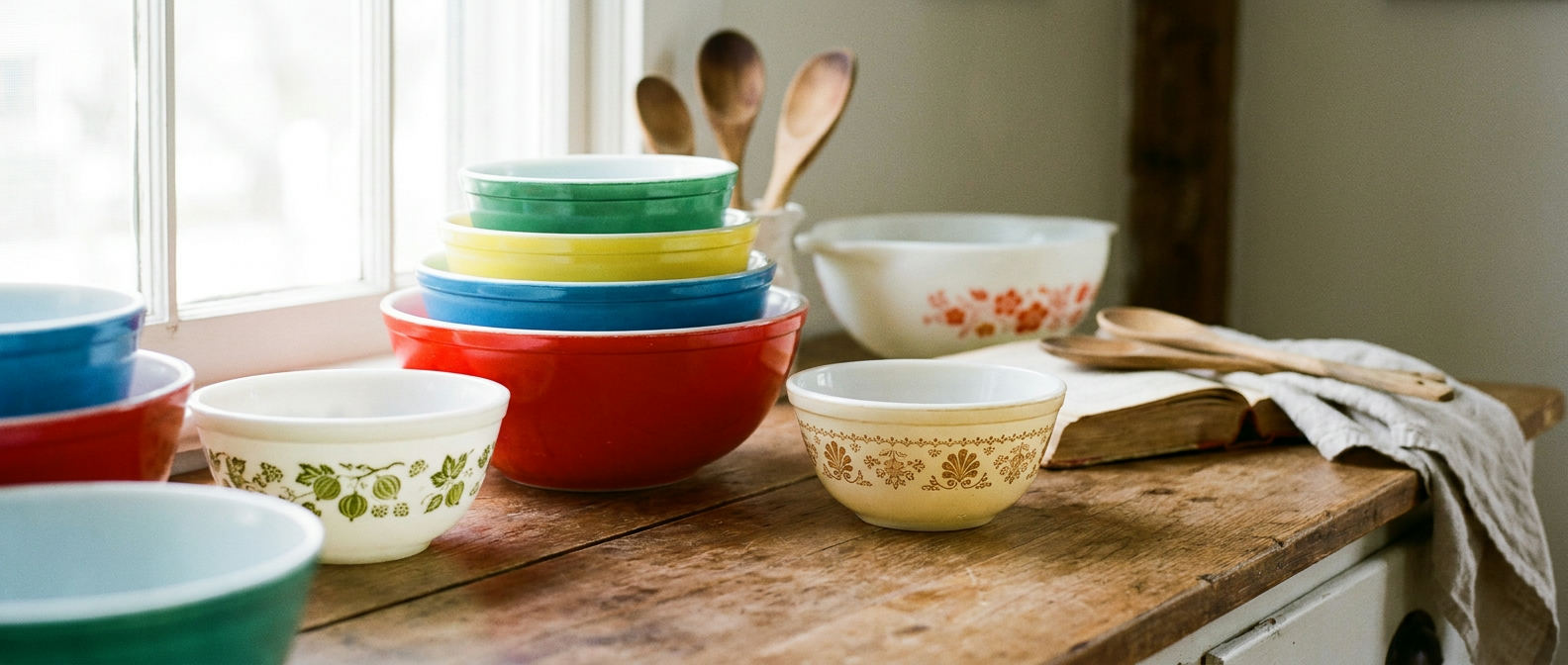
Vintage pyrex value typically falls between $15 and $150 for individual production bowls and casseroles, while complete four-piece nesting sets and rare promotional releases often command between $250 and $1,500. Whether you uncovered a colorful stack of mixing bowls at a garage sale or inherited kitchenware from a family member, knowing what you have is the first step toward smart pricing. When checking vintage glassware and kitchenware pricing, identifying the exact pattern, verifying backstamps, and grading the glass surface will help you understand the market before creating a listing with FlipAI.
Related reading: Vintage Toy Value Guide 2026 — Prices by Era · Rummage Sale Pricing: What to Pay and What to Skip (2026) · Vintage Levi's Jeans Value — What Your Pair Is Really Worth in 2026
Quick answer
For most everyday finds, vintage pyrex prices depend heavily on whether a piece was standard catalog production or a limited promotional item. Common individual Cinderella bowls or round nesting bowls from widespread lines like Spring Blossom Green (Crazy Daisy), Butterfly Gold, Woodland, and Shenandoah regularly carry asking figures between $15 and $35. Complete four-piece sets (numbered 401 through 404 or 441 through 444) in these popular lines generally range from $80 to $160 when the paint finish retains its original gloss.
Mid-tier favorites attract stronger collector demand. Well-preserved pieces in Gooseberry, Butterprint (often called Amish), Pink Daisy, Friendship, and Turquoise Butterprint frequently list from $45 to $120 for single dishes, while full four-bowl sets often list between $250 and $450. Rare promotional and test patterns sit at the top of the market. Dishes such as Lucky in Love, Pink Stems, Atomic Eyes, and Balloons can command asking prices from $600 to well over $2,000, particularly when accompanied by their original glass lids, brass cradles, or retail boxes.
Why the price varies
Two bowls sharing the exact same pattern name can carry vastly different market figures. Understanding the structural and visual details that influence pyrex patterns value will prevent you from underpricing a rare piece or sitting on slow inventory.
Pattern rarity and production runs
Condition and dishwasher damage
Condition is paramount in the vintage kitchenware community. Collectors look for high gloss, vibrant enamel, and an absence of scratches. The biggest value destroyer is "dishwasher damage" (commonly abbreviated DWD in collector circles). Automatic dishwasher detergents chemically etch the borosilicate and soda-lime glass, stripping the glossy clear coat and leaving the colored enamel chalky, faded, and rough. A bowl with severe dishwasher haze can lose 80% of its market appeal compared to an identical mint-gloss example.
Completeness, lids, and accessories
Many Pyrex casseroles originally retailed with decorated glass lids, clear opal covers, metal stands, or wooden carrier handles. An undamaged divided casserole dish without its patterned lid is missing half its collector appeal. Having the correct matching lid, an intact metal cradle, or the original corrugated box substantially increases buyer interest.
How to research comparable items
Accurate research requires separating active asking prices from theoretical appraisal values. Online marketplaces display millions of items, but asking figures reflect what sellers hope to receive, not what transactions conclude at. When evaluating what an individual pyrex bowl worth might be, verify these three physical indicators first:
- Inspect the bottom backstamp: Turn the piece upside down under bright lighting. Look for standard Corning backstamps. Early pieces from the late 1940s and 1950s often feature the embossed "PYREX" lettering in all caps with "MADE IN U.S.A." and the classic glassblower logo inside a circle. Later pieces from the 1970s and 1980s include numeric mold numbers (like 401, 1 1/2 PT) along with metric volume measurements and "CORNING, NY, USA."
- Identify the exact model number: Cinderella bowls feature distinct pouring spouts on both sides (numbered 441, 442, 443, 444), whereas standard mixing bowls are round with rolled rims (401, 402, 403, 404). Space Savers are rectangular casseroles with clear lids, and fridges refer to the 501, 502, and 503 refrigerator storage sets. Exact mold numbers eliminate confusion in search queries.
- Examine under directional light: Hold the bowl directly in front of a strong light source. Flea bites along the rim, micro-chips, silver utensil marks (grey scrape lines caused by metal beaters), and pinprick paint loss become immediately apparent. Note every defect honestly in your records before listing.
If you source your kitchenware through sourcing kitchen collectibles at estate sales or local community thrift stores, checking community groups like the ThriftStoreHauls community on Reddit can give you helpful visual references for patterns found in the wild.
Best platform to sell it
Selecting the right marketplace depends on whether you are selling heavy complete sets or individual display-quality casseroles. Shipping heavy glass requires careful packing, which makes fee structures and platform audience demographics critical considerations.
eBay remains the largest market for vintage kitchenware because of its global search volume and established collector base. As of October 2026, according to the official eBay selling fees policy, sellers pay 13.6% of the total sale up to $7,500, then 2.35% on the portion over $7,500 for most categories, alongside a per-order fee of $0.30 for orders of $10.00 or less, or $0.40 for orders over $10.00. Sellers also receive their first 250 listings a month free, after which listings cost $0.35 each. This fee structure gives broad reach, which is helpful for high-end promotional pieces.
Etsy caters strongly to home decor buyers and vintage lifestyle shoppers. As of October 2026, according to the official Etsy fees policy, sellers pay a $0.20 listing fee and a 6.5% transaction fee, plus payment processing fees. Etsy works well for pristine display pieces in pastel shades like Pink Daisy or Turquoise Butterprint.
Mercari offers a streamlined mobile selling environment. As of October 2026, according to the official Mercari fee schedule, sellers pay a flat 10% selling fee on the item price and buyer-paid shipping, while buyers pay a 3.6% Buyer Protection fee, with no separate payment processing fee for sellers.
For bulky four-piece mixing bowl sets that weigh eight to ten pounds packaged, local pickup on Facebook Marketplace avoids shipping risks entirely. When shipping orders through the platform, Facebook Marketplace charges a selling fee of 10% (or an $0.80 minimum per order), deducted from the payout on orders paid through Facebook as of October 2026, based on the Facebook Marketplace fee documentation. For sellers managing inventory across multiple venues, crosslisting inventory to multiple marketplaces ensures maximum visibility.
Where FlipAI fits
Pricing vintage glassware requires speed when sourcing at weekend markets. FlipAI lets you take a photo of any item or scan its barcode to see live eBay asking prices plus an AI estimate. It is a starting point, not an appraisal or a guaranteed value.
Because mid-century glassware predates modern retail UPC barcodes, you will not find packaging barcodes on loose thrift store bowls. With FlipAI, you simply photograph the bowl, its pattern, and the bottom backstamp. The visual recognition system reviews your images to show live eBay asking prices plus an AI estimate, helping you generate listing titles and descriptions.
Here is how the process works step-by-step:
- Capture clean photographs: Take a photo of any item or scan its barcode with your mobile device, making sure the pattern artwork and rim are sharply focused under even lighting.
- Review current asking data: FlipAI displays live eBay asking prices plus an AI estimate.
- Prepare your listing details: The app drafts copy-ready product titles, condition notes, and pattern identifiers that you can adjust before publishing.
- Post or export: FlipAI posts directly to eBay and Amazon (Etsy and Shopify coming soon); for Facebook Marketplace, Poshmark, Mercari and Vinted, FlipAI prepares copy-ready listings the seller posts manually.
Tips to get the best price
Maximizing returns on vintage Pyrex requires thoughtful presentation and protective packing. Following these practical steps will protect your seller reputation and help attract serious buyers:
- Photograph all sides under natural light: Take clear pictures of the exterior pattern on all sides, the interior glass surface, and the underside backstamp. Turn the bowl against a dark backdrop so buyers can evaluate the true opacity and sheen of the enamel.
- Disclose flaws accurately: Mention all pinpricks, black utensil scuffs, chips, or rough edges along the rim. Collectors appreciate transparency, and accurate descriptions prevent return requests.
- Never use abrasive cleaners: Do not scrub vintage Pyrex with steel wool, harsh chemical bleaches, or scouring pads. Clean gently using warm water, mild liquid dish soap, and a non-abrasive sponge. To remove stubborn grey metal marks, a gentle dab of liquid glass cooktop cleaner on a soft cloth often lifts residue without damaging the colored finish.
- Pack with extreme care: Wrap each bowl individually in several layers of small bubble wrap, followed by large bubble wrap. When shipping nesting sets, place dense cardboard or foam spacers between each bowl to prevent rim friction, and use a sturdy double-walled cardboard box with at least two inches of cushioning on all sides.
- Expand your sourcing knowledge: For more strategies on finding profitable inventory, consult our practical guide for reselling collectibles.
Try it free
Evaluating kitchen collectibles does not have to involve carrying bulky reference books to estate sales. Whether you are sorting through vintage mixing sets, mid-century casseroles, or regional promotional glassware, having fast access to live asking data gives you a practical baseline before you buy or sell. Take clear photos, inspect every surface for gloss, and prepare accurate descriptions for your buyers. Take a photo of any item or scan its barcode with FlipAI.
Frequently Asked Questions
How much is an average vintage pyrex bowl worth?
A standard individual vintage Pyrex mixing bowl in common patterns like Butterfly Gold, Spring Blossom Green, or Woodland typically carries an asking price between $15 and $35 in good condition. Complete four-piece nesting sets in those widespread production patterns generally list between $80 and $160.
Does FlipAI show sold prices for vintage Pyrex?
No, FlipAI shows live eBay asking prices plus an AI estimate. It gives sellers a practical view of active market competition and listing prices rather than historical transaction records, serving as a helpful research starting point.
What is the most valuable vintage Pyrex pattern?
The most valuable patterns are rare limited promotional releases from the late 1950s and 1960s. Patterns like Lucky in Love, Pink Stems, Atomic Eyes, and Turquoise Balloons frequently list for over $600, with complete, pristine examples sometimes reaching asking figures above $2,000.
How can I tell if my vintage Pyrex has dishwasher damage?
Dishwasher damage shows up as a dull, chalky, or milky finish on the colored exterior enamel. Instead of reflecting light with a slick, glossy sheen, dishwasher-etched glass feels slightly rough to the touch and looks faded or cloudy under direct lighting.
Where can I find the pattern name and model number on Pyrex?
Model numbers are embossed directly on the bottom glass backstamp, such as 401 (1 1/2 pint) or 444 (4 quart Cinderella). Pattern names were not printed on the glass; sellers identify them by matching the printed artwork against official Pyrex reference catalogs and collector archives.