How to Read a Garment Barcode — Style, Colour and Size Decoded (2026)
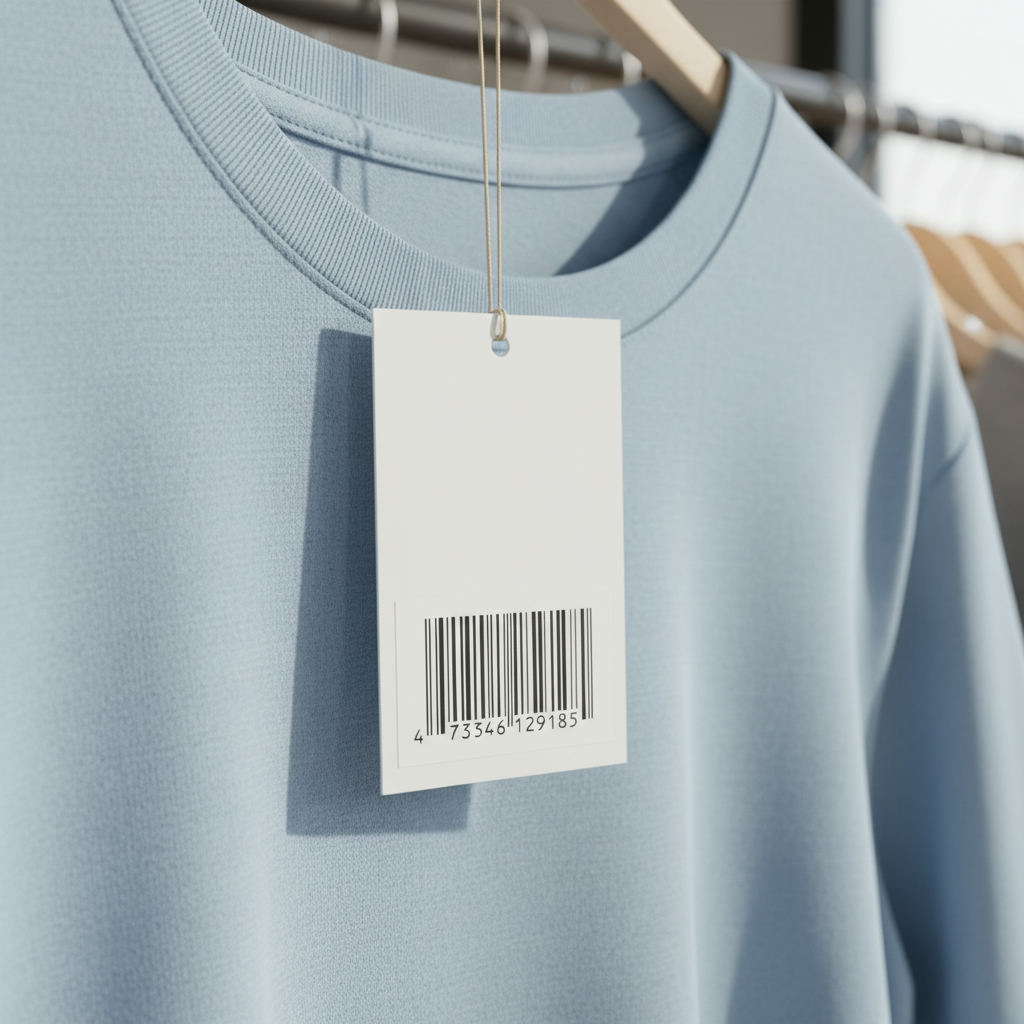
Knowing how to read a garment barcode is absolutely essential for any reseller looking to maximize their profits in 2026. Forget guessing games or just pulling prices out of thin air! We're talking about quickly identifying an item's style, color, and size, then accurately pricing it to sell fast and for top dollar. As a seasoned reseller, I've seen countless folks leave money on the table because they didn't know how to properly research an item. This guide will walk you through the precise steps to become a barcode-reading pro, helping you turn those thrift store finds into serious cash. From understanding those cryptic numbers on a clothing hangtag code to using advanced tools like FlipAI, you'll be an expert in no time. Let's dive in!
Related reading: How to Shop Vintage Clothing Stores Without Overpaying (2026) · Barcode Damaged or Missing? How to Price the Item Anyway (2026) · UPC Code Lookup — How to Scan a Barcode and See Real Value in 2026
Quick Answer: How to Read a Garment Barcode
To quickly read a garment barcode for reselling, you need to identify the brand, style number, color code, and size from the series of numbers. Use these details to search for "sold listings" on platforms like eBay or Poshmark to establish a realistic market value. Always account for condition, fees, and shipping to determine your actual profit potential.
Step 1: Identify the Item Exactly
Alright, superstar reseller, the very first step in understanding how to read a garment barcode is to become a detective. You need to zero in on every single detail of the item in front of you. Think of it like this: not all black Nike hoodies are created equal. Is it a vintage 90s piece or a current season athletic fit? The barcode is your secret weapon here, but you still need to visually confirm and cross-reference.
Break Down the Barcode Numbers
A typical UPC (Universal Product Code) or EAN (European Article Number) on a clothing hangtag code isn't just a random string of digits. It's often encoded with vital information. While you won't always find style, color, and size directly readable like English words, the sequence of numbers is unique to that specific product variant. The first few digits usually identify the manufacturer, the next set often points to the product or style number, and the final digits can denote a specific color, size, or other attribute. For example, a popular apparel brand might have a base style number like "12345". Then, "12345-001" might be the black version in small, "12345-002" the black in medium, and "12345-100" the white in small. Your job is to grab that full number sequence.
Look for Additional Tags and Markings
Beyond the primary garment barcode labels, scan the item for other tags. Inside tags often have "RN#" (Registered Identification Number for textile products), style numbers, season codes, or even manufacturing dates. Sometimes these numbers are more directly helpful than the barcode itself for finding comps. Let's say you're looking at a pair of Levi's jeans. The little white tag inside will have a series of numbers that indicate the model (e.g., 501, 505), the wash, and often the date of manufacture. These small details can make a huge difference in value. A vintage "Big E" Levi's from the 60s is worth a fortune compared to a modern pair!
Consider All Visual Clues
Even if the garment barcode labels are missing or unreadable, visual identification is key. What's the fabric composition? Are there unique details like embroidery, specific button styles, or unusual stitching? Is it part of a collaboration (e.g., Target x Lilly Pulitzer)? All these elements contribute to the item's identity and ultimately its market value. Getting this step right is foundational for accurate pricing. Without precise identification, you're just throwing darts in the dark, and that's not how we make money, right?
Step 2: Find Recent Completed Sales
Once you've identified your item, the next, and arguably most critical, step in how to read a garment barcode for profit is to find out what it *actually sells for*. And I mean "sells for," not what people are *asking* for. There's a huge difference! Don't get me started on how many times new resellers have shown me an item they found, saying "this is listed for $200!" only for me to find out it's been sitting at that price for a year and has never actually sold.
Focus on Sold Listings Only
Your holy grail in this step is "sold listings" or "completed listings." Most major reselling platforms like eBay, Poshmark, and Mercari have filters for this. When you input the details you gathered in Step 1 (brand, style number, color, size, etc.) into the search bar, make sure to activate the "sold items" filter. This shows you exactly what buyers have been willing to pay, and when. For example, on eBay, after you search, you can scroll down the left-hand menu and check the box for "Sold Items." On Poshmark, it's usually an option under "Availability" to select "Sold."
Aim for 3+ Comps
One sold listing is good, but three or more similar "comps" (comparable items) are even better. This gives you a more robust average and helps you spot outliers. If one item sold for $100, but two others sold for $40 and $50, the $100 sale might have been an anomaly or in pristine, NWT (New With Tags) condition. Your goal is to get a true picture of the market. Consider the condition of the sold items as well – were they "new with tags," "excellent used condition," or "good used condition"? This will help you benchmark against your own item.
Look Across Multiple Platforms
Don't limit yourself to just one platform. A vintage band t-shirt might fly off the shelves on eBay for $80, but only fetch $40 on Poshmark. Conversely, a designer dress might get more attention and a higher price on Poshmark than on Mercari. I always recommend checking at least two or three platforms to get the broadest possible view. This is where tools that show you comps from multiple sources really shine. Understanding the nuances of each marketplace is part of becoming an expert reseller. This research phase is non-negotiable for smart pricing strategies. For more general reselling tips, check out our reseller guide.
Step 3: Adjust for Condition and Completeness
Okay, so you've nailed down how to read a garment barcode, identified your item, and found some solid comps. Fantastic! But hold your horses before you slap a price tag on it. The next crucial step is to be brutally honest about your item's condition and completeness. This is where many aspiring resellers go wrong, overestimating their item's value because they've fallen in love with it or didn't notice a tiny flaw.
Evaluate Condition Honestly
Condition is king, queen, and the entire royal court in reselling. A "New With Tags" (NWT) item will almost always command a higher price than a "Used - Excellent Condition" item, which in turn will sell for more than "Used - Good Condition." Be meticulous:
- New With Tags (NWT): Exactly as it sounds. Original tags attached, never worn or washed. This is the top tier.
- New Without Tags (NWOT): Never worn or washed, but tags are missing. Still excellent, but often fetches slightly less than NWT.
- Excellent Used Condition (EUC): Worn a few times, no visible flaws like holes, stains, pilling, or fading. Looks almost new.
- Good Used Condition (GUC): Minor signs of wear, perhaps slight fading, minimal pilling, or a tiny, barely noticeable flaw. Still very wearable.
- Play/Fair/Acceptable Condition: More noticeable flaws, but still functional. Often priced low or for craft projects.
If your comp sold for $75 NWT, and your item is EUC, you can't expect the same price. You might need to adjust down by 15-30% depending on the item and its popularity. Be honest in your photos and description too – transparency builds trust with buyers.
Check for Completeness and Inclusions
Does your garment come with everything it originally did? For example, a designer jacket with its original dust bag, hanger, and authentication cards will always sell for more than one without. A pair of sneakers with the original box and extra laces adds significant value. For collectible apparel, even things like original packaging or special hangtags can boost the price. Missing components can significantly reduce the value, sometimes by 20-50% or more, especially for higher-end or collectible items. Always check your comps carefully to see what was included in their sale and adjust your expectations accordingly. This attention to detail will set you apart from the casual flipper.
Step 4: Subtract Fees and Shipping
Now for the fun part (or maybe not-so-fun, depending on the fees!): figuring out your actual take-home profit. Ignoring fees and shipping costs is one of the biggest rookie mistakes in reselling. You might think you're making a killing on a $50 sale, but after everything's said and done, you could be looking at a much smaller payout. This step is crucial for understanding how to read a garment barcode not just for identification, but for pure profit.
Understand Platform Fees
Every platform has its own fee structure, and they can vary wildly. It's vital to know these cold:
- Poshmark: For sales under $15, they take a flat $2.95. For sales $15 and over, it's a hefty 20% commission. So, if you sell a jacket for $50, Poshmark takes $10. Not insignificant! Learn more about selling on Poshmark here.
- eBay: Final value fees vary by category but are commonly around 13.25% for most clothing items up to a certain amount, plus a $0.30 transaction fee. If your $50 jacket sells on eBay, they'd take around $6.63 + $0.30 = $6.93.
- Mercari: Generally a 10% selling fee, plus a 2.9% + $0.50 payment processing fee. For that $50 jacket, Mercari would take $5 + $1.95 = $6.95.
- Depop: A flat 10% fee on the sale price (including shipping), plus a PayPal or Depop Payments transaction fee of 2.9% + $0.30.
- Etsy: A 6.5% transaction fee on the item price (plus shipping and gift wrapping), a 3% + $0.25 payment processing fee, and a $0.20 listing fee.
These fees add up quickly! Always factor them into your pricing strategy. If you want to make a minimum of $20 profit, and you know fees will eat up $10, your item needs to sell for at least $30 before even considering your cost of goods.
Calculate Shipping Costs
Shipping is another profit killer if not calculated correctly. Will you offer free shipping (meaning you absorb the cost), or will the buyer pay? If the buyer pays, are you setting a realistic shipping price? Heavy or bulky items can quickly eat into profits. Know your typical package weights and dimensions. A pair of jeans might be 1-2 lbs, a winter coat could be 3-5 lbs. Use shipping calculators from USPS, FedEx, or UPS, or utilize the flat-rate shipping options some platforms provide (like Poshmark's $7.97 rate for up to 5 lbs). Don't forget the cost of shipping supplies – poly mailers, bubble wrap, tape – they all add up!
Don't Forget Cost of Goods (COG)
Finally, subtract what you paid for the item (your COG). If you found that amazing designer top for $5 at the thrift store, that's part of your equation. Your profit is Sale Price - Fees - Shipping Costs (if you pay) - COG. A clear understanding of these numbers before you list is the difference between a thriving reselling business and a hobby that just breaks even. This is where a profit calculator comes in handy, and guess what? FlipAI has one built right in! This tool can be a game-changer for your bottom line. Check out our profit calculator guide to learn more about maximizing your earnings.
The Fast Way: Scan It with FlipAI
Let's be real. Doing all that manual research, toggling between apps, and crunching numbers for every single item? It's effective, yes, but it can be a massive time sink. As an expert reseller, I'm all about efficiency, and that's where FlipAI comes into play. If you're serious about making a living (or a serious side hustle income) from reselling, you need tools that make your life easier and faster, without sacrificing accuracy. This is particularly true when you're dealing with hundreds of garment barcode labels.
Instant Comps, No Guessing
This is my favorite part. Imagine you're at a busy estate sale, a bustling flea market, or even just going through your own closet. You spot an interesting garment, but you have no idea what it's truly worth. Instead of fumbling with Google searches or endlessly scrolling through eBay sold listings on your phone, you just whip out FlipAI. FlipAI lets you take a photo of any item or scan its barcode to instantly see current eBay asking prices (live listings, not sold prices) plus an AI estimate. No guessing. No Googling. Just point your camera at anything and know what it is actually worth in about 10 seconds. It's like having a team of research assistants in your pocket.
Why Speed Matters
In the world of reselling, especially at thrift stores or estate sales, speed equals opportunity. The faster you can identify and price an item, the quicker you can make a buying decision. That means you can snag that high-value piece before another reseller even finishes typing their search query. This is especially useful for items that have complex garment barcode labels. FlipAI's AI vision technology can often identify items even without a perfect barcode scan, analyzing visual characteristics to find similar items. This saves you precious minutes, which can translate into dozens, even hundreds of dollars over a sourcing trip.
Beyond Just Comps
FlipAI isn't just about comps, though that's a huge part of its power. It also offers a built-in profit calculator, taking the guesswork out of Step 4. You can quickly input your cost of goods and see your estimated profit after fees for various platforms. Plus, its cross-listing capabilities mean you can list your item on up to 9 different platforms with just a few taps once you've decided to sell. This integrated approach is a game-changer for serious resellers who want to scale their business and spend less time on tedious tasks and more time on finding great inventory. It's truly a secret weapon for anyone wondering how to read a garment barcode and turn that knowledge into consistent income. Learn more about our incredible barcode scanner feature!
Common Mistakes When Pricing Garments
Even with a solid understanding of how to read a garment barcode and find comps, there are still some pitfalls that can trip up even experienced resellers. I've made these mistakes myself (and learned the hard way!), so trust me when I say avoiding them will save you headaches and boost your bank account.
1. Using Retail Price as a Guide
This is probably the most common error. Just because something retailed for $200 doesn't mean it will sell for $200 on the secondary market. Retail prices are set by brands, often inflated to cover marketing, overhead, and profit margins that don't apply to you. A brand new, current season item might hold some of its retail value, but most pre-owned items, even NWT, will sell for a fraction of their original price. Your buyer is coming to you for a deal, remember? Always, always, *always* rely on *sold prices* from the secondary market, not the original retail price tag. That $200 jacket might only resell for $60-$80, so don't get starry-eyed looking at the original price.
2. Relying on Active Asking Prices
We touched on this earlier, but it bears repeating: active listings are *aspirations*, not realities. Anyone can list a basic t-shirt for $500, but that doesn't mean it will ever sell. Your competition might be listing an item identical to yours for $100, but if it's been sitting there for six months with no takers, it's not a true market indicator. Stick strictly to completed and sold listings. This gives you concrete evidence of what people are willing to pay and, crucially, what *has actually been paid*. If you only look at active listings, you're likely to overprice your items, leading to slow sales and stagnant inventory.
3. Ignoring Variants and Specifics
Remember our Nike hoodie example? This mistake ties directly back to Step 1. Not all "brand X sweater" items are the same. Ignoring small details like:"
- Colorways: A classic black t-shirt might sell for $20, but a limited-edition tie-dye version could fetch $70.
- Material composition: A 100% cashmere sweater is worth far more than a cashmere blend or acrylic one.
- Specific style numbers: Brands like Lululemon or Athleta often have specific style numbers that denote fit, fabric, or unique features. An "Align" pant sells for much more than a "Wunder Under" pant, even if they look similar to the untrained eye.
- Year or season of release: Vintage items are a different beast, but even modern items can have different values based on their release. A current season item will usually do better than one from five seasons ago, unless it's a coveted classic.
These nuances are embedded in that garment barcode information, and if you don't dig deep enough, you'll either underprice a gem or overprice a dud. Take the time to confirm you're comparing apples to apples, not apples to oranges.
4. Forgetting About Fees and Shipping
This is a surefire way to kill your profit margins. We went through it in Step 4, but it's such a common mistake that it's worth highlighting again. Thinking you made $50 on a sale when you actually walked away with $35 after fees, shipping, and your initial cost of goods is a real buzzkill. Always work backward from your desired profit. If you want to make $30 on an item you bought for $5, and you know fees and shipping will total $10, you need to list that item for at least $45. Neglecting these costs means you're operating on false assumptions about your profitability.
5. Not Taking Great Photos
While not directly related to how to read a garment barcode, poor photos can drastically reduce your selling price, making all your careful research moot. Even a perfectly priced item will languish if it's poorly photographed in bad lighting or looks wrinkled and unappealing. Invest in good lighting (natural daylight is often best!), a clean background, and clear, detailed shots of the front, back, tags, and any flaws. Great photos sell items faster and for more money, simple as that. And hey, FlipAI's cross-listing features can help you get those great photos out to multiple platforms efficiently once you've taken them!
Get Started with FlipAI Today!
So there you have it, future reselling rockstar! You've learned the ins and outs of how to read a garment barcode, identify specific details, find true market value, and account for all those pesky fees and shipping costs. This isn't just about moving inventory; it's about building a profitable, sustainable reselling business. No more guessing, no more underpricing, and definitely no more leaving money on the table!
Remember, the faster and more accurately you can value an item, the more confident you'll be in your purchasing decisions, and the more profit you'll put in your pocket. Whether you're at a thrift store, an estate sale, or just clearing out your own closet, having the right tools makes all the difference.
Ready to supercharge your reselling game? Download FlipAI for free today and experience the difference! It's your ultimate companion for finding, valuing, and listing items across multiple platforms. Stop guessing and start knowing what your items are truly worth. With FlipAI, you're not just selling; you're selling smarter. Don't let another hidden gem slip through your fingers because you didn't know its true value. Download FlipAI on the App Store and transform your reselling business now!
Join thousands of resellers already using FlipAIFrequently Asked Questions
What is a garment barcode and why is it important for reselling?
A garment barcode (usually a UPC or EAN) is a unique identifier for a clothing item, often found on the hangtag or internal labels. It encodes information like manufacturer, style number, color, and size. For resellers, understanding how to read a garment barcode is crucial because it allows for precise identification of an item, enabling accurate research of sold prices (comps) and leading to more profitable pricing strategies. Without it, valuing specific clothing items can be a challenging guesswork.
Can I really tell the style, color, and size just from the barcode numbers?
While you won't typically see explicit text like 'red' or 'size medium' in the barcode numbers, the full string of digits is unique to a specific variant of an item. The first digits usually identify the brand, followed by a product or style number. The later digits often differentiate between specific colors and sizes. By inputting the full barcode number into a search engine or a reselling tool like FlipAI, you can usually pull up product listings that reveal the exact style, color, and size associated with that unique code. This provides the exact match you need for accurate research.
What's the difference between asking price and sold price, and why does it matter?
The asking price is what a seller hopes to get for an item, found in active listings. The sold price is what a buyer actually paid for it, found in completed or sold listings. For reselling, only sold prices matter because they represent the true market value – what people are actually willing to pay. Relying on asking prices can lead to overpricing, slow sales, and stagnant inventory. Always filter your searches to show 'sold items' on platforms like eBay or Poshmark to get a realistic picture of an item's worth.
How do reselling platform fees affect my profit when selling clothing?
Reselling platform fees significantly impact your net profit. Each platform has a different fee structure; for example, Poshmark takes 20% on sales over $15, eBay charges around 13.25% plus a transaction fee for most clothing, and Mercari typically has a 10% selling fee plus payment processing. These fees are deducted from your sale price. To calculate your actual profit, you must subtract these fees, your shipping costs (if you cover them), and your initial cost of goods from the final sale price. Always factor these into your pricing strategy to ensure you're making a healthy margin.
How can FlipAI help me read garment barcodes and price items quickly?
FlipAI streamlines the entire pricing process. Instead of manually searching, you can simply take a photo of any garment or scan its barcode directly with your phone. FlipAI instantly accesses real-time market prices from multiple major reselling platforms like eBay, Poshmark, and Mercari, showing you what items have actually sold for. This eliminates guesswork and saves significant time. Additionally, FlipAI often includes a built-in profit calculator, helping you quickly factor in fees and cost of goods to determine your net profit, making your sourcing and pricing decisions faster and more informed.