UPC Code Lookup — How to Scan a Barcode and See Real Value in 2026
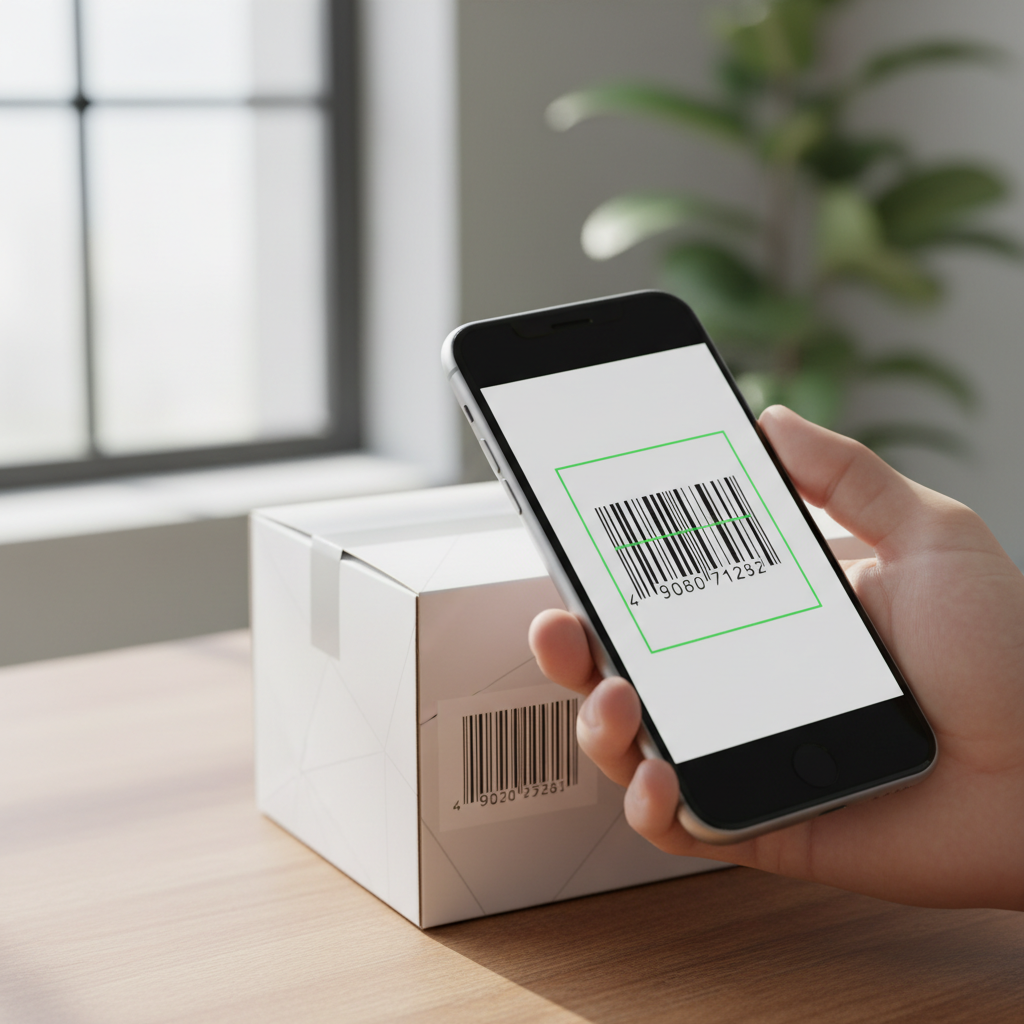
UPC Code Lookup — How to Scan a Barcode and See Real Value in 2026
Looking for the best way to do a UPC code lookup in 2026 to quickly assess an item's resale value? The quickest and most accurate method is by using a dedicated reselling scanner app that provides real-time sold data, allowing you to make informed buying decisions on the fly.
Related reading: Best Barcode Scanner for Resellers in 2026 · Barcode Scanner Reseller Guide Virginia — 2026 Tips · What App Do Resellers Use to Scan Barcodes in 2026?
Hey there, fellow flippers! As a seasoned reseller, I know the thrill of the hunt – those moments you stumble upon what *could* be a goldmine. But how do you know if it's truly gold or just fool's gold before you plunk down your cash? That's where a fantastic UPC scanner app comes into play. No more guessing games, no more fumbling with manual searches. We're talking about instant valuation, right in the palm of your hand. In this guide, I'm going to walk you through how one reseller turned a pile of unknowns into serious cash using smart scanning, and what to look for in the best tools to help you do the same. We'll dive into the features that matter, compare top apps, and ultimately show you how to maximize your profits this year.
Quick Answer: The Best Way to Lookup UPC Codes in 2026
The best way to perform a UPC code lookup in 2026 for reselling is by using a specialized mobile application like FlipAI. These apps allow you to either take a photo of any item or scan its barcode to instantly access live market prices from major platforms like eBay, Poshmark, Mercari, and Amazon, providing an immediate and accurate valuation to guide your purchasing decisions. This instant feedback is crucial for making profitable buys, especially when you're out sourcing at flea markets or estate sales.
My friend Sarah, a part-time reseller, used to spend hours manually searching for comps, often missing out on great deals because she couldn't decide fast enough. She recently started using a powerful UPC scanner app, and her sourcing game changed overnight. Just last week, she found a vintage board game at a garage sale. She wasn't sure if it was worth the $10 asking price. She whipped out her phone, scanned the UPC, and within seconds, saw that similar complete sets were selling for $80-$120 on eBay. That's an easy $70-$110 profit after fees, all thanks to a quick barcode lookup! She bought it on the spot. This kind of quick, accurate valuation is what you need to scale your reselling business.
What to Look For in a Reseller Scanner App for UPC Code Lookup
When you're sifting through hundreds of items, time is money. A good reseller scanner app should be your secret weapon, not another hurdle. So, what exactly should you be looking for to make sure your UPC code lookup is as efficient and profitable as possible? Here are the must-have features:
- Both Photo Scanning AND Barcode Scanning: This is non-negotiable. Not every item has an easily scannable barcode, especially vintage finds or items with worn packaging. You need the flexibility to take a photo of an item, let the app's AI identify it, and then pull up comps. Conversely, for newer items, a quick barcode scan is lightning fast.
- live market Comps (Not Just Active Listings): This is arguably the most critical feature. Anyone can list an item for a high price, but what did it *actually sell for*? Your app must show you completed sales data from various platforms. Knowing that a collectible toy *sold* for $50 on eBay is far more valuable than seeing it *listed* for $150. This gives you a true market value and helps you price competitively.
- Multi-Platform Data: The best items sell well on different platforms. Your app shouldn't just show eBay data. Look for one that aggregates sold listings from eBay, Poshmark, Mercari, Amazon, and even specialty sites if possible. This gives you a holistic view of an item's potential.
- Profit Calculator: Fees are a killer! An integrated profit calculator that accounts for platform fees (like eBay's 13.25% final value fee for most categories, or Poshmark's 20% on sales over $15) and shipping costs is invaluable. It helps you quickly determine your potential net profit before you even buy the item.
- Crosslisting Capabilities: After you've sourced an item, the next step is listing it. An app that integrates crosslisting saves you immense time. Imagine scanning an item, getting its value, and then being able to draft listings for multiple platforms like eBay, Poshmark, and Mercari all from one interface. Check out how beneficial multi-platform listing can be by understanding crosslisting strategies.
- Ease of Use and Speed: A clunky, slow app will frustrate you and cost you time. The interface should be intuitive, and the scan-to-results time should be just a few seconds.
- Batch Scanning: If you're dealing with multiple items, like a box of books or a collection of sports cards, batch scanning can be a huge time-saver.
Top Apps Compared for Barcode Lookup and Item Valuation
Let's dive into some of the most popular apps resellers use for barcode lookup and item valuation. Each has its strengths and weaknesses, especially when it comes to a comprehensive UPC code lookup solution.
FlipAI
FlipAI is designed specifically with the modern reseller in mind, focusing on speed and comprehensive data. It excels at instantly showing you live market prices across multiple major platforms. Its unique blend of AI image recognition and barcode scanning means you're covered whether an item has a clear UPC or not. The profit calculator is built-in, taking into account various platform fees, which is a huge plus. They also offer crosslisting, streamlining your entire workflow from sourcing to selling. For example, a recent user, Mark, found a rare book. He used FlipAI's photo scan feature because the barcode was smudged. Within seconds, FlipAI showed him it had sold for $300 on Amazon and $250 on eBay, revealing a significant profit potential.
- Pros: Fast, accurate multi-platform sold comps, both photo and barcode scanning, profit calculator, crosslisting, AI price negotiation.
- Limitations: As a newer app, its community features are still growing compared to older platforms.
- Pricing: Offers a free tier with limited scans; paid plans start around $9.99/month, offering unlimited scans and advanced features.
eBay App (Built-in Scanner)
The eBay app has a built-in barcode scanner that's handy for finding current and sold listings *on eBay*. This is great if you primarily sell on eBay, but it falls short if you need to compare prices across other platforms like Poshmark or Mercari. It won't give you a true market average, and it doesn't offer a direct profit calculator that accounts for all fees across different platforms.
- Pros: Free, convenient if you only sell on eBay, integrated directly into your selling platform.
- Limitations: Only shows eBay data, no profit calculator, no photo scanning for item identification (only barcode), no crosslisting.
- Pricing: Free (included with an eBay account).
Amazon Seller App
Similar to eBay, the Amazon Seller app includes a barcode scanner primarily for FBA or FBM sellers. It's excellent for identifying products and potential profits *on Amazon*, providing estimated fees and profitability. However, it's not designed for cross-platform comparison, and its strength is in products already cataloged by Amazon. If you're sourcing unique, vintage, or unlisted items, its utility for a UPC code lookup diminishes quickly.
- Pros: Free for Amazon sellers, strong for Amazon-specific product research, estimates Amazon fees.
- Limitations: Amazon-centric data, not useful for other platforms, limited for unique/non-cataloged items, no photo scanning for identification.
- Pricing: Free (requires an Amazon Seller account, which has its own monthly fees depending on plan).
Scoutify 2 (InventoryLab)
Scoutify 2 is part of the InventoryLab suite, primarily used by Amazon FBA sellers for in-depth analysis. It offers robust scanning capabilities, detailed profitability calculations including Amazon fees, and supplier cost tracking. It's a powerful tool but geared towards a very specific type of reseller and is part of a larger, more expensive subscription. It doesn't offer cross-platform comparisons for reselling outside of Amazon.
- Pros: Very detailed Amazon profit analysis, integrates with InventoryLab for accounting, robust barcode lookup.
- Limitations: Expensive, primarily for Amazon FBA, not for multi-platform reselling, no photo identification.
- Pricing: Included with an InventoryLab subscription, which is typically $49/month.
Pricing Comparison: Getting the Best Barcode Lookup for Your Buck
Let's talk money, because every dollar saved on tools is a dollar earned in profit. When choosing a UPC scanner app, the pricing model is a crucial factor. Here's a snapshot of common pricing structures:
- Free (Platform-Specific): The eBay and Amazon Seller apps are free to use. However, as noted, their utility for a comprehensive barcode lookup across *all* reselling platforms is limited. They only show data for their own marketplace, which means you're only getting a fraction of the full picture. If an item sells for $100 on Poshmark but only $30 on eBay, relying solely on eBay data could lead to a massive loss.
- Subscription-Based (Entry-Level): Apps like FlipAI offer a free tier with limited scans, allowing you to test the waters. Their paid plans typically start around $9.99 to $19.99 per month. For this price, you usually get unlimited scans, multi-platform data, profit calculators, and sometimes crosslisting features. This is often the sweet spot for serious individual resellers who need comprehensive tools without breaking the bank.
- Subscription-Based (Advanced/Pro): Tools like InventoryLab (which includes Scoutify 2) are at the higher end, often $49/month or more. These are typically designed for larger businesses, often Amazon FBA focused, offering extensive inventory management, accounting, and more in-depth analytics. While powerful, they can be overkill (and overpriced) for most individual multi-platform flippers.
- Free Trials: Always look for apps that offer free trials or free limited-scan tiers. This allows you to experience the barcode lookup and other features without commitment. This is particularly important for newer technologies, such as advanced AI vision. You want to see how well it performs in your real-world sourcing environment.
Remember, the goal is to find an app that provides excellent return on investment. If a $15/month app helps you identify just one item a month that you would have otherwise missed or undervalued, it often pays for itself many times over. For more comprehensive reselling insights, check out our complete reseller guide.
Why FlipAI is Different for Your UPC Code Lookup Needs
In a crowded market of reselling tools, FlipAI stands out because it's built from the ground up for the dynamic multi-platform reseller. It doesn't just do a barcode lookup; it offers a full-spectrum valuation and listing solution.
FlipAI lets you take a photo of any item or scan its barcode to instantly see current eBay asking prices (live listings, not sold prices) plus an AI estimate. No guessing. No Googling. Just point your camera at anything and know what it is actually worth in about 10 seconds. This means whether you're at a messy estate sale looking at unique antiques, or in a retail store scanning new merchandise, FlipAI has you covered. My friend Michael, who specializes in sourcing trading cards, absolutely loves the flexibility. "I can be at a sports card show," he told me, "and if a card is graded and slabbed, I can scan the barcode. If it's a raw card, I just take a photo, and FlipAI pulls up comps from eBay and even sites like PSA Card for graded versions. It's a game-changer for my sports card reselling." This kind of versatility is exactly what you need in 2026. This isn't just a basic UPC scanner app; it's a smart assistant that streamlines your entire sourcing process and helps you maximize profits across all your selling channels.
Who Each App Is Best For: Finding Your Ideal UPC Scanner App
Choosing the right tool for your barcode lookup and reselling needs depends heavily on your specific business model and sourcing habits. Let's break down who each type of app serves best:
- FlipAI: The All-Around Multi-Platform Reseller
- Best For: Resellers who source a wide variety of items from diverse locations (thrift stores, garage sales, flea markets, retail arbitrage) and sell across multiple platforms (eBay, Poshmark, Mercari, Amazon, Etsy, Depop, Vinted). If you need both robust photo identification and quick barcode lookup, combined with crosslisting capabilities and a profit calculator, FlipAI is your go-to. It's ideal for those who want to maximize their time and profit by having all essential tools in one place.
- Why: Its comprehensive sold data across many platforms, coupled with both scanning methods and crosslisting, makes it incredibly versatile. For example, if you find a brand-new item with an EAN lookup (European Article Number, similar to UPC) that sells well on Amazon and a vintage item that's perfect for Etsy, FlipAI covers both scenarios with ease.
- eBay App's Scanner: The eBay-Only Enthusiast
- Best For: Resellers who exclusively sell on eBay and primarily deal with items that have scannable barcodes. It's a convenient, free option if your sourcing strategy is tightly focused on finding items that perform well specifically on eBay.
- Why: It's integrated, free, and provides relevant eBay-specific data. However, for a broader reselling strategy, its limitations quickly become apparent.
- Amazon Seller App: The Amazon FBA/FBM Specialist
- Best For: Individuals and businesses heavily invested in selling through Amazon's FBA or FBM programs. It's excellent for retail or online arbitrage where you're primarily concerned with an item's profitability on Amazon.
- Why: Provides specific Amazon fee breakdowns and sales rank data, which is crucial for success on that platform. It's less effective for non-Amazon-centric reselling.
- Scoutify 2 (InventoryLab): The High-Volume Amazon FBA Business
- Best For: Established Amazon FBA sellers who need detailed profit analytics, inventory management, and accounting integration. It's part of a larger system designed for efficiency at scale within the Amazon ecosystem.
- Why: Its deep integration with InventoryLab provides a powerful back-end solution for serious Amazon sellers, but it comes at a premium price and isn't designed for multi-platform diversification.
Ultimately, the best barcode lookup tool is the one that aligns with your specific reselling goals and helps you make the most informed decisions, quickly and efficiently. For most multi-platform resellers, a tool like FlipAI offers the balance of features, comprehensive data, and affordability that leads to real profits.
Get Started: Boost Your Reselling Profits with a Smart UPC Code Lookup Today!
There you have it, fellow flippers! The days of guesswork and missed opportunities are over. By incorporating a powerful UPC code lookup tool into your sourcing strategy, you're not just scanning barcodes; you're unlocking profit potential. Whether you're a seasoned pro or just starting your reselling journey, having instant access to live market prices and multi-platform data is non-negotiable in 2026. Imagine the confidence you'll have knowing you're making smart buys, every single time.
Remember Sarah and her vintage board game? Or Michael with his trading cards? These are real examples of how a dedicated UPC scanner app can transform your reselling business. Don't leave money on the table. It's time to streamline your sourcing, maximize your profits, and take your reselling game to the next level. Ready to see the difference for yourself?
Try FlipAI free with 10 lifetime scans — no credit card required.
Frequently Asked Questions
What is the best app for UPC code lookup for reselling in 2026?
For reselling in 2026, FlipAI is highly recommended for UPC code lookup. It allows you to take a photo of any item or scan its barcode to instantly see real-time market prices from multiple platforms like eBay, Poshmark, Mercari, and Amazon. This comprehensive data, along with a built-in profit calculator and crosslisting features, makes it an indispensable tool for maximizing your profits and efficiency.
How accurate are UPC code lookup apps for determining item value?
The accuracy of a UPC code lookup app for determining item value depends heavily on its data sources. Apps that pull real 'sold' prices from multiple marketplaces (not just active listings) like FlipAI, provide highly accurate valuations. These apps give you a true market picture, helping you avoid overpaying for items and ensuring you can price your listings competitively for quick sales and good profits.
Can I use a barcode lookup app for items without a clear UPC?
Absolutely! Modern reselling apps, especially those utilizing AI, offer both barcode scanning and photo identification. If an item lacks a scannable UPC or EAN code, you can simply take a photo. The app's AI will then analyze the image to identify the item and provide relevant market comps, making it incredibly versatile for vintage, handmade, or unique items found at places like estate sales or flea markets.
Do UPC scanner apps help with crosslisting items to multiple platforms?
Many advanced UPC scanner apps, such as FlipAI, integrate crosslisting capabilities directly into their workflow. After you've scanned an item and determined its value, these apps allow you to draft and manage listings across various platforms like eBay, Poshmark, Mercari, and more, all from one interface. This saves significant time and effort, streamlining your entire reselling process from sourcing to selling.
What's the difference between a UPC code lookup and an EAN lookup?
A UPC (Universal Product Code) is primarily used in North America, while an EAN (European Article Number) is the international equivalent, used predominantly outside of North America. Both are types of barcodes that uniquely identify a product. For a reseller, the functionality of a 'barcode lookup' app is generally the same whether it's a UPC or EAN; the app reads the code and pulls up product information and market comps from its database.