Barcode Damaged or Missing? How to Price the Item Anyway (2026)
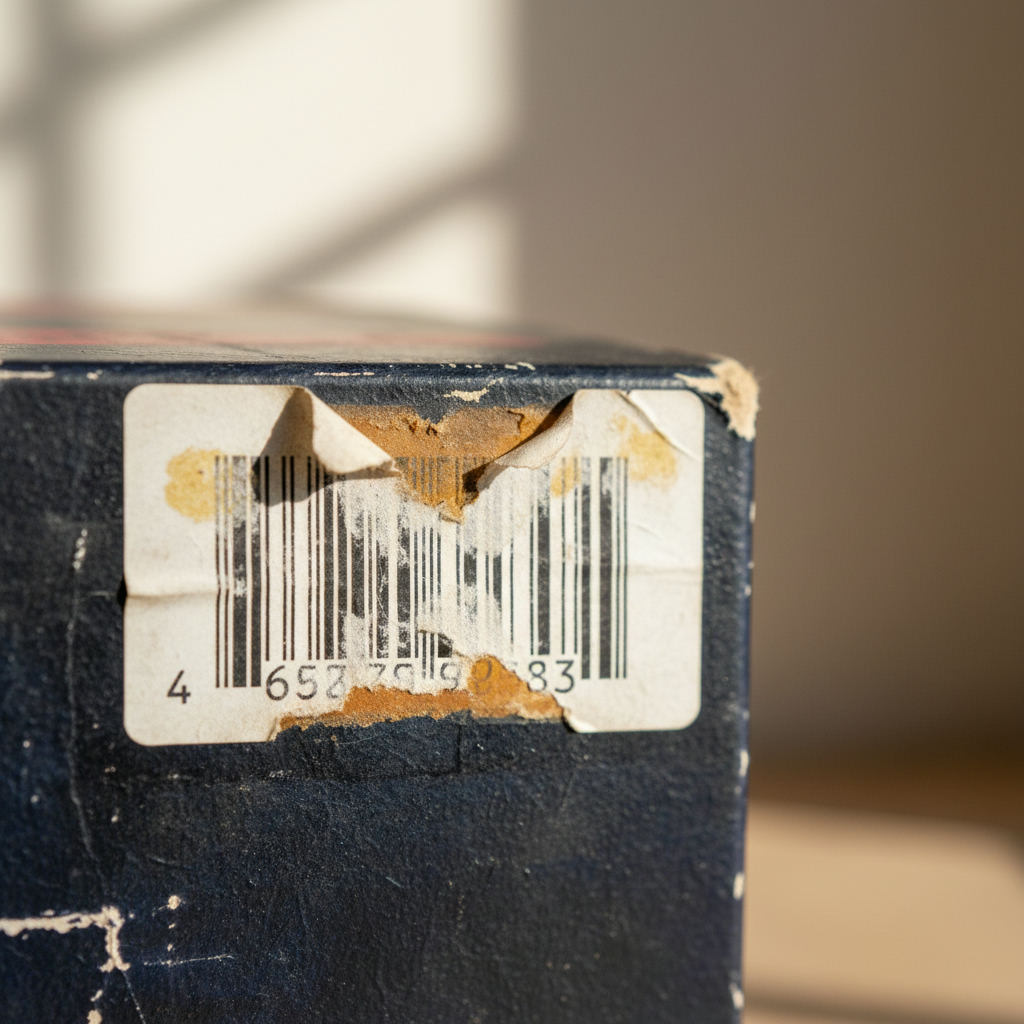
When you encounter an item where the barcode damaged or missing, you can still accurately price it for resale by performing a detailed manual search for comparable sold listings, meticulously identifying the item's specifics, and then adjusting for condition, completeness, and platform fees. This post will walk you through my exact process for turning those seemingly unidentifiable treasures into cold, hard cash on platforms like eBay, Poshmark, Mercari, and more, even when that pesky barcode won't scan.
Related reading: Best Barcode Scanner for Resellers in 2026 · Barcode Scanner Reseller Guide Virginia — 2026 Tips · What App Do Resellers Use to Scan Barcodes in 2026?
As a seasoned reseller, I've come across countless items with a barcode won't scan situation. It's a common hurdle, but certainly not a roadblock to profit! My goal is to empower you to confidently research and price any item, transforming what might seem like a liability into a valuable asset in your inventory. We're going to dive deep into how I tackle these challenges, ensuring you never leave profit on the table just because a label is scuffed or gone. Ready to master the art of pricing without a perfect barcode?
Quick Answer: How to Price an Item When the Barcode is Damaged or Missing
When faced with a barcode damaged or missing item, your best bet is to conduct a thorough manual search. Start by precisely identifying the item's brand, model, and unique features. Next, search for recent sold listings on major reselling platforms, focusing on exact matches, and then adjust the potential selling price based on your item's condition, completeness, and the final selling fees of your chosen platform. This methodical approach ensures you get the most accurate valuation without relying on a non-existent or unreadable barcode.
It's all about being a detective, looking for clues that help you build a complete picture of your item's market value. This method bypasses the need for a scannable barcode entirely, relying instead on keen observation and smart research. You'll learn to spot the details that matter and translate those into a profitable price point. Many resellers get intimidated by a no barcode on item scenario, but with these steps, you'll see it's just another opportunity to shine and prove your reselling prowess. Trust me, I've seen some incredible flips from items where the barcode was long gone!
Step 1: Identify the Item Exactly
The very first, and arguably most crucial, step when you have a barcode damaged or missing is to become an expert on the item itself. Forget the barcode for a moment; your mission is to extract every piece of identifying information from the item, its packaging (if any remains), and any accompanying documentation. Think of yourself as a forensic investigator! This is where you dig deep to uncover the brand, specific model number, year of manufacture (if visible), unique serial numbers, color variations, size, material composition, and any distinct features or markings.
For example, if you find a vintage toy with a barcode won't scan, look for brand names molded into the plastic, copyright dates, country of origin, or character names. For electronics, scour the back or bottom for tiny labels with model numbers like 'Sony Walkman WM-DD30' or 'Nintendo Game Boy DMG-01'. Clothing might have care tags with style numbers or production codes in addition to brand and size. Don't overlook subtle details – a specific button style, a unique stitching pattern, or a particular shade of blue can make all the difference in finding accurate comps. Even a small detail can narrow down your search considerably. Write down everything you find, no matter how insignificant it seems at first glance. This meticulous identification process is the bedrock of accurate pricing when a traditional barcode isn't an option. Without this precise information, your searches in the next step will be too broad, leading to inaccurate pricing.
Step 2: Find Recent Completed Sales (Sold Listings Only)
Once you've precisely identified your item from Step 1, the next move is to hit the pavement – the digital pavement, that is – and find out what similar items have actually *sold* for. This is paramount when your barcode damaged or missing situation means you can't just scan and go. I cannot stress this enough: you are looking for completed sales, not active listings or retail prices. Active listings are just what sellers *hope* to get, and retail prices are often irrelevant for pre-owned goods. Focus on eBay's sold listings filter, Poshmark's 'Sold' filter, or Mercari's 'Sold' toggle. These are your goldmines!
Your goal is to find at least three (ideally more) comparable sold listings. Use the precise details you gathered: brand, model, color, size, condition keywords (e.g., 'new with tags', 'pre-owned excellent', 'for parts'), and any unique identifiers. For instance, if you have a vintage camera, search for 'Polaroid SX-70 Alpha 1 sold'. Pay close attention to the date of sale; recent sales (within the last 90 days, or even 30 days for fast-moving items) are far more reliable than sales from a year ago. Market demand shifts, so freshness matters. If you find a range of prices, note the average and try to understand *why* some sold for more (e.g., better condition, rare variant, original box included, lower shipping cost). This step requires a bit of patience and detective work, but it's where you genuinely discover the market value for your no barcode on item treasure. Understanding these real-world transactions is key to profitable reselling. For more advanced pricing strategies, check out our reseller guide!
Step 3: Adjust for Condition and Completeness
After you've gathered your sold listings, the next critical step for any barcode damaged or missing item is to meticulously compare your item's condition and completeness to those sold comps. This is where you bridge the gap between what others sold and what your item is truly worth. An item in pristine, like-new condition with all original accessories and packaging will command a significantly higher price than an item with wear, missing parts, or no original box.
Condition Assessment:
- New With Tags (NWT) / New In Box (NIB): This is the highest tier. Does your item genuinely fit here? Even a tiny flaw means it's not NWT.
- Excellent / Like New: Minimal signs of use, fully functional, no major flaws.
- Good: Moderate signs of use, minor cosmetic imperfections, fully functional.
- Fair: Significant wear, noticeable flaws, but still functional.
- Poor / For Parts: Heavily damaged, non-functional, only useful for components.
Be brutally honest with your assessment. If your item is 'Good' but the comps you found were 'Excellent', you'll need to adjust your price downwards, perhaps by 10-25% depending on the item and flaw. Conversely, if your item is NWT and the comps were mostly 'Good', you can likely price higher. Don't forget to consider if your barcode won't scan because of heavy damage to the item itself; this directly impacts value.
Completeness Checklist:
- Original Packaging: Does it have the box, manual, tags? This can add 10-30% to value, especially for collectibles or electronics.
- Accessories: Are all cables, chargers, remote controls, extra pieces present? Missing accessories can drastically reduce value.
- Documentation: Warranties, instruction manuals, certificates of authenticity.
A complete item, even if it's pre-owned, will always fetch more. If your item is missing something crucial that was present in the sold comps, you must lower your expected price. This careful adjustment ensures your price is realistic and competitive, maximizing your profit even when a no barcode on item situation forces a manual appraisal.
Step 4: Subtract Fees and Shipping
Okay, you've identified your barcode damaged or missing item, found solid comps, and adjusted for its condition. Now, before you set that final price, you absolutely *must* factor in the costs of doing business. This includes platform fees and shipping expenses. Many new resellers overlook this, leading to disappointing profit margins. These aren't just suggestions; they are non-negotiable costs that eat into your gross sale price.
Platform Fees:
- eBay: For most categories, final value fees range from 12.9% to 15% (plus a $0.30 per order fee), but can be as high as 15% for certain items like musical instruments or NFTs. For example, clothing is often 13.25% for amounts up to $7,500.
- Poshmark: Simple and straightforward: 20% commission on sales of $15 or more, and a flat $2.95 for sales under $15.
- Mercari: Charges a 10% selling fee, plus a payment processing fee of 2.9% + $0.50 per sale.
- Etsy: Has a transaction fee of 6.5% on the sale price (including shipping), a payment processing fee of 3% + $0.25 (for US sellers), and a listing fee of $0.20 per item.
- Depop/Vinted: Depop generally charges a 10% selling fee on the item price (including shipping), while Vinted charges buyer protection fees instead of seller fees, making it attractive for some.
Always check the latest fee structure for your chosen platform, as they can change. Some platforms also charge fees on shipping costs, not just the item price, which can add up quickly.
Shipping Costs:
Consider the cost of packaging materials (boxes, bubble wrap, poly mailers) and the actual postage. Will you offer free shipping (and build it into your price) or charge the buyer? If you charge the buyer, ensure your shipping estimate is accurate. For heavier or larger items, shipping can be a significant cost. Always get an estimate through USPS, FedEx, or UPS based on weight and dimensions. For items where the barcode won't scan, you might need to weigh and measure it manually to get an accurate shipping estimate, which is crucial for calculating profit.
Let's say you're selling an item for $100 on eBay with 13.25% fees and $10 for shipping/materials. Your actual take-home would be $100 - $13.25 (fees) - $10 (shipping) - $0.30 (per order fee) = $76.45. By subtracting these costs upfront, you can set a price that ensures you reach your desired profit margin, even if you started with a no barcode on item scenario. Using a reliable profit calculator can make this step much easier and more precise.
The Fast Way: Scan It With FlipAI
While the manual process is absolutely essential when you have a barcode damaged or missing, let's be real: sometimes you just need to move fast. Imagine being at a busy flea market, an estate sale, or even just clearing out your garage, and you stumble upon a goldmine of items where the barcode is either scuffed, obscured, or simply never existed. That's where a tool like FlipAI becomes your ultimate secret weapon. You don't have to spend precious time Googling or sifting through endless active listings.
Instead of manually typing in every detail, dealing with a barcode won't scan headache, or trying to decipher cryptic model numbers, FlipAI streamlines the entire process. FlipAI lets you take a photo of any item or scan its barcode to instantly see current eBay asking prices (live listings, not sold prices) plus an AI estimate. No guessing. No Googling. Just point your camera at anything and know what it is actually worth in about 10 seconds. This means you can quickly validate if an item is worth picking up or even if it's worth the time to do a deeper dive. When you're dealing with a large volume of inventory or limited time, this feature is invaluable. It helps you prioritize what to sell and what to pass on, ensuring you're always making the most profitable decisions without being slowed down by a missing or damaged barcode. I use its AI vision feature all the time for those tricky, unique finds, making my sourcing trips incredibly efficient. For more tips on sourcing, check out our flea market app guide.
Common Mistakes When Pricing Without a Barcode
Even with the best intentions, resellers often fall into common traps when they're trying to price an item where the barcode damaged or missing. Avoiding these pitfalls will save you time, frustration, and most importantly, ensure you don't leave money on the table or price yourself out of a sale.
1. Using Retail Price as a Guide:
This is probably the biggest and most frequent mistake. Just because an item sold for $100 new in a store doesn't mean a pre-owned, no barcode on item will fetch anywhere near that. Retail prices reflect new condition, warranties, and often the brand's marketing. Resale value is a completely different beast, influenced by demand for used goods, current trends, and condition. Always, always, *always* focus on sold comps for pre-owned items, never retail prices.
2. Using Asking Prices (Active Listings):
Another big no-no. Browsing active listings on eBay or Poshmark might give you a sense of what others are *hoping* to get, but it doesn't tell you what buyers are actually *paying*. Many items sit for weeks or months at high asking prices before finally selling at a much lower price or being removed entirely. When your barcode won't scan, it's tempting to grab the first price you see, but resist! Stick to sold listings to gauge true market value. A high asking price is just a dream until it's a realized sale.
3. Ignoring Variants and Specifics:
As we discussed in Step 1, precise identification is key. A 'blue shirt' isn't just a 'blue shirt'. Is it a specific shade of blue? A rare limited edition? Made from a premium fabric? The smallest variant can dramatically affect price. For example, a vintage action figure with a specific accessory might be worth $100, while the same figure without that accessory might only be $20. When the barcode damaged or missing, you can't rely on a simple scan to differentiate, so your manual research has to be spot on. Missing these subtle differences can lead to significant underpricing or overpricing.
4. Forgetting About Fees and Shipping:
This was Step 4 for a reason! New sellers often look at a $50 sold price and think they've made $50. Nope! Those platform fees (like eBay's 13.25% or Poshmark's 20%) and shipping costs eat into that profit. Always calculate your net profit before setting your final list price. Don't let your no barcode on item stress make you forget the fundamental economics of reselling!
5. Not Accounting for Seasonality or Trend Fluctuations:
The demand and price for certain items can be highly seasonal or trend-dependent. Christmas decorations sell well before December, not in July. Trendy fashion items might fetch high prices for a few months and then plummet. When researching comps for an item with a barcode won't scan, consider if the recent sales are influenced by a temporary spike in demand. This often requires looking at a wider range of sold dates or checking if the item is part of a current craze.
Get Started with FlipAI
Navigating the world of reselling, especially when dealing with a barcode damaged or missing item, can feel like a puzzle. But with the right tools and strategies, it becomes a profitable adventure. You've learned how to meticulously identify, research, adjust, and account for costs, transforming potential head-scratchers into successful flips. My journey as a reseller has taught me that diligence pays off, and having powerful resources at your fingertips makes all the difference.
Even though this guide empowers you to handle any barcode won't scan situation manually, imagine how much faster and more efficient your process could be with a dedicated reselling companion. That's exactly why I rely on FlipAI. It simplifies the entire pricing process, letting me make smart, data-driven decisions on the fly, whether I'm at an estate sale or sorting through a thrift store haul. It's truly a game-changer for anyone serious about reselling, helping you identify potential profits from items with or without scannable barcodes.
Ready to supercharge your reselling business and never second-guess an item's value again? Say goodbye to the frustrations of a no barcode on item and hello to confident pricing. It's time to leverage the power of real-time market data directly from your phone. Give your reselling efforts the competitive edge they deserve in 2026.
Download FlipAI free and scan your first item in under 60 seconds.Frequently Asked Questions
What if my item has no barcode at all?
If an item has no barcode on it, you'll need to rely entirely on manual research. Focus on step-by-step identification: brand, model, unique markings, and any other distinguishing features. Use these details to search for sold listings on platforms like eBay, Poshmark, or Mercari. Always look for exactly matching items that have recently sold to determine its true market value, just as you would for a damaged barcode.
How do I find 'sold listings' on eBay or Poshmark?
On eBay, after searching for an item, scroll down the left-hand sidebar (or tap 'Filter' on mobile) and select 'Sold Items' under the 'Show Only' section. This will filter results to only show items that have actually sold. On Poshmark, after searching, look for a filter option that says 'Sold' (often next to 'Price Range' or 'Brand'). Mercari also has a 'Sold' toggle at the top of search results. Always prioritize these over active listings.
Why shouldn't I use the retail price to determine value?
Retail price reflects the item's brand-new cost from a store, often including marketing, warranties, and new-product demand. For pre-owned items, these factors don't apply. The resale market values items differently, based on current demand for used goods, item condition, and how easily it can be acquired elsewhere. Relying on retail price will almost always lead to overpricing and slow sales for your second-hand items.
How many comparable sales do I need to find?
I recommend finding at least three (3) comparable sold listings to get a reliable average. The more data points you have, the more accurate your pricing will be. If you can only find one or two, ensure they are very recent and match your item's condition and completeness extremely closely. If you find many, look for a clear price range and identify why some sold for more (e.g., better condition, included accessories).
What's the best way to account for platform fees?
To account for platform fees effectively, you need to know the specific percentage and any fixed fees of the platform you plan to sell on (e.g., eBay's ~13.25%, Poshmark's 20%, Mercari's 10% + processing). Once you have a target selling price from your comps, work backward. Subtract the estimated fees (and shipping costs if you're covering them) from that target price to see your net profit. Better yet, use a profit calculator or FlipAI's built-in tools to do this automatically.