How Much Is My Jewelry Worth in 2026? Gold, Silver and Costume
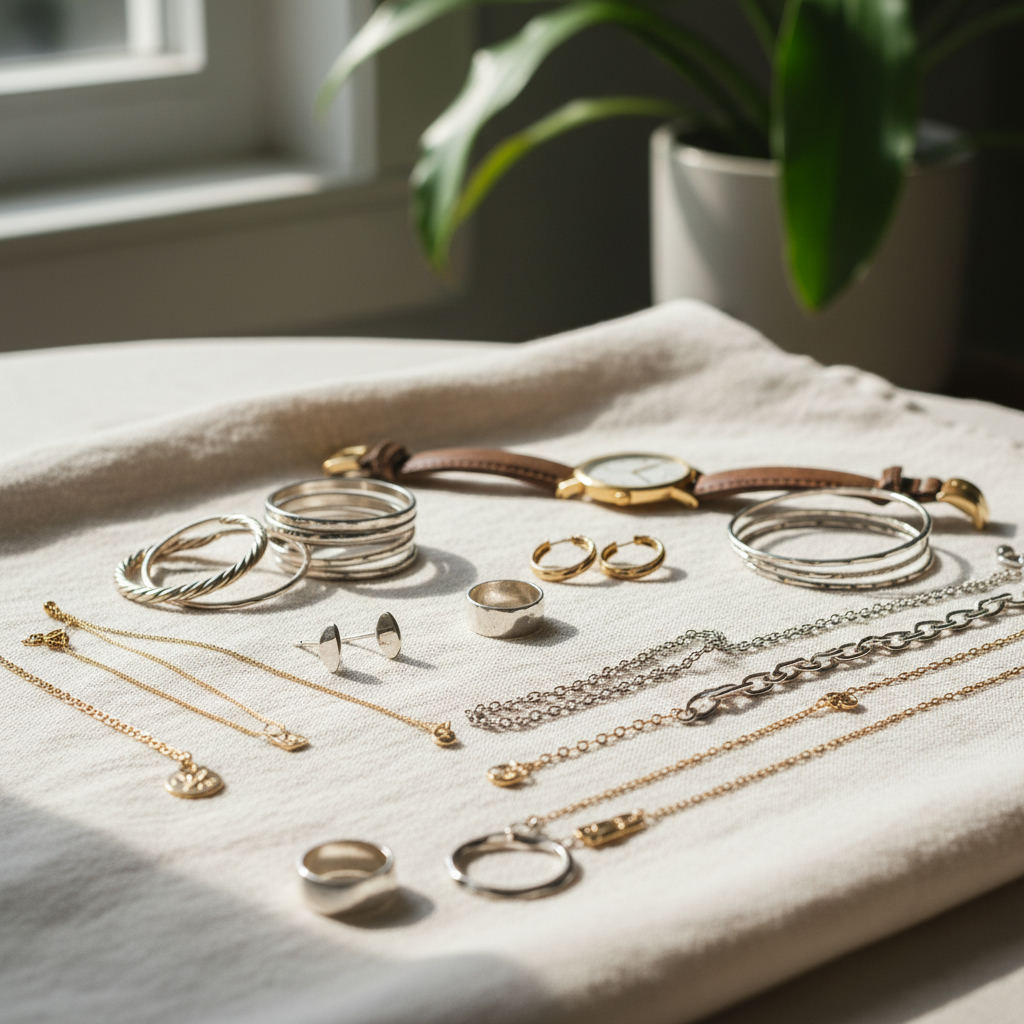
So, you're holding a piece of jewelry and wondering, "how much is my jewelry worth?" You've come to the right place! In 2026, the value of your jewelry, whether it's fine gold, shimmering silver, or eye-catching costume pieces, can range from a few dollars to thousands, depending on several key factors I'll break down for you. As an expert reseller, I’ve seen countless pieces pass through my hands, and I can tell you that understanding what makes a piece valuable is half the battle. This guide will walk you through assessing your jewelry's potential, finding its true market value, and getting the best price when you decide to sell. We'll dive into the nuances of condition, rarity, and the best platforms to list your treasures, making sure you're equipped with all the info you need to turn your bling into big bucks. If you're serious about reselling, you'll find our reseller guide super helpful for broader tips!
Related reading: How Much Is My iPhone Worth in 2026? Real Resale Numbers · How Much It Worth? Checking Real Resale Value in 2026 · Art Deco Jewelry Identification and Value: The 2026 Guide
Quick answer: How Much Is My Jewelry Worth in 2026?
Alright, let's get right to it. The quick answer to "how much is my jewelry worth" in 2026 depends heavily on its material, condition, and market demand. Generally, you can expect the following ranges:
- Fine Gold Jewelry (10k, 14k, 18k, 24k): For scrap gold, you might get $30 to $60 per gram, depending on the karat and current market prices. For wearable pieces, especially those with gemstones or designer names, you could be looking at $100 for a simple ring up to $5,000+ for intricate necklaces or pieces with significant diamonds/gemstones. A plain 14k gold chain might sell for $200-$500, while a substantial 18k designer bracelet could easily fetch $1,500-$3,000.
- Sterling Silver Jewelry: Scrap silver often yields around $0.50 to $1.50 per gram, but again, wearable pieces are where the real value often lies. A simple sterling silver ring might sell for $15-$40, while a vintage Navajo piece or a Tiffany & Co. bracelet could command $150-$800, sometimes even more for rare items.
- Costume Jewelry: This category has the widest range. Most modern costume jewelry sells for $5-$30. However, vintage or antique costume jewelry from renowned designers like Miriam Haskell, Chanel, or Eisenberg can surprisingly fetch anywhere from $50 to $500, with some exceptional and rare pieces soaring past $1,000. I once sold a vintage Art Deco brooch for $350 that I picked up for $5 at a garage sale!
- Jewelry with Gemstones (precious & semi-precious): This adds another layer of complexity. A small diamond solitaire ring could be worth $300-$1,500, while a sapphire or ruby pendant might go for $200-$2,000+. Factors like the 4 Cs (cut, color, clarity, carat weight) for diamonds, and origin/treatment for colored stones, dramatically impact the final price.
Always remember, these are estimates. The true jewelry value is what someone is willing to pay. That's why checking real sold prices is crucial, which we'll get into soon.
Why the price varies so much when determining jewelry value
It’s not just about the sparkle! When you're trying to figure out "how much is my jewelry worth," a multitude of factors come into play, making each piece a unique puzzle. Understanding these variables is key to accurately assessing your jewelry value.
Condition is King (or Queen!)
Just like with anything else you resell, the condition of your jewelry is paramount. Is it pristine, with no scratches or dents? Are all stones secure and sparkling? Is the clasp fully functional? A piece in excellent condition will always command a higher price than one that’s damaged, tarnished, or missing stones. For example, a vintage sterling silver bracelet in perfect shape might sell for $150, while the exact same piece with a broken clasp and heavy tarnish might only fetch $50 or even just its scrap metal value. Always be honest about any flaws when listing your items – transparency builds trust with buyers.
Rarity and Uniqueness Factor
Is your piece a dime a dozen, or is it a rare gem? Limited edition pieces, antique jewelry, or items from highly sought-after designers will naturally have a higher jewelry value. Think about unique handcrafted pieces, historical artifacts, or jewelry made with now-scarce materials. For instance, a mass-produced modern necklace might sell for $20, but a one-of-a-kind Art Deco brooch from the 1920s could easily go for $400 or more, especially if it’s well-preserved. Even some costume jewelry, if it's a rare designer piece, can fetch a surprising amount.
Material and Craftsmanship
This is where gold, silver, and gemstones truly shine. The karat weight of gold (10k, 14k, 18k, 24k) directly influences its inherent value, as does the purity of silver (sterling .925 is the most common for jewelry). For pieces with gemstones, factors like the 4 Cs (cut, color, clarity, carat weight) for diamonds, and the quality, origin, and treatment of colored stones (sapphires, rubies, emeralds, etc.) are critical. Expert craftsmanship, intricate designs, and recognizable designer signatures (e.g., Tiffany & Co., Cartier, David Yurman) also add significant value beyond the raw materials. This is why a simple gold band might be worth its scrap gold value, but a designer gold ring with intricate details will be worth much more.
Market Demand and Trends
Fashion trends come and go, and so does the demand for certain styles of jewelry. Vintage styles, specific gemstone types, or even certain eras (e.g., Art Deco, Mid-Century Modern) can suddenly surge in popularity, driving prices up. Keeping an eye on current trends can help you decide when to sell. Sometimes, holding onto a piece for a few years can drastically increase its jewelry value if its style comes back into vogue. For example, chunky gold chains might be hot one year, while delicate layered necklaces dominate the next.
Provenance and Documentation
Does your jewelry have a story? If you can prove its origin, previous ownership (especially if it belonged to a celebrity or historical figure), or if it comes with original boxes, paperwork, or appraisals, its value can skyrocket. This is particularly true for high-end pieces or antiques. Documentation provides authenticity and a narrative that buyers often find compelling, adding significantly to the perceived and actual jewelry value.
Where to check real sold prices, not asking prices
This is a critical step in accurately answering "how much is my jewelry worth." You absolutely cannot rely on asking prices. Why? Because anyone can list anything for any price, but that doesn't mean it will sell. We're interested in what buyers are actually *paying* for similar items. This is where sold comps come in, and there are several excellent places to find them:
eBay Sold Listings
eBay is my go-to for finding real sold prices for almost anything, including jewelry. They have a massive database of past transactions. To find sold comps: go to eBay, type in a detailed description of your item (e.g., "vintage sterling silver turquoise ring size 7" or "14k gold herringbone chain 18 inch"), then filter your search results by "Sold Items" and "Completed Items" (usually found in the left-hand sidebar under 'Show only'). This will show you exactly what similar items have sold for, their condition, and how they were listed. Pay close attention to items that are identical or very close to yours in terms of material, design, condition, and any hallmarks. This is invaluable data when calculating your potential profit.
Poshmark and Mercari Sold Listings
For more contemporary, fashion-forward, or even some vintage costume jewelry, Poshmark and Mercari are fantastic resources. Both platforms have millions of users and a strong secondary market. On Poshmark, you can search for your item, then toggle the 'Availability' filter to 'Sold Items'. Mercari offers a similar function under its search filters. These platforms are particularly good for branded fashion jewelry, sterling silver, and mid-range gold pieces. You'll often see specific brands like Kendra Scott, Kate Spade, or lesser-known artisan jewelers with clear sold prices. This can be especially helpful for determining the worth of your costume jewelry.
Specialized Auction Sites and Appraisers
For high-value items – think significant diamonds, rare gemstones, or important estate pieces – you might need to look beyond the usual suspects. Sites like Heritage Auctions, Sotheby's, or even local reputable auction houses often have publicly available past auction results. For truly unique or very expensive items, a professional jewelry appraiser is your best bet. They can provide a formal valuation, often necessary for insurance, and can give you an expert opinion on your jewelry value that no online search can replicate. While there's a fee, it's a worthwhile investment for pieces potentially worth thousands.
FlipAI: Your Secret Weapon for Instant Valuation
Now, I know what you're thinking: "Searching through all those sites takes forever!" And you're right. That's why I absolutely love FlipAI. It simplifies this entire process down to seconds. Instead of endless searching and filtering, FlipAI lets you take a photo of any item or scan its barcode to instantly see real sold prices from eBay, Poshmark, Mercari, Amazon, and more. No guessing. No Googling. Just point your camera at anything and know what it is actually worth in about 10 seconds. This is a game-changer for speed and accuracy, especially when you're sourcing inventory at flea markets or estate sales. It's like having an expert appraiser in your pocket, telling you exactly how much is my jewelry worth at that moment.
Best platform to sell it and maximize your profit
Knowing "how much is my jewelry worth" is one thing; getting that value is another! Choosing the right platform to sell your jewelry is crucial for maximizing your profit and finding the right buyer. Different types of jewelry perform best on different marketplaces, and understanding their fee structures is key.
eBay: The Broad Market for All Jewelry Types
eBay is the giant of online reselling and a strong contender for almost any type of jewelry. From fine gold and silver to vintage costume pieces, eBay attracts a global audience. It's excellent for finding buyers for niche items or for maximizing your gold scrap value by listing lots. However, be aware of their fees: eBay typically charges a final value fee of 13.25% for most jewelry categories on the total sale amount (item price + shipping), with a maximum fee of $750. Payment processing fees through managed payments are usually included in this. For a $100 piece, you'd pay about $13.25 in fees. The sheer volume of buyers often makes this worthwhile.
Poshmark: Fashion-Forward & Designer Pieces
If you have trendy, contemporary, or designer jewelry (think Kendra Scott, Tiffany & Co., Pandora), Poshmark is a fantastic choice. It has a very active social community that loves fashion and accessories. Poshmark's fee structure is straightforward: for sales under $15, they take a flat $2.95 commission. For sales of $15 or more, they take a 20% commission. So, if you sell a $100 necklace, you'll pay $20 in fees. While the percentage is higher than eBay for items over $15, Poshmark's engaged user base and ease of listing often lead to quicker sales for the right items. This platform is also great for mid-tier costume jewelry worth more than a few dollars.
Mercari: Easy Selling for a Wide Range
Mercari is another user-friendly platform that's great for selling a variety of items, including jewelry. It's often seen as a good middle ground between eBay and Poshmark, attracting buyers looking for both everyday items and some higher-end pieces. Mercari charges a 10% selling fee based on the final sale price (item price + shipping) and a 2.9% + $0.50 payment processing fee. So, on a $100 sale, you'd pay $10 in selling fees and about $3.40 in processing fees, totaling around $13.40. Its simplicity and broad appeal make it a solid choice, especially for silver and good quality costume jewelry.
Etsy: Handmade, Vintage, and Unique
If your jewelry is handmade, vintage (over 20 years old), or truly unique and artisan, Etsy is your prime destination. Buyers on Etsy are specifically looking for unique, often handcrafted items that tell a story. While it might take longer to sell generic pieces, specialized vintage or handmade jewelry can command premium prices here. Etsy charges a $0.20 listing fee (for four months), a 6.5% transaction fee on the item price, plus a 3% + $0.25 payment processing fee. For a $100 handmade necklace, you'd pay about $6.50 in transaction fees and $3.25 in processing fees, plus the listing fee. The specific niche can bring in very dedicated buyers who appreciate the craftsmanship.
Facebook Marketplace & Local Sales: No Fees, but Limited Reach
For lower-value items, or if you prefer a quick, local transaction with no selling fees, Facebook Marketplace can be effective. It's great for costume jewelry or pieces you want to get rid of quickly without the hassle of shipping. However, your reach is limited to your local area unless you opt for shipping, and you'll often encounter lower offers. Always meet in a public place for safety. For high-value items, I’d generally avoid this unless you're selling to a trusted, known buyer or a reputable local jeweler.
Remember, you don't have to pick just one! Many resellers use a cross-listing strategy to maximize exposure. Tools like FlipAI's cross-listing feature can help you list your jewelry on multiple platforms efficiently, reaching a wider audience and increasing your chances of a quicker sale at the best possible price. Just make sure to remove items promptly once sold on one platform.
How FlipAI shows real sold prices in seconds
Figuring out "how much is my jewelry worth" used to be a tedious, time-consuming process of searching through countless sold listings on different platforms. But honestly, who has time for that when you're trying to source inventory or just declutter your home? That's where FlipAI comes in as your ultimate reselling sidekick.
Imagine this: you're at a garage sale, or perhaps digging through a box of old items you inherited. You spot a cool-looking ring or a vintage necklace. Instead of pulling out your phone and spending precious minutes (or even longer!) sifting through eBay's sold listings, hoping to find a match, you just open the FlipAI app. With its cutting-edge AI vision technology, FlipAI lets you take a photo of any item or scan its barcode to instantly see real sold prices from eBay, Poshmark, Mercari, Amazon, and more. No guessing. No Googling. Just point your camera at anything and know what it is actually worth in about 10 seconds. It’s seriously that fast!
Beyond the Quick Scan: Deeper Insights with FlipAI
FlipAI doesn't just give you a number; it provides the context you need to make smart selling decisions. When you scan your jewelry, you'll see a range of sold prices, often with images and descriptions of the actual sold listings. This allows you to compare your item's condition, style, and unique features to similar pieces that have already sold successfully. You can quickly discern whether your "gold" necklace is indeed solid gold or just plated, or if your costume jewelry worth has an unexpected premium because it's a desirable vintage brand.
This powerful feature is invaluable whether you're a seasoned reseller or just starting out. It takes the guesswork out of pricing, ensuring you don't undervalue your treasures or overprice them and miss out on a sale. For specific items like gold scrap value, FlipAI can guide you towards market rates by showing similar gold items that sold near their melt value versus those that sold for more due to design or brand.
But FlipAI isn't just about valuation. Once you know how much your jewelry is worth, FlipAI can help you list it too. With its cross-listing feature, you can create a single listing and push it out to multiple platforms like eBay, Poshmark, Mercari, and even TikTok Shop, significantly expanding your audience without duplicating your work. This dramatically increases your chances of a quick and profitable sale. So next time you're wondering "how much is my jewelry worth," remember FlipAI is just a tap away.
Tips to get the best price for your jewelry
Once you’ve figured out "how much is my jewelry worth" and chosen your selling platform, your next goal is to maximize your profit. Here are my top tips for getting the absolute best price for your precious (and not-so-precious) pieces:
Clean and Prepare Your Jewelry
A little elbow grease goes a long way! Gently clean your jewelry to remove dirt, tarnish, and grime. For gold and silver, a soft cloth and a specialized jewelry cleaner can work wonders. For costume jewelry, be careful – some materials can be damaged by harsh chemicals; a damp cloth is often best. Make sure clasps are functional and stones are secure. A sparkling, well-maintained piece looks more appealing and can justify a higher price. This small effort can increase the perceived value and ultimately, your selling price by 10-20%.
Take High-Quality Photos
This cannot be stressed enough. Your photos are your storefront! Use natural light, a clean, neutral background, and take multiple angles. Show close-ups of hallmarks, designer signatures, unique details, and any gemstones. If there are flaws, photograph them clearly and honestly. Blurry, dark, or cluttered photos will deter buyers and leave money on the table. Think about how professional jewelers present their items; you want to mimic that quality to instill buyer confidence. For rings, show them on a ring holder or model hand; for necklaces, lay them flat or hang them. Good photos are worth more than a thousand words – they're worth more dollars.
Craft a Detailed and Accurate Description
Your description needs to tell the full story. Include:
- Material: Is it 14k gold, sterling silver (.925), gold-filled, or plated? Be specific.
- Measurements: Length of necklaces/bracelets, ring size, dimensions of pendants, and approximate carat weight for stones.
- Condition: Describe any wear, scratches, dents, or missing stones honestly. Transparency is key.
- Hallmarks/Signatures: Mention any stamps indicating metal purity or designer.
- Style/Era: Is it vintage, antique, Art Deco, modern? This helps attract targeted buyers.
- Story: If it has any interesting provenance, share it!
The more information you provide, the fewer questions buyers will have, and the more confident they'll feel in their purchase. This reduces returns and increases sales.
Price Competitively but Fairly
You've done your research using FlipAI's sold comps, so you know the real jewelry value. Price your item competitively within that range. If your item is in excellent condition or has unique features, you can aim for the higher end. If it has flaws, price it accordingly. Consider starting slightly higher than your desired price if you're open to offers, especially on platforms like Poshmark or Mercari where negotiation is common. Always factor in platform fees (e.g., eBay's 13.25%, Poshmark's 20%, Mercari's 10%) when setting your price to ensure you still make a profit.
Offer Excellent Customer Service
Respond promptly to questions, ship quickly, and package your jewelry securely. A positive buying experience leads to positive reviews, which can boost your reputation and future sales. Consider offering gift-ready packaging if it makes sense for your item and adds value. Building a trustworthy seller profile means repeat customers and higher confidence in your listings. A simple thank-you note in the package can also go a long way!
Consider Cross-Listing
As mentioned, don't put all your eggs in one basket. Use tools like FlipAI to cross-list your jewelry on multiple platforms like eBay, Poshmark, and Mercari. This significantly increases your item's visibility and shortens the selling time. Just be diligent about removing listings from other platforms once an item sells to avoid double-selling.
Try FlipAI free with 10 scans
No more guessing games. No more endless scrolling through outdated listings. When you're standing there with a piece of jewelry, whether it's inherited gold, a thrifted silver find, or a piece of intriguing costume jewelry, and you ask yourself "how much is my jewelry worth?" – FlipAI is your answer. It's built by resellers, for resellers, to make your life easier and your pockets fuller.
Imagine the time you'll save, the money you'll earn, and the confidence you'll gain knowing the true market value of every item you encounter. Don't leave money on the table or waste hours trying to find comparable sales. The power to instantly price your inventory, understand the true jewelry value, and list it for maximum profit is literally at your fingertips.
Ready to revolutionize your reselling game? Download FlipAI free and scan your first item in under 60 seconds.