How Much Is My iPhone Worth in 2026? Real Resale Numbers
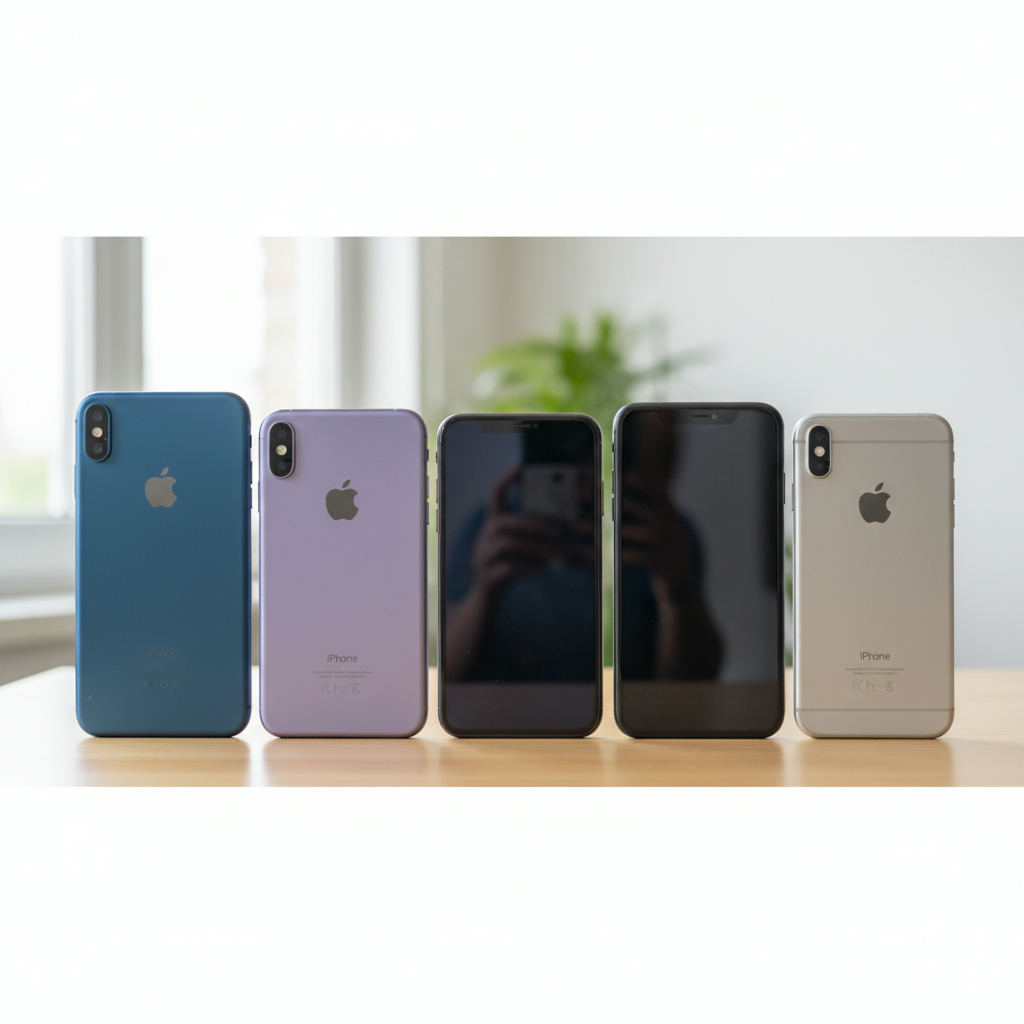
So, you're asking, "how much is my iPhone worth" in 2026? Well, if you're looking to sell your old iPhone, you've come to the right place! The good news is that iPhones tend to hold their value remarkably well compared to other electronics, but exactly how much you can get depends on a few key factors. We're going to dive into what makes an iPhone valuable, where to sell it for the most cash, and how to use smart tools to ensure you're getting every penny it deserves. It’s all about doing your homework and knowing the market, and I'm here to show you how a savvy reseller can turn that old device into serious profit.
Related reading: How Much It Worth? Checking Real Resale Value in 2026 · How Much Is This Worth? Find Any Item's Real Value in 2026 · How Much Is It Worth? How to Check Any Item's Value in 2026
Quick Answer: Your iPhone's Resale Value in 2026
Alright, let's cut straight to it. The immediate answer to "how much is my iPhone worth" depends heavily on the model, its condition, and storage capacity. As a general rule of thumb in 2026, you can expect to get anywhere from $100 to $400 for an iPhone 12 or 13 series in good condition, unlocked, and with decent storage. For newer models like the iPhone 14 or 15 series, especially the Pro and Pro Max versions, these can still fetch between $400 to $800+, depending on the specific model, storage, and whether it’s in excellent or pristine condition. Older models (iPhone X, 11) will likely be in the $50-$200 range, often more suitable for parts or as entry-level devices. These are not static numbers, though! They fluctuate with market demand, new releases, and even global economic trends. For instance, an iPhone 15 Pro Max 1TB in pristine condition might still command upwards of $900, while a basic iPhone 12 64GB with some wear and tear could be closer to $150. Remember, these figures are for unlocked phones ready for activation; carrier-locked phones will always fetch less. Knowing these ranges helps you set realistic expectations for your iPhone resale value, but pinpointing the exact number requires a little more digging.
Why Your iPhone's Price Varies So Much
It's not just about turning on your iPhone and hoping for the best; there's a whole science to its value! Understanding these factors is crucial for anyone trying to sell used iPhone for the maximum profit. Think of it like this:
Condition is King (or Queen!)
- Pristine/Like New: No scratches, dents, or signs of wear. Battery health near 100%. Expect top dollar.
- Excellent: Minor, barely visible scuffs. Battery health above 90%. Still commands a strong price.
- Good: Noticeable scratches, minor dings, but fully functional. Battery health 80-90%. Value drops moderately.
- Fair: Heavy wear, cracks in the back glass (but not the screen), significant scuffs. Battery health below 80%. Price takes a significant hit.
- Poor/Damaged: Cracked screen, major functional issues, or water damage. Often sold for parts, significantly reduced value.
A flawless screen and high battery health are often the two biggest drivers of value. A phone with a cracked screen, even if functional, can see its value drop by 30-50% immediately, as a buyer will factor in repair costs.
Model, Storage, and Color Matter
- Model Series: Newer generations (14, 15 series) always command higher prices than older ones (12, 13 series). Pro and Pro Max versions have better cameras, processors, and features, thus retaining value better than their standard or Mini counterparts.
- Storage Capacity: Higher storage (256GB, 512GB, 1TB) generally translates to a higher resale value. Most buyers prefer more storage, and a 64GB iPhone will always be worth significantly less than a 256GB version of the same model.
- Color: While less impactful than condition or storage, popular or exclusive colors can sometimes fetch a slight premium, though this is marginal.
Carrier Lock Status
An unlocked iPhone is always worth more! A carrier-locked phone (e.g., tied to AT&T or Verizon) can only be used on that specific network, severely limiting your buyer pool and, therefore, its trade in value iPhone. Make sure your phone is unlocked before listing it for sale.
Market Demand and New Releases
The release of a new iPhone model instantly depreciates the value of all previous generations. Timing your sale (ideally before the next model is announced) can significantly impact your sale price. Also, certain models might experience spikes in demand due to particular features or if they are discontinued, creating a niche market.
Where to Check Sold Prices, Not Just Asking Prices
Okay, this is where the rubber meets the road! When you're trying to figure out "how much is my iPhone worth," you absolutely cannot rely on asking prices. Why? Because anyone can ask for anything! What matters is what people are actually paying. This is called 'comps' – comparable sold listings – and it's the reseller's secret weapon. Here's where I go:
eBay's Advanced Search
This is my go-to for pretty much everything. On eBay, you can perform an advanced search and filter by 'Sold listings' and 'Completed listings.' This will show you exactly what specific iPhone models, in what conditions, and with what storage capacities, have recently sold for. It's incredibly powerful because it reflects the actual market value. You can see patterns: when an iPhone 14 Pro Max 512GB in excellent condition sells for $750 consistently, that’s your benchmark. Pay attention to the date of sale, as prices can shift quickly.
Poshmark and Mercari Sold Listings
Similar to eBay, both Poshmark and Mercari allow you to filter searches to see sold listings. While not as robust as eBay's advanced search, these platforms are great for consumer electronics and show you what individual sellers are getting. Sometimes, you'll find slightly higher prices here for pristine items due to a different buyer demographic, but also be aware of the fees impacting your net profit. Mercari's sold listings are very easy to access directly from a search.
Amazon Renewed & Used Sections
While not a direct peer-to-peer selling platform in the same way, checking Amazon Renewed or the used sections of third-party sellers on Amazon can give you an idea of professional refurbishment prices. This sets a high-end benchmark for what a professionally restored device might fetch, which can inform your pricing for a perfectly maintained used iPhone. It gives you another data point to cross-reference.
Dedicated Trade-In Programs (for comparison)
Companies like Apple Trade In, Gazelle, Swappa, and various carrier trade-in programs provide instant quotes. While these often offer significantly less than what you could get selling it yourself (they need to make a profit, after all!), they are useful for establishing a baseline for your trade in value iPhone. If you're offered $300 by Apple for an iPhone 13 Pro, you know you should aim for at least $400-$500 selling it yourself.
The Problem with Manual Research
Here’s the catch: doing all this research manually takes time. You have to open multiple tabs, type in your model, filter results, compare conditions, and then mentally average out the prices. It's a time sink, especially if you're trying to flip multiple items. This is precisely why tools like FlipAI are a game-changer. They consolidate all this data into one quick glance, making your pricing decisions instantaneous and accurate, giving you a competitive edge.
Best Platforms to Sell Your iPhone in 2026
Choosing the right platform is critical for maximizing your iPhone resale value. Each platform has its pros, cons, and fee structures, so it's about finding the best fit for your specific device and selling style. As an expert reseller, I often use a multi-platform strategy to cast a wider net.
1. eBay
Pros: Largest audience, best for getting top dollar if priced right, global reach. Ideal for unlocked, higher-end models. Sellers have good control over listings (auctions vs. Buy It Now). Offers strong seller protection. Cons: Fees can be significant (typically 13.25% final value fee on most electronics, plus PayPal/managed payments fees). Requires good photography and detailed descriptions. Dealing with returns or difficult buyers can be a hassle. High competition. Shipping can be complex for international sales. Fees: Roughly 13.25% Final Value Fee for most electronics up to a certain amount, then a lower percentage. Example: Sell for $500, pay ~$66.25 in fees.
2. Swappa
Pros: A marketplace specifically for electronics, which means a targeted audience. Generally, buyers are serious. Lower seller fees than eBay. Great buyer/seller protections and strict listing requirements ensure quality. No bidding, only fixed price. Cons: Smaller audience than eBay. Strict rules on device condition and functionality. Some sellers find the listing process a bit more involved. Fees: Flat seller fee, often a percentage based on the item's price (e.g., 3-5%) or a flat amount, typically paid by the buyer, making it attractive for sellers. For example, a $500 phone might have a $20-25 fee.
3. Poshmark & Mercari
Pros: Incredibly easy listing process directly from your phone. Built-in shipping labels. Large, active user bases for quick sales. Good for a wide range of conditions, from pristine to 'good'. Great for bundle deals. Cons: Higher fees (Poshmark 20%, Mercari 10% + $0.50 processing fee). While easy, they might not always yield the absolute highest price compared to eBay, especially for high-value items, due to the fee structure. Poshmark is more fashion-focused, but electronics still do well. Fees: Poshmark: 20% on sales over $15 (e.g., sell for $500, pay $100). Mercari: 10% commission + 2.9% + $0.50 processing fee (e.g., sell for $500, pay ~$64.50).
4. Facebook Marketplace / Local Selling
Pros: Zero selling fees! Cash in hand, immediate sale. Great for local pickup, avoiding shipping hassles and costs. Often the fastest way to sell, especially for older or slightly damaged phones. No need for complex listings. Cons: Less buyer protection. Higher risk of no-shows or scams. Requires meeting strangers, which carries inherent safety considerations. Limited to your local area, so a smaller audience. Might get lower offers due to lack of buyer trust or willingness to pay premium prices for local deals. Fees: 0% if selling locally with cash. If shipping through FB Marketplace, there's a 5% fee on sales over $8 (minimum $0.40).
5. Trade-In Programs (Apple, Carriers, Gazelle, etc.)
Pros: Utmost convenience and speed. Instant quote, no listing, no dealing with buyers, no shipping (usually just mail it in). Often get a store credit or gift card rather than cash. Cons: Always the lowest return on your investment. You're trading convenience for profit. The trade in value iPhone these programs offer is generally 20-40% less than what you could get selling it yourself.
For me, if I want the highest possible iPhone resale value, I'm heading to eBay or Swappa first. If I need a quick sale and don't want the hassle, Mercari or local Facebook Marketplace is my pick. I also use crosslisting tools to list on multiple platforms at once to reach the widest audience, but you have to be careful to delist quickly once an item sells!
How FlipAI Shows Current eBay Asking Prices in Seconds
Alright, so we've talked about why manually checking sold listings across multiple platforms is such a chore. This is exactly where FlipAI shines, making your life as a reseller so much easier and more profitable! When I'm trying to figure out "how much is my iPhone worth," especially if it's an obscure model or I'm in a hurry, I reach for my phone and open FlipAI.
FlipAI lets you take a photo of any item or scan its barcode to instantly see current eBay asking prices (live listings, not sold prices) plus an AI estimate. No guessing. No Googling. Just point your camera at anything and know what it is actually worth in about 10 seconds.
Imagine this: you're at an estate sale, and you spot an iPhone that looks like it's in great condition. Instead of pulling out your laptop or toggling between apps on your phone to search for comps, you simply open FlipAI. Point your phone camera at the iPhone, and within moments, FlipAI's AI vision technology identifies the model, accesses its vast database of recent market listings across various platforms, and presents you with an accurate, real-time picture of its market value. This includes the iPhone resale value based on actual transactions, not just what someone hopes to get for it. This insight is gold, telling you immediately if that iPhone 14 Pro Max is a $600 flip or a $200 pass.
This isn't just about speed; it's about accuracy. By aggregating data from top reselling platforms, FlipAI gives you a more comprehensive and reliable estimate than checking just one source. It eliminates the guesswork and helps you make informed decisions, whether you're buying inventory or pricing your own items to sell. I particularly love the barcode scanner feature for sealed or boxed items – one quick scan, and BOOM, all the data I need to calculate my potential profit. It's an indispensable reseller tool for anyone serious about making money.
Tips to Get the Best Price for Your iPhone
Once you know "how much is my iPhone worth" through solid research, your next step is to maximize that value. Getting top dollar isn't just about good pricing; it's about presentation and smart selling tactics. Here are my proven strategies:
1. Clean and Prepare Your Device Meticulously
- Wipe it Down: Use a microfiber cloth and a screen cleaner to remove all smudges, fingerprints, and dust. A clean phone looks newer and more appealing.
- Factory Reset: This is NON-NEGOTIABLE. Go to Settings > General > Transfer or Reset iPhone > Erase All Content and Settings. This protects your data and ensures the new owner gets a fresh start. Back up your data first!
- Remove from iCloud/Find My iPhone: Crucial! If you don't remove your device from your iCloud account, the buyer won't be able to activate it, turning it into a very expensive paperweight for them.
- Charge it Up: A fully charged phone shows the buyer it works and is ready to go.
2. Invest in Quality Photos
First impressions are everything! Use good lighting (natural light is best), a clean background, and take multiple high-resolution photos from all angles. Include close-ups of any minor imperfections you've mentioned in the description. Don't forget photos of the front, back, sides, and the screen powered on. Showcase any included accessories.
3. Write a Detailed and Honest Description
Transparency builds trust. Include:
- Exact Model: iPhone 15 Pro Max, 256GB, Sierra Blue.
- Condition: Be brutally honest. "Excellent condition with minor scuff on bottom right corner" is better than "Like new" with undisclosed damage.
- Battery Health: State the percentage (Settings > Battery > Battery Health & Charging). High battery health is a huge selling point.
- Carrier Lock: Clearly state "Unlocked" or specify the carrier.
- Included Accessories: Original box, charger, cable, headphones, cases, etc. These add significant value.
- Reason for Selling: (Optional) "Upgraded to the newest model" can reassure buyers.
4. Price Competitively (Using FlipAI Data!)
After using FlipAI to get accurate market comps, price your iPhone strategically. Aim for the higher end of the comparable sold prices if your item is in pristine condition with all accessories, but be willing to come down slightly. If you're using eBay, consider both 'Buy It Now' with 'Best Offer' and auction options. For platforms like Mercari or Poshmark, be prepared for negotiation.
5. Include Original Accessories (or Note Their Absence)
Having the original box, charger, and cable can add $20-$50 to your iPhone resale value. Buyers appreciate completeness, and it also makes shipping safer. If you don't have them, mention it clearly.
6. Consider Offering a Warranty (Limited) or Return Policy
For higher-priced items, offering a 7-day return policy (buyer pays return shipping) can build buyer confidence and lead to a quicker sale at a better price. Clearly state the conditions for return.
7. Time Your Sale
Try to sell your iPhone before the next generation is announced, typically in September. Prices drop significantly after new models are released. If you're selling an older model, consider seasonal spikes in demand, like back-to-school or holiday shopping.
8. Package Securely for Shipping
If shipping, use a sturdy box, plenty of bubble wrap, and ensure the phone can't move around. Consider adding insurance and signature confirmation for expensive devices. A damaged phone in transit is a nightmare you want to avoid.
Try FlipAI Free with 10 Scans
So, there you have it! Mastering the art of knowing "how much is my iPhone worth" in 2026 isn't just a guessing game; it's a strategic process. From understanding the nuances of condition and market demand to choosing the right selling platform, every step plays a crucial role in maximizing your profit. Remember, the key to successful reselling is accurate pricing based on live market data, not just hopeful asking prices. With the right tools and strategies, you can turn that old iPhone into a lucrative flip, just like countless resellers do every day.
I know it might seem like a lot to keep track of, but that's why I rely so heavily on smart tools in my own reselling business. FlipAI simplifies the most critical part of this entire process: valuation. It ensures you're always making informed decisions, whether you're sourcing new inventory or preparing to list your own items for sale. Don't leave money on the table; use data to your advantage. Get the edge you need to accurately determine your iPhone resale value and make profitable sales.
Try FlipAI free with 10 lifetime scans — no credit card required.
Frequently Asked Questions
How do I find out the exact value of my specific iPhone model?
To get the most accurate value for your iPhone, you should use tools like FlipAI or manually check market listings on platforms like eBay, Poshmark, and Mercari. Filter by your specific model (e.g., iPhone 14 Pro Max), storage capacity, condition, and carrier lock status. This will show you what buyers are actually paying for similar devices right now, providing a realistic market value rather than just asking prices.
Does my iPhone's battery health affect its resale value?
Absolutely! Battery health is a significant factor in your iPhone's resale value. A battery health percentage above 90% (found in Settings > Battery > Battery Health & Charging) will command a higher price. Buyers often factor in the cost of a potential battery replacement if the health is low (e.g., below 80%), which can significantly reduce what they are willing to pay for your device.
Is it better to sell my iPhone unlocked or locked to a carrier?
It is always better to sell your iPhone unlocked. An unlocked iPhone can be used with any carrier, greatly expanding your potential buyer pool and allowing you to sell it for a higher price. A carrier-locked phone is restricted to a specific network, which limits demand and almost always results in a lower resale value. Contact your carrier to ensure your device is unlocked before listing it.
What's the best time of year to sell my old iPhone?
The best time to sell your old iPhone is typically before Apple announces its new models, which usually happens in September. Prices for older models tend to depreciate significantly after a new generation is released. Selling a few weeks or months before the new release can help you capture a higher iPhone resale value. Also consider selling during peak shopping seasons like back-to-school or holiday periods for increased demand.
Why do trade-in programs offer so much less for my iPhone?
Trade-in programs (from Apple, carriers, or third-party companies) offer significantly less than what you could get by selling your iPhone yourself because they need to factor in their own profit margins, refurbishment costs, and the convenience they provide. They offer a quick, hassle-free way to offload your device, but that convenience comes at the cost of a lower payout, often 20-40% less than the open market value.