Gaming Console Resale Value in 2026 — PS5, Xbox, Switch and Retro
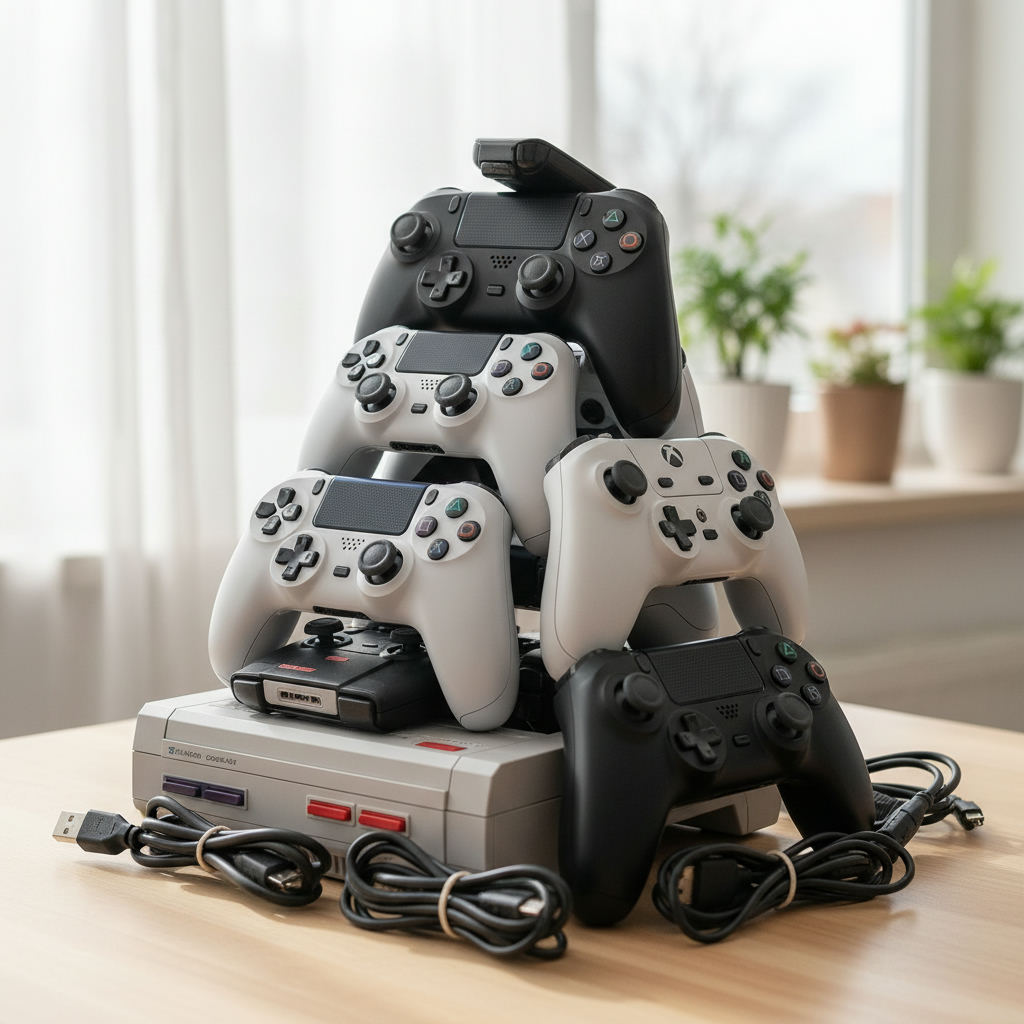
Alright, fellow flippers and gamers! Ever wondered what your beloved console is actually worth? The gaming console resale value is a hot topic, especially as new tech drops and older generations become collector's items. In 2026, the market is as dynamic as ever, and I'm here to spill the beans on how you can get top dollar for your PlayStation, Xbox, Switch, or even those nostalgic retro systems. Forget guessing – we're diving deep into real market prices, how to avoid common pitfalls, and how FlipAI can be your secret weapon to selling smarter, not harder!
Related reading: Where to Sell Used Electronics in 2026 — Best Payouts Compared · How Much It Worth? Checking Real Resale Value in 2026 · Best Platform to Sell Electronics in 2026
Whether you're clearing out your gaming backlog, upgrading to the latest model, or stumbled upon a dusty gem in an estate sale, knowing the true value is key. We're going to break down everything from current-gen giants like the PS5 and Xbox Series X to the ever-popular Nintendo Switch and the rising stars of retro gaming. Stick with me, and you'll be an expert at identifying profitable flips in no time. If you're new to reselling, you might want to check out our complete reseller guide for more foundational tips!
Quick Answer: Your Gaming Console Resale Value in 2026
Let's cut to the chase! You want to know what your gear is worth, right? As of 2026, here’s a realistic range for popular gaming consoles in excellent, used condition (with all original accessories and no major cosmetic damage):
- PlayStation 5 (Disc Edition): Expect to fetch anywhere from $350 to $425. If it's a special edition or comes with extra controllers/games, you could push $450-$500. The Digital Edition usually lands in the $300-$375 range.
- Xbox Series X: Similar to the PS5, a well-maintained Xbox Series X will likely bring in $325 to $400. Bundles with multiple controllers or popular games can easily add $50-$100 to that.
- Xbox Series S: As the more budget-friendly option, a used Series S typically sells for $175 to $250. It’s a great entry point for many, making it a consistent seller.
- Nintendo Switch (V2/OLED): The standard V2 model hovers around $175 to $225, while the OLED model, with its gorgeous screen, can pull $250 to $300. Limited edition Switches, especially Animal Crossing or Zelda versions, can sometimes exceed these figures by $50-$100!
- Nintendo Switch Lite: These compact beauties usually go for $100 to $150, depending on color and condition.
- PlayStation 4/Xbox One (Last-Gen): Believe it or not, these still have value! A PS4 Pro or Xbox One X can sell for $150-$225, while standard models are often in the $80-$150 range. Great for entry-level gamers or those on a budget.
- Retro Consoles (NES, SNES, N64, Sega Genesis, Dreamcast, PS2, GameCube): Ah, now we're talking big ranges! A loose, working console could be $50-$150, but a complete-in-box (CIB) system, especially a rare variant or one with a highly sought-after game bundle, can easily jump to $200, $500, or even over $1,000 for truly pristine or sealed items. The Nintendo 64, for example, has seen massive resurgence, with special edition consoles like the Funtastic series often selling for $200-$400 just for the console itself.
Remember, these are estimates. The real magic happens when you dive into sold listings, which is where FlipAI truly shines. We'll get to that in a bit!
Why the Price Varies So Much When You Sell a Used Console
So, you've got a console, and you've seen the wide ranges above. Why such a difference? It's not just a roll of the dice; there are very specific factors that dictate whether your console fetches top dollar or just a quick buck.
1. Condition, Condition, Condition!
This is probably the biggest factor. Is your console pristine, or does it look like it survived a zombie apocalypse? A console that's fully functional, clean, and has minimal cosmetic wear will always command a higher price. Be honest in your assessment: no sticky buttons, no loud disc drives, no deep scratches. If it comes from a smoke-free home and has been well-cared for, definitely highlight that! I once sold an original Xbox for $150 more than comparable listings just because it was spotless and had the original plastic on it still!
2. Completeness (CIB vs. Loose)
Does it have its original box? All the original cables, controllers, and even manuals? A 'Complete In Box' (CIB) console, especially for retro systems, is a goldmine. For modern consoles, having the original box makes it feel more premium and easier to ship safely. My first big score was a CIB Sega Saturn that I found at a flea market. It looked rough on the outside, but inside, everything was pristine. It sold for over $400!
3. Rarity and Edition
Limited editions, special color variants, or consoles tied to major game launches (think specific Zelda Switch or Spider-Man PS4 Pro) always hold or even increase their value. Collectors pay a premium for uniqueness. Retro consoles like the Virtual Boy, Neo Geo, or certain Atari systems are inherently rarer and thus fetch higher prices, even in average condition. Do your research – that odd-colored controller might be worth more than you think!
4. Market Demand and New Releases
When a new console generation is on the horizon, older models naturally dip in value. Conversely, a sudden surge in popularity for a specific retro game can drive up the price of its associated console. Think about the effect the COVID-19 lockdowns had on demand for Switches – prices soared! Staying aware of gaming news helps you time your sales for maximum profit.
5. Included Accessories and Games
Bundling extra controllers, charging docks, headsets, or a few popular games can significantly boost your gaming console resale value. Buyers love convenience and perceive more value in a ready-to-play package. Just make sure the bundled games are desirable, not just dusty sports titles from 2015!
Where to Check Sold Prices, Not Just Asking Prices
Okay, this is crucial. When you're trying to figure out your gaming console resale value, you absolutely, positively MUST look at *sold* prices, not just asking prices. Anyone can list a broken PlayStation 2 for $1,000, but that doesn't mean it will sell. You need to see what buyers have actually paid in the recent past.
Here are the go-to places I hit up:
- eBay's 'Sold Listings': This is my number one spot. When you search for an item on eBay, scroll down on the left-hand sidebar (or tap 'Filter' on mobile) and select 'Sold Items' under the 'Show Only' section. This instantly filters results to show you what people have actually paid, and when. It’s an indispensable tool for gauging current market value. I always check at least the last 3-5 sales for consistency.
- Dedicated Reselling Apps' Completed Sales: Many platforms like Poshmark, Mercari, and even Facebook Marketplace (sometimes!) allow you to filter for sold items. While not always as robust as eBay, they give you a sense of what's moving on those specific platforms. Mercari, for instance, is great for this, as all sales are completed directly through the app.
- PriceCharting.com: For retro consoles and games, PriceCharting is an absolute lifesaver. They aggregate sold data from various sources (including eBay) and provide average prices for loose, CIB, and new/sealed items. It's a fantastic resource for understanding retro console value, whether you're looking at a Super Nintendo or a Game Boy Advance.
- Local Facebook Marketplace Groups: While you can't always filter for 'sold,' keeping an eye on local 'for sale' groups and seeing what prices people are listing items at, and how quickly they're being marked as 'pending' or 'sold,' can give you a feel for your local market's demand and acceptable price points. This is particularly useful for bulky items where shipping is a factor.
Always compare apples to apples. If you have a loose Nintendo 64, don't compare it to a CIB one. Look for similar condition, completeness, and included accessories to get an accurate read. It takes a little detective work, but it's worth it for that higher profit!
Best Platforms to Sell Your Gaming Console
Deciding where to sell can be just as important as pricing it right. Each platform has its pros and cons, fees, and audience. Here’s my rundown:
1. eBay (Best for Reach & Value)
Why I love it: Unbeatable reach. eBay connects you to millions of buyers worldwide, including dedicated collectors and everyday gamers. For maximizing your gaming console resale value, especially for popular current-gen systems or rare retro finds, eBay is often the king. Their 'Sold Items' filter is also essential for pricing.
Fees: Generally, eBay charges a final value fee of 13.25% (up to $7,500) on the total sale price (item + shipping), plus a $0.30 per order fee for most electronics. They handle payments directly, making it smooth.
Tips: Use high-quality photos, detailed descriptions, and consider offering various shipping options. Always track your package! If you're selling a valuable retro console, consider selling with authenticity guarantees if available. Learn more about selling on eBay at eBay Seller Center.
2. Mercari (Great for Simplicity & Local Pick-up)
Why I love it: Mercari is super user-friendly and has a strong electronics category. It’s often a quicker sale than eBay for mid-range items, and their rating system is straightforward. You can also offer local pick-up to avoid shipping hassles entirely.
Fees: Mercari charges a flat 10% selling fee and a 2.9% + $0.50 payment processing fee on the final sale price, including shipping. So, if you sell a console for $200 with $15 shipping, your fees would be around $20 (selling) + $6.35 (processing) = $26.35.
Tips: Clear photos and concise descriptions work best here. Be ready to ship quickly or coordinate a safe local meet-up. Mercari has strong buyer protection, which is great, but also means you need to be precise in your listing.
3. Facebook Marketplace (Best for Local, No-Fee Sales)
Why I love it: No selling fees! This is huge for maximizing profit. It's fantastic for bulky items like consoles where shipping costs might eat into your margin. Local pickup means less hassle and instant payment (usually cash).
Fees: Free for local pickup! If you choose to ship through Facebook's platform, they might charge a small selling fee, usually around 5%. But most console sales are local.
Tips: High-quality photos are still key. Be prepared for hagglers and no-shows. Always meet in a public place for safety. List in relevant local groups for better visibility.
4. Poshmark (Niche for Bundles/Accessories)
Why I love it: While primarily known for fashion, Poshmark has a growing electronics section. It can be surprisingly effective for selling console accessories, themed bundles (e.g., a pink Switch Lite with themed games), or even full consoles if you target the right audience. It's also fantastic for cross-listing! For more on that, check out our crosslisting guide.
Fees: Poshmark charges a 20% commission on sales $15 and over, and a flat $2.95 for sales under $15. This is higher than other platforms, so factor that in.
Tips: Engage with the community, share your listings, and be active. Bundling can help offset the fees. Poshmark is also great for selling unique console skins or themed items.
How FlipAI Shows Current eBay Asking Prices in Seconds
Alright, let's talk about the tool that changes the game for resellers: FlipAI. When I first started flipping, I spent hours scrolling through eBay sold listings, manually comparing items, and second-guessing my prices. It was a grind. But then FlipAI came along and made pricing decisions a breeze.
Here’s the deal: FlipAI lets you take a photo of any item or scan its barcode to instantly see current eBay asking prices (live listings, not sold prices) plus an AI estimate. No guessing. No Googling. Just point your camera at anything and know what it is actually worth in about 10 seconds. Seriously, it's like having a team of pricing experts in your pocket.
Imagine you're at an estate sale, and you spot a vintage Nintendo Entertainment System. Instead of pulling out your phone and frantically typing into eBay, you just open FlipAI, snap a photo of the console, and boom! Within seconds, you have a solid idea of its average sold price, ranging from 'loose' to 'complete in box.' This quick insight allows you to make an informed buying decision on the spot, knowing whether it's a profitable flip or not.
I use FlipAI not just for buying, but for selling too. Before I list a console, I'll use FlipAI's AI vision feature to get an up-to-date snapshot of what similar consoles are currently selling for. This helps me set a competitive price that attracts buyers without leaving money on the table. It also highlights exactly which platforms are moving certain items. If I'm trying to figure out the current gaming console resale value, especially for something a bit obscure, FlipAI's ability to pull data from multiple marketplaces is a lifesaver. It’s like having a supercharged barcode scanner and image recognition tool all in one.
Tips to Get the Best Gaming Console Resale Value
You've got your console, you know what it's worth, and you've picked your platform. Now, let's make sure you nail the listing and get every penny you deserve!
1. Clean It Like It's Brand New
Seriously, this is non-negotiable. Dust, grime, and sticky residue are instant turn-offs. Use compressed air for vents, a microfiber cloth for surfaces, and isopropyl alcohol for tough spots (being careful around screens and delicate plastics). Make it sparkle! A clean console implies it was well-cared for, which instills confidence in buyers. I once spent an extra 30 minutes cleaning an old PS3 and sold it for $50 more than comparable, dirtier listings.
2. Test Everything Thoroughly
Plug it in. Play a game. Connect to Wi-Fi. Test every port, every button on every controller. Make sure the disc drive works perfectly. For retro consoles, blow into those cartridges (just kidding, use rubbing alcohol and Q-tips for connectors!). Document that everything is in working order and be ready to include a photo or video of it working. Honesty builds trust and prevents returns.
3. Fantastic Photos are Your Best Friends
Good lighting, multiple angles, and clear shots are paramount. Take photos of: the console from all sides, the controllers, all cables, the original box (if you have it), and any accessories. Highlight any minor imperfections, but don't dwell on them. If you're selling a retro console, show the condition of the cartridge slots or disc trays. I always take at least 5-7 photos for a console listing!
4. Write a Killer Description
Be detailed, honest, and persuasive. Include: the exact model and storage, its condition (functional and cosmetic), what's included (console, controllers, cables, games), any special features (e.g., limited edition), and why you're selling (optional, but can add a personal touch). Use keywords buyers would search for, like "gaming console resale value," "PS5 with two controllers," or "retro Nintendo 64 bundle." Don't forget to mention if it comes from a smoke-free, pet-free home!
5. Price Strategically and Be Open to Offers
Using FlipAI, you'll have a great starting point for your price. Consider pricing slightly above your desired minimum to allow for negotiation, especially on platforms like Facebook Marketplace or Mercari where haggling is common. On eBay, you can set a 'Buy It Now' price with a 'Best Offer' option. Being flexible can lead to a quicker sale.
6. Package It Safely for Shipping
If you're shipping, proper packaging is non-negotiable. Use sturdy boxes, plenty of bubble wrap, and packing peanuts. Consoles are fragile electronics, and a damaged item means a refund and a lost sale. Insure valuable shipments, especially for high-end gaming consoles. Check out USPS Business Tools for shipping tips. I've learned the hard way that skimping on packaging is never worth it!
7. Consider Console Trade In vs. Resell
When weighing console trade in vs resell, always aim to resell yourself if maximizing profit is your goal. Retailer trade-in programs (like GameStop, Best Buy, or Amazon) offer convenience, but they typically give you 30-50% of the actual market value. If you're okay with less money for an immediate, hassle-free transaction, trade-in might be for you. But if you want to make the most from your gaming console resale value, take the extra steps to sell it yourself.
Conclusion: Maximize Your Gaming Console Resale Value in 2026
There you have it, flippers! Getting the best gaming console resale value in 2026 is totally within your reach. It's about knowing your item's true worth, presenting it professionally, and choosing the right platform for your sale. From a mint PS5 to a nostalgic Nintendo 64, every console has a market, and with a little effort and the right tools, you can turn your unused electronics into cold, hard cash.
Remember to always check live market prices, not just asking prices, and let FlipAI be your guide. It's truly revolutionary for anyone looking to sell used console tech efficiently and profitably. No more guessing games, just smart, data-driven decisions that put more money in your pocket. Happy flipping!
Try It Free!
Ready to unlock the true potential of your items? Discover how simple it is to price accurately and sell faster. Stop leaving money on the table!
Try FlipAI free with 10 lifetime scans — no credit card required.Frequently Asked Questions
How much can I sell my PS5 for in 2026?
In 2026, a used PlayStation 5 Standard Edition (disc drive) in excellent condition could fetch anywhere from $350 to $425, depending on storage, included games, and accessories. The Digital Edition might be slightly less, around $300-$375. Special editions or bundles with rare games can push that value higher. Always check recent sold listings on platforms like eBay to get the most accurate, up-to-the-minute pricing.
What affects the resale value of a gaming console?
Several factors impact a gaming console's resale value: its condition (physical and functional), completeness (original box, cables, controllers), rarity (limited editions often hold value better), current market demand, and the release of new console generations. Even storage capacity can make a difference. Consoles with original packaging and all accessories in working order will always command a higher price.
Is it better to trade in my console or sell it myself?
Selling your console yourself almost always yields a higher return than trading it in. Trade-in programs from major retailers offer convenience, but they typically pay out 30-50% less than what you could get by selling directly to another consumer. If your goal is to maximize profit, take the time to list it yourself on platforms like eBay or Facebook Marketplace. Use tools like FlipAI to ensure you price it correctly for a quick sale.
How do I find the true value of a retro gaming console?
Finding the true value of a retro gaming console requires looking at actual sold prices, not just asking prices. Check completed listings on eBay, look at specialized retro gaming marketplaces, and consult price guides from sites like PriceCharting. Condition is paramount for retro consoles; a complete-in-box (CIB) system, especially if factory sealed, will be worth significantly more than a loose console. Rarity and demand for specific titles also play a huge role.
What's the best platform to sell a used gaming console?
For maximizing profit and reaching the widest audience, eBay is generally the best platform for selling used gaming consoles, especially for popular current-gen and highly sought-after retro systems. Facebook Marketplace and local selling apps are great for avoiding shipping fees and attracting local buyers. Poshmark can work for accessories or themed bundles, but is less ideal for bulky consoles. Always consider the platform's fees and buyer protection policies when making your choice.