Home / Blog / Coins & Currency
Coin Values in 2026 — What Your Change Jar Is Actually Worth
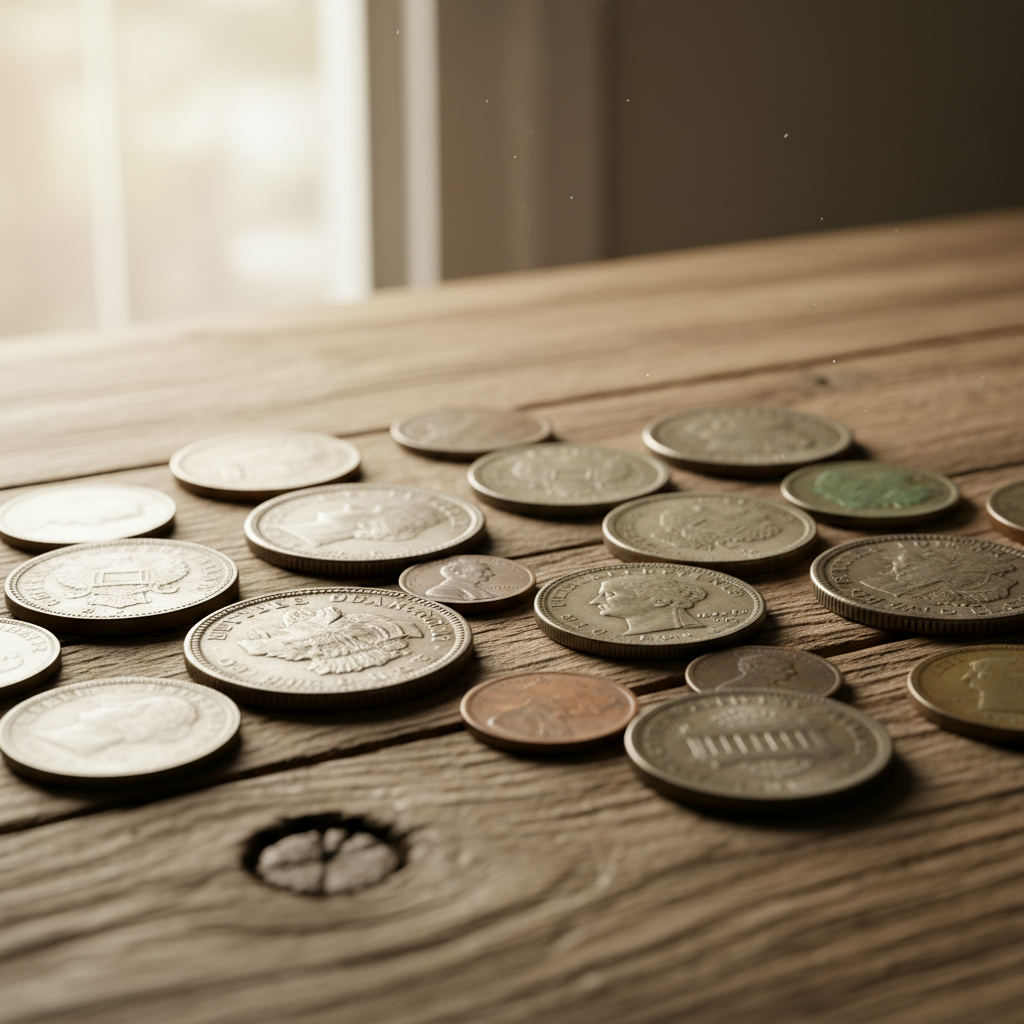
So, you're wondering about coin values and what that dusty jar of old change might actually be worth in 2026? You've come to the right place! Determining the real value of coins can turn a few cents into serious profit, and I'm going to show you how. Just last month, I was at a local estate sale, sifting through a box of miscellaneous items. Mostly junk, honestly, but then I spotted it: a tarnished, slightly bent coin. It looked old, but nothing special at first glance. My gut, however, told me to check it out. I whipped out my phone, used my trusty FlipAI app to scan it, and within seconds, I saw comps for that exact coin, including one that sold for over $400! Turns out, it was a 1916-D Mercury Dime, a key date coin in decent condition. That's the power of knowing what you have, and I'm going to share all my reseller secrets for finding and flipping valuable coins.
Related reading: Baseball Card Values in 2026 — What Yours Are Really Worth · Pokemon Card Values in 2026 — Live Market Prices, Not Guesses · What's It Worth? The 2026 Guide to Real Item Values
Quick Answer: Coin Values in 2026 Can Range from Pennies to Thousands!
Okay, let's get straight to it. The realistic price range for coins in 2026 is incredibly broad, stretching from mere face value (or slightly above, like $0.50 to $5 for common silver coins) all the way up to hundreds, even thousands, of dollars for rare specimens. For instance, a common circulated silver dime (pre-1965) might fetch you $1.50 to $2.50 for its silver melt value, whereas a well-preserved silver dollar from the late 1800s could easily command $50 to $200. Rare key date coins, like that 1916-D Mercury Dime I found, can sell for $200 to $1,000+ depending on condition. Even modern coins can surprise you – a rare error coin or a low-mintage commemorative piece might go for $10 to $100. The key takeaway is that you absolutely cannot assume all old coins are valuable, nor can you assume they're all worthless. The market is dynamic, influenced by precious metal prices, collector demand, and the specific rarity of the coin itself. This isn't like selling a common t-shirt; each coin is unique. To truly unlock their potential, you need to know how to accurately assess them, and that's where smart tools and strategies come into play. Want to learn more about identifying profitable flips? Check out our complete reseller guide.
Why the Coin Value Varies So Much
The vast disparity in coin value isn't random; it's driven by a few critical factors that every reseller needs to understand. These aren't just minor fluctuations; they can mean the difference between a coin being worth a dollar and a coin being worth a fortune. Let's break them down:
Condition: The King of Coin Value
Condition, also known as 'grade' in numismatics, is paramount. A coin in pristine, uncirculated condition will almost always fetch significantly more than the same coin that's heavily worn, scratched, or damaged. Collectors pay a premium for coins that look as close to their original state as possible. Terms you'll hear include 'Good' (G), 'Very Fine' (VF), 'Extremely Fine' (EF), 'Uncirculated' (UNC), and 'Proof'. A coin graded 'Good' might only be worth melt value, while the same coin graded 'Uncirculated' could be worth hundreds. Professional grading services like PCGS and NGC provide standardized evaluations, and coins encapsulated by these services often command the highest prices because buyers trust the grade. For example, a 1909-S VDB Lincoln Cent in Good condition might be $800, but in EF it could be $5,000, and in UNC it could hit $20,000+. It's a huge difference!
Rarity: Supply and Demand at Its Finest
Rarity refers to how many of a particular coin were minted and how many still exist today. Coins with low mintage figures (fewer produced) or those that were heavily melted down or lost over time are inherently rarer and thus more valuable. For example, a 1932-D Washington Quarter is rarer than a 1932-P (Philadelphia mint) quarter. The 'D' mint mark (Denver) signifies a much lower mintage. Identifying these 'key date coins' is crucial. Mints are often indicated by a small letter (like 'S' for San Francisco, 'D' for Denver, 'P' for Philadelphia, though 'P' was often omitted on older coins) just below the date or on the reverse. Always look for these! Scarcity drives collector demand, and high demand for a limited supply equals high prices.
Precious Metal Content: The Floor of Value
Many older coins contain precious metals like silver or gold. For instance, US dimes, quarters, and half-dollars minted before 1965 are 90% silver. These coins always have an intrinsic 'melt value' based on the current market price of silver. This sets a floor for their value, meaning even if they're not rare, they're still worth more than face value. A roll of circulated 90% silver dimes, often called 'junk silver,' can easily sell for $150 to $250 today, depending on silver spot prices, purely for their metal content. Gold coins, even common ones, carry significant value due to their gold content, often starting at hundreds of dollars. The melt value protects you from selling a silver coin for a dime!
Market Demand and Economic Factors
Beyond rarity and condition, collector trends and the broader economy play a role. Certain series or types of coins might suddenly become popular, driving up prices. Economic stability can also affect discretionary spending on hobbies like coin collecting. For instance, during periods of inflation or economic uncertainty, some investors turn to precious metals, which can indirectly boost the value of silver and gold coins.
Where to Check Sold Prices, Not Asking Prices
This is where many aspiring resellers go wrong! They look at active listings on eBay or Etsy and think that's the coin's value. Wrong! An asking price is just what someone hopes to get. You need to focus on live market prices – what buyers actually paid. This is critical for accurate pricing and profitable flipping. So, where do you find this golden data?
- eBay Sold Listings: This is probably the most accessible and robust source. Go to eBay, search for your coin, and then filter by 'Sold Items.' You'll see actual transaction prices, dates, and even the condition of the sold coin. Pay close attention to listings with multiple bids, as these often indicate strong demand and competitive pricing. Look for patterns in conditions and prices to get a good average.
- Heritage Auctions & Stacks and Bowers: For truly high-value or rare coins, professional auction houses like Heritage Auctions provide extensive archives of past sales. These are where the big-money coins change hands, and their records are meticulously detailed, often including professional photos and grading reports. This is your go-to for museum-quality pieces.
- Coin Dealer Price Guides: Reputable dealers often have internal price guides based on their own sales data. While not always publicly available, some online dealer sites will show prices for coins they've recently sold or are currently offering, giving you another data point.
- FlipAI: This is my personal favorite shortcut! Instead of manually sifting through various platforms, FlipAI consolidates this data for you. More on this in a bit, but it's a game-changer for speed and accuracy. It pulls live market prices directly, so you don't have to manually check each site.
- Forums and Communities: Online communities like Reddit's r/coins or specialized numismatic forums can offer insights, but treat these as secondary sources for opinions, not definitive pricing data.
Remember, the goal is to find several comparable sales for coins in similar condition. Don't just look at one sale; look for trends. An anomaly could throw off your entire valuation.
Best Platforms to Sell Coins
Once you've figured out your coin values, you need to know where to sell them for the best return. Different platforms cater to different types of coins and sellers. Here's a rundown of my top picks:
1. eBay: The King for Most Coins
Why it's great: eBay has the largest audience of coin collectors and general buyers. From common silver coins to mid-range rarities, you'll find a buyer here. It's excellent for anything from a $5 silver quarter to a $500 key date coin. You can list as an auction or a fixed-price listing. The sheer volume of traffic ensures your coin gets seen.
Fees: eBay charges a Final Value Fee, typically around 13.25% for most collectibles, including shipping. eBay Seller Center is a great resource to learn more.
2. Specialized Online Coin Dealers/Auction Houses
Why it's great: For high-value, professionally graded coins (think $1,000+), consigning to a reputable coin auction house like Heritage Auctions or Stacks and Bowers is often your best bet. They have established clienteles of serious collectors who are willing to pay top dollar. They handle photography, description, marketing, and shipping.
Fees: Consignment fees vary but can be substantial, often 10-20% of the hammer price, plus photography and cataloging fees. However, the higher selling price often offsets these.
3. Local Coin Shops (LCS)
Why it's great: Good for quick cash, especially for 'junk silver' or common gold coins. An LCS offers convenience and immediate payment. They're also great for getting expert opinions on your coins before you decide to sell.
Fees: You'll generally get less than market value, as the dealer needs to make a profit. Expect 60-80% of what you could get on eBay, but without the hassle of listing and shipping.
4. Online Marketplaces (e.g., Etsy, Facebook Marketplace)
Why it's great: Etsy is good for unique, artistic, or commemorative coins, especially those that might appeal to a broader 'gift' market rather than hardcore numismatists. Facebook Marketplace can work for local sales of less valuable coins or bulk lots, avoiding shipping.
Fees: Etsy fees are around 6.5% transaction fee plus payment processing. Facebook Marketplace is free for local pickup. Poshmark and Mercari aren't ideal for coins specifically, but if you have a niche collection of coin jewelry, Poshmark's 20% commission (for items over $15) or Mercari's 10% selling fee plus processing might apply. However, for serious coin collecting, stick to eBay or specialized platforms.
5. Coin Shows and Conventions
Why it's great: Direct interaction with collectors and dealers. You can get multiple offers on the spot and sell a variety of coins. Great for networking and learning.
Fees: Booth fees if you're a vendor, but if you're just selling to dealers, no direct fees, just potential negotiation on price.
My advice? Start with eBay for anything under $1,000, then consider auction houses for the truly rare pieces. And always use FlipAI to ensure you're pricing correctly!
How FlipAI Shows Current eBay Asking Prices in Seconds
This is where FlipAI shines, making the process of determining coin values ridiculously easy and accurate. Remember that personal story I shared about the Mercury Dime? That's exactly how it works. No more guessing, no more hours of tedious research.
FlipAI lets you take a photo of any item or scan its barcode to instantly see current eBay asking prices (live listings, not sold prices) plus an AI estimate. No guessing. No Googling. Just point your camera at anything and know what it is actually worth in about 10 seconds.
Here’s how you can use FlipAI to master coin valuing:
- Snap a Photo: Open the FlipAI app and use the AI Vision feature. Just take a clear picture of your coin. Try to get both sides if possible, and include any discernible mint marks or dates.
- Instant Comps: Our AI will analyze your photo, identify the coin, and then pull up live market listings from across major marketplaces. This isn't just asking prices; it's what buyers actually paid. You'll see a range of prices for similar coins in various conditions.
- Filter and Refine: You can then filter these results further by condition, specific years, or mint marks if you know them. This helps you hone in on the most accurate value for your specific coin.
- Price with Confidence: Armed with actual sold data, you can list your coin with a price that's competitive and realistic, maximizing your profit potential without underpricing or overpricing.
- Crosslist with Ease: Once you've priced your coin, FlipAI's crosslisting feature (our crosslisting tool) allows you to list it on multiple platforms like eBay, Facebook Marketplace, and more, all from one interface. This saves you tons of time and dramatically increases your coin's exposure to potential buyers.
Whether you're dealing with a common silver dollar or searching for a hidden key date coin, FlipAI is like having a team of expert numismatists in your pocket, guiding your pricing decisions with real-time market data.
Tips to Get the Best Price for Your Coins
Finding accurate coin values is just the first step. To truly maximize your profit, you need to present your coins in the best possible light and employ smart selling strategies. Here are my top tips for getting the absolute best price:
1. DO NOT Clean Your Coins!
This is the cardinal rule of coin collecting and reselling. Cleaning a coin, even gently, will almost always diminish its value. What might look like tarnish to you is often original patina to a collector, which adds to its authenticity and appeal. Cleaning can scratch the surface, remove original luster, and destroy collectible value, sometimes reducing a coin worth hundreds to just its melt value. Leave it as you found it!
2. High-Quality Photography is Non-Negotiable
Clear, well-lit photos are paramount. Use natural light if possible, avoid glare, and take multiple shots from different angles. Focus on showing both sides of the coin, any mint marks, and the date clearly. Macro lenses (even inexpensive clip-on phone lenses) can make a huge difference in capturing detail. Blurry, dark photos will deter buyers and make them question the coin's authenticity or condition. Buyers want to see exactly what they're getting.
3. Write Detailed and Accurate Descriptions
Your listing description should be thorough and honest. Include: the coin's denomination, year, mint mark, estimated condition (e.g., 'circulated,' 'appears to be XF'), known errors if applicable, and any unique features. Mention if it's a 'silver coin value' piece. If you've used a tool like FlipAI, you can mention how your pricing was informed by market comps. Be transparent about any flaws, scratches, or damage. Overstating condition will lead to returns and negative feedback.
4. Consider Professional Grading for High-Value Coins
If you have a coin that FlipAI or other research indicates is worth several hundred dollars or more, consider sending it to a professional grading service like PCGS or NGC. A certified grade adds immense credibility and can significantly boost the selling price, as it removes any doubt about the coin's authenticity and condition. The cost of grading (typically $30-$100+) is often recouped many times over for genuinely valuable coins.
5. Price Competitively Based on Sold Comps
As discussed, always base your asking price on actual sold listings, not active listings. Price slightly above the average for your condition if you believe your coin is exceptional, or slightly below if you want a quick sale. Use FlipAI's profit calculator feature to account for listing fees, shipping costs, and payment processing fees so you know your actual profit margin before you list. Knowing your costs is crucial!
6. Offer Secure Shipping
For valuable coins, use tracked, insured shipping. Buyers are investing in these items and want peace of mind. Pack coins securely in appropriate holders to prevent damage during transit. For instance, a 2x2 cardboard holder placed inside a padded envelope or a small box is usually sufficient for most coins. Don't just throw it in a regular envelope!
Try FlipAI Free to Discover Real Coin Values Now!
There you have it, my fellow flippers! Unlocking the true potential of your coins, from the humble penny to the illustrious silver dollar, is all about having the right knowledge and the right tools. We've covered why coin values vary, where to find accurate sold prices, the best places to sell, and crucial tips to maximize your profit. Remember my Mercury Dime story – that could be you next week! The world of numismatics is full of hidden gems, and with a little effort and the power of technology, you can turn those forgotten pieces of metal into serious cash.
Don't let valuable coins sit unrecognized in your drawers or jars. Start exploring your collection with confidence. Use the tips outlined here, focus on live market prices, and get ready to transform your understanding of what's truly valuable in your hands. It's time to stop guessing and start knowing!
Try FlipAI free with 10 lifetime scans — no credit card required.Frequently Asked Questions
How do I find out the value of old coins?
To find the value of old coins, focus on real-time market prices, not just asking prices. Use platforms like eBay's 'Sold Items' filter, consult reputable coin auction archives, or use an app like FlipAI. FlipAI allows you to take a photo of your coin and instantly see what similar coins have recently sold for across various marketplaces, giving you an accurate valuation in seconds. Pay close attention to the coin's year, mint mark, and condition.
What makes a coin valuable in 2026?
Several factors contribute to a coin's value in 2026. The most important are its condition (the better the grade, the higher the value), rarity (low mintage numbers or few surviving examples), and precious metal content (silver or gold). Error coins, historical significance, and current collector demand also play a significant role. Key date coins, which are specific years and mint marks with low mintage, are particularly sought after.
Should I clean my old coins before selling them?
Absolutely not! This is one of the biggest mistakes amateur sellers make. Cleaning an old coin, even with gentle methods, almost always damages its original surface and luster, significantly decreasing its numismatic value. Collectors prefer coins in their original, uncleaned state, including any natural patina or toning. What appears to be dirt might be a valuable historical layer to an expert. Leave your coins as you find them to preserve their potential value.
Where is the best place to sell valuable coins?
For most coins under $1,000, eBay is an excellent platform due to its vast audience of collectors. For very high-value or professionally graded coins (>$1,000), specialized online coin auction houses like Heritage Auctions are often the best choice, as they attract serious buyers and handle all aspects of the sale. Local coin shops can offer quick cash for common silver or gold coins, though typically at a lower price than online sales.
What is a 'key date coin' and why are they valuable?
A 'key date coin' refers to a specific year and mint mark combination within a coin series that has a significantly lower mintage or fewer surviving examples compared to other dates in that series. Because fewer of these coins were produced or many were lost/melted, they are much rarer and therefore highly sought after by collectors. This scarcity drives their value up considerably, making them some of the most desirable and valuable coins for collectors and resellers alike.