Pokemon Card Values in 2026 — Live Market Prices, Not Guesses
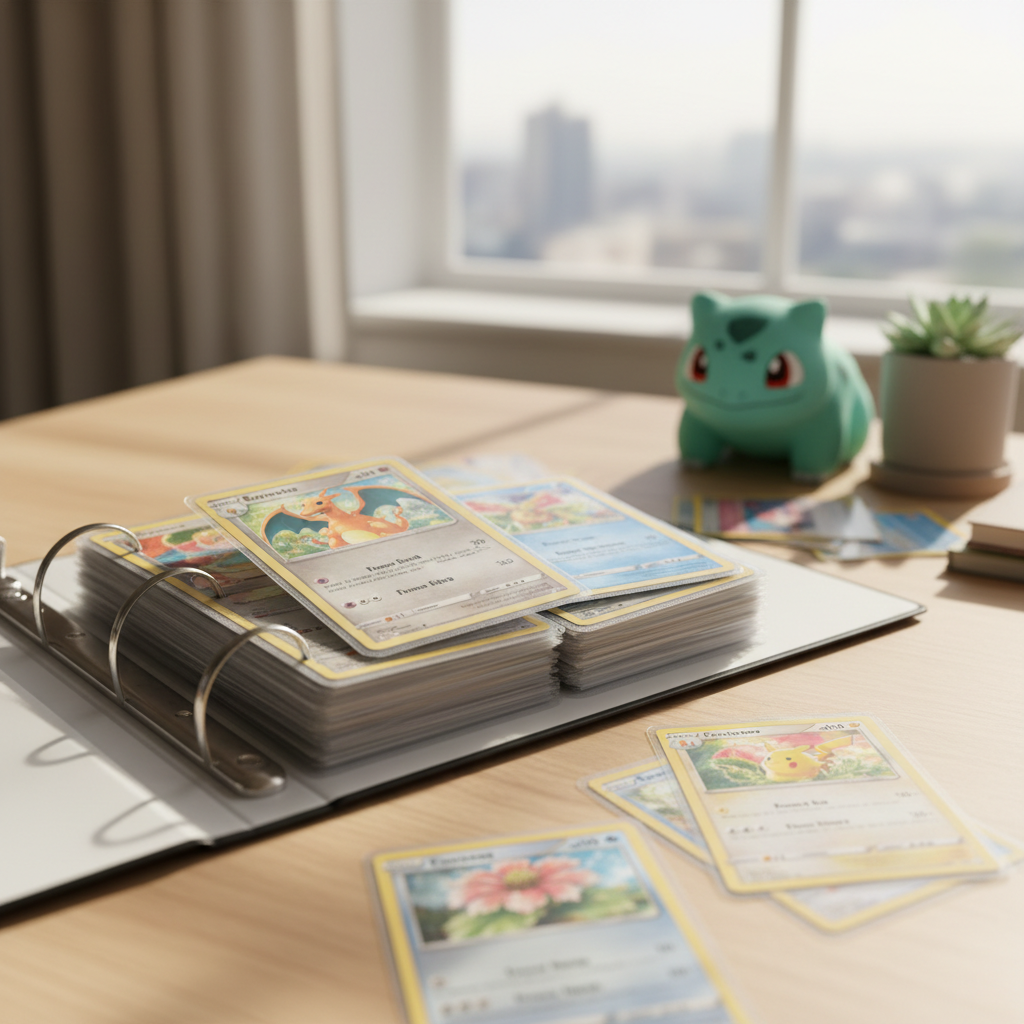
When you're trying to figure out your pokemon card values in 2026, it's all about checking live market prices. No more guessing or relying on outdated price guides! Whether you've just unearthed a childhood collection or you're deep into the hobby, understanding what your cards are actually worth can be the difference between a good flip and leaving money on the table. As a seasoned reseller, I've seen firsthand how crucial accurate pricing is, especially in a market as dynamic as Pokémon. This guide will walk you through the key factors that drive card values, show you how to find genuine sold data, and introduce you to an incredible tool that makes appraisal a breeze. Ready to turn your cardboard into cold, hard cash? Let’s dive in!
Related reading: Pokemon Cards Value Guide for 2026 · Best Place to Sell Pokemon Cards in Iowa 2026 Guide · Best Place to Sell Pokemon Cards in South Dakota 2026 Guide
Quick answer: How Much Are Your Pokémon Cards Worth in 2026?
Figuring out exact pokemon card values without seeing the specific card is like trying to guess the weather without a forecast – impossible! However, I can give you a realistic range based on current market trends and what I've seen crossing my selling platforms daily. Most common, ungraded Pokémon cards you might find in an old binder are typically worth anywhere from $0.50 to $10. Think about those bulk commons, uncommons, and even some non-holo rares from older sets; they usually sell in lots or for very small amounts individually. If you've got a holographic rare, especially from a classic set like Base Set, Jungle, or Fossil, and it's in good condition, you could be looking at $20 to $150. Then we step into the territory of truly rare cards, first editions, shadowless cards, and certain chase cards (like Charizard or certain trainer cards) that are ungraded but in excellent condition – these can fetch $200 to $1,000+. And if you're lucky enough to have a professionally graded card (PSA 9 or 10, BGS 9.5, etc.) that's highly sought after, the sky's the limit, with values soaring from $1,000 to tens of thousands, or even hundreds of thousands for iconic pieces. The market for sports cards and collectibles can fluctuate, but demand for Pokémon remains incredibly strong heading into 2026, so knowing your card's precise condition and verifying comps is paramount. Your initial assessment will narrow down the field, but the real work comes in confirming the value, which we'll cover next. For more in-depth reselling tips, check out our complete reseller guide.
What Drives Pokémon Card Value: Key Factors for Appraisal
Understanding what makes a Pokémon card valuable is the first step in accurately assessing your collection. It's not just about age; a combination of factors contributes to a card's market price. Here's what I always look for:
1. Rarity and Set
- Set Identification: Is it from a Base Set (especially 1st Edition or Shadowless), Jungle, Fossil, Team Rocket, or a newer, highly popular set like Evolving Skies or Celebrations? Older, iconic sets often carry more weight.
- Rarity Symbol: Look for the symbol in the bottom corner (circle for common, diamond for uncommon, star for rare). A black star generally means it's a rare card, but a holographic star indicates a holo rare. Gold stars, secret rares, and alternate arts are among the most desired.
- Promo Cards: Cards given out at events or in special products can be very limited and therefore valuable.
2. Condition is King (or Queen!)
This is probably the single most important factor for high-value cards. Even a super rare pokemon cards can be worthless if it's been through the wringer. Collectors pay top dollar for cards in near-mint (NM) or gem-mint condition. Look for:
- Surface: No scratches, print lines, or indentations.
- Corners: Sharp, crisp, and not rounded or dinged.
- Edges: Smooth, no whitening or fraying.
- Centering: The artwork should be evenly framed within the border.
3. Professional Grading (PSA, BGS, SGC)
Having a card professionally graded by companies like PSA, Beckett (BGS), or SGC provides an objective assessment of its condition and authenticity, drastically impacting its value. A PSA 10 (Gem Mint) of a desirable card can sell for exponentially more than the same card in raw (ungraded) near-mint condition. We'll talk more about grading later, but know that a high grade equals significantly higher potential returns.
4. Player/Pokémon Popularity
Let's be real, certain Pokémon are just more popular! Charizard, Umbreon, Gengar, and specific Pikachu variants consistently command higher prices because of their iconic status and strong fan bases. Trainer cards featuring popular characters can also be quite valuable.
5. Print Run and Scarcity
The lower the print run, the fewer cards exist, which inherently makes them more valuable. 1st Edition Base Set cards, for example, had a much smaller print run than later unlimited printings, hence their higher value. Certain error cards or misprints also fall into this category due to their extreme scarcity.
How to Check live market Comps for Pokémon Card Values
Alright, this is where the rubber meets the road. No amount of guessing or using outdated price guides will tell you the true pokemon card value. You need to look at what identical cards have *actually sold for* recently. This is called checking "sold comps" (comparable sales), and it's the gold standard in reselling. Here’s how I do it, and how you can too:
1. The eBay Sold Listings Method
eBay is my go-to for finding reliable sold data. It has the largest marketplace for collectibles and provides a vast history of completed sales. Here's the drill:
- Go to eBay.com.
- In the search bar, type in specifics for your card: Pokémon's name, set name, card number (if visible), and any special attributes (e.g., "Charizard Base Set 4/102 1st Edition holo").
- On the left-hand sidebar (or under "Filter" on mobile), scroll down and select "Sold Items" and "Completed Items."
- Analyze the results. Look for cards that are identical to yours in terms of condition, edition, and whether they are graded or raw. Ignore active listings; they only tell you what sellers *want*, not what buyers *paid*.
Realistic eBay Sold Examples:
- Example 1: A "Charizard Base Set Shadowless Holo" (ungraded, Near Mint condition) sold for approximately $650 in late 2025. This was a classic card in fantastic shape, which always commands a premium.
- Example 2: A "Mewtwo 1st Edition Holo (Jungle Set, Card 10/64)" graded PSA 9 (Mint) sold for approximately $280 in early 2026. The 1st Edition stamp and high grade pushed this iconic psychic Pokémon's value.
2. Dedicated Card Marketplaces
Sites like TCGPlayer (primarily for current TCG cards) and Card Ladder (subscription-based, compiles data from multiple sources including auction houses) are excellent resources. For higher-end graded cards, auction results from platforms like PWCC Marketplace or Goldin Auctions also provide valuable insights, though these are typically for cards already commanding thousands.
3. The FlipAI Advantage
This is where I save a ton of time. While manually checking eBay is effective, it's time-consuming, especially with a large collection. I use FlipAI to speed up this process. It helps me quickly get a baseline understanding of market value without endless scrolling. It's a game-changer for efficiently finding your card price guide without the hassle. For more on maximizing your profits, check out our profit calculator feature!
Best Places to Sell Your Pokémon Cards in 2026
So, you've assessed your pokemon card values, and now it's time to turn them into cash! Knowing *where* to sell is just as important as knowing *what* to sell. Different platforms cater to different types of cards and offer varying fee structures. Here’s my rundown:
1. eBay: The King of Card Sales for Most Values
For the vast majority of Pokémon cards, from individual rares to graded slabs, eBay remains the undisputed champion. Its massive reach means millions of potential buyers, leading to competitive bidding and higher selling prices. You'll deal with a final value fee, typically around 13.25% for trading cards, plus a small payment processing fee. The key to success on eBay is clear, high-quality photos, detailed descriptions, and accurate shipping methods.
2. Facebook Marketplace & Local Groups: Great for Low-Value Raw Cards
If you have a stack of ungraded cards worth under $20 each, or even a bulk lot, Facebook Marketplace or local Pokémon trading groups can be fantastic. You avoid shipping costs and fees, often making it a higher profit margin for lower-value items. It’s perfect for "meet-up and sell" scenarios. Just be sure to meet in a safe, public place!
3. PWCC Marketplace & Goldin Auctions: For High-End Graded Treasures
If you're sitting on a graded PSA 9 or 10 Charizard worth hundreds or thousands, these are your platforms. PWCC and Goldin specialize in high-value collectibles and provide a white-glove service, often handling authentication, photography, and marketing. Their fees can be higher, but they attract serious collectors willing to pay premium prices. Typically, you'd only consider these for cards valued at $500+.
4. TCGPlayer & Card Kingdom: Best for Playing Cards
If your collection leans more towards modern, playable cards for the actual Pokémon TCG game, these sites are excellent. TCGPlayer allows you to list individual cards and sets fair market prices based on current demand from players. They have clear pricing tiers and a strong community. Fees are generally competitive but vary based on seller level.
5. Other Platforms: Poshmark, Mercari, Whatnot
You can also sell Pokémon cards on platforms like Poshmark (better for bundled fashion, but collectibles are growing), Mercari (good for individual items, 10% selling fee), and Whatnot (live auction style, great for engagement). I often use these for cross-listing, especially for unique items or smaller collections. Poshmark takes 20% on sales over $15, so know your margins!
How FlipAI Values Pokémon Cards in Seconds
This is where my personal reselling superpower comes in, especially with trading cards. I’m not spending hours scrolling through old eBay listings anymore. Thanks to FlipAI, I can quickly get an accurate read on pokemon card values. It’s a total game-changer for speed and efficiency.
FlipAI lets you take a photo of any item or scan its barcode to instantly see current eBay asking prices (live listings, not sold prices) plus an AI estimate. No guessing. No Googling. Just point your camera at anything and know what it is actually worth in about 10 seconds. For cards, its AI vision is incredibly smart. It can often detect key details like:
- Pokémon Name: Instantly recognizes the character on the card.
- Set Identification: Often identifies the specific set the card belongs to.
- Card Number: Reads the numerical identifier for easy lookups.
- Edition (e.g., 1st Edition, Shadowless): Critical for value, FlipAI can spot these markers.
- Holographic Status: Distinguishes between regular and holo versions.
- Rarity Symbol: Quickly picks up on common, uncommon, rare, or special rarity symbols.
- Grading (PSA/BGS/SGC): If the card is slabbed, it can often read the grade and provide comps for graded examples.
This means you don't have to be an expert in every single Pokémon set or card variation. FlipAI does the heavy lifting, serving up relevant market comps faster than you can say "Pikachu!" It's like having a super-smart card price guide built right into your phone. This feature is particularly useful when you're sifting through a large collection or are at a flea market and need to make quick decisions. If you're looking to scale your reselling business, using tools like this to quickly value items is non-negotiable. Learn more about how FlipAI can streamline your listing process with its crosslisting capabilities, too.
Grading Your Pokémon Cards: Worth It Or Not?
The question of whether to get your Pokémon cards graded by a professional service like PSA, Beckett (BGS), or SGC is a crucial one, and the answer isn't always a straightforward "yes." It primarily depends on the card's potential value and its condition.
When Grading IS Worth It:
- High-Value Potential: If you have a highly sought-after card (e.g., a vintage Charizard, a rare alternate art, or a popular Pokémon chase card) that sells for hundreds or thousands raw, grading is almost always a good idea. A high grade (PSA 9 or 10, BGS 9.5) can multiply its value significantly.
- Exceptional Condition: Only submit cards that are in near-mint or better condition. Grading fees can range from $20 to $100+ per card depending on the service level and declared value. Submitting a card that will only get a PSA 6 or 7 often isn't worth the cost, as the value increase may not cover the expense.
- Authentication: Grading provides third-party authentication, assuring buyers your card is genuine and not a fake. This adds trust and can expedite sales.
- Long-Term Investment: Graded cards are better protected in their slabs and are generally considered more liquid and stable assets for long-term collection.
When Grading is NOT Worth It:
- Low-Value Cards: For commons, uncommons, and most non-holo rares that sell for under $20, the grading fee will eat up any potential profit. It's usually better to sell these raw or in bulk.
- Poor Condition: Cards with significant damage (creases, heavy whitening, deep scratches) will receive low grades (PSA 1-5). The market for these is much smaller, and the cost of grading will almost certainly outweigh the small increase in value, if any.
- Modern, Mass-Produced Holos: While some modern cards can be valuable, many holographic rares from recent sets are printed in such high quantities that even a PSA 10 might only increase the value by a small margin, making the grading fee a significant hurdle.
My advice? Use FlipAI to get a solid estimated raw value. If that value is over, say, $100-$150 and the card looks pristine to your eye, then start researching recent graded sales for that exact card. Compare the raw price to graded PSA 9 and 10 prices to see if the potential upside justifies the grading cost and time. You can find excellent resources on grading standards on sites like PSA's official website.
Get Started: Flip Your Pokémon Cards Today!
So there you have it, future Pokémon master reseller! Understanding your pokemon card values in 2026 isn't a dark art; it's a skill you can absolutely master with the right knowledge and tools. We've covered everything from what makes a card valuable to the best places to sell, and crucially, how to check those all-important live market prices. Remember, condition is paramount, rarity matters, and using professional grading strategically can supercharge your profits.
Don't let valuable cards gather dust or sell them for less than they're worth. With tools like FlipAI by your side, you can quickly identify, value, and list your Pokémon treasures with confidence. Stop guessing and start knowing. Ready to uncover the hidden value in your collection? Then it's time to take action!
Try FlipAI free with 10 lifetime scans — no credit card required.Frequently Asked Questions
How do I find out how much my old Pokémon cards are worth?
The best way to determine your old Pokémon card values is by checking recent sold listings on platforms like eBay. Search for your card by name, set, and card number, then filter results by "Sold Items" and "Completed Items." Pay close attention to the card's condition and whether it's 1st Edition, Shadowless, or graded, as these significantly impact value. Tools like FlipAI can also help by quickly scanning your card to find market comps.
Are all old Pokémon cards valuable?
No, not all old Pokémon cards are valuable. While some vintage cards, especially 1st Edition holographics or rare promos in excellent condition, can be worth a lot, most common and uncommon cards from older sets are only worth a few dollars or less. Condition is extremely important; a damaged rare card will be worth much less than a pristine one. Rarity, popularity of the Pokémon, and demand from collectors are also key factors.
Should I get my Pokémon cards graded?
Getting your Pokémon cards graded by a professional service like PSA or BGS is generally only recommended for high-value cards (typically those worth $100+ raw) that are in near-mint or better condition. Grading can significantly increase a card's value and provide authentication, but it incurs fees (often $20-$100+ per card). For lower-value or heavily damaged cards, the cost of grading usually outweighs the potential increase in selling price.
What are the most expensive Pokémon cards in 2026?
In 2026, some of the most expensive Pokémon cards continue to be rare vintage cards like the 1st Edition Base Set Charizard (especially PSA 10), Illustrator Pikachu, certain Trophy Cards (e.g., from Japanese tournaments), and exceptionally rare error cards. Newer, highly sought-after alternate art cards from sets like Evolving Skies, if graded perfectly, also command premium prices. The exact "most expensive" can fluctuate with auction results, but these categories consistently top the charts.
How does FlipAI help with Pokémon card values?
FlipAI streamlines the process of valuing your Pokémon cards by allowing you to simply take a photo of the card. Its AI vision quickly identifies key details like the Pokémon name, set, card number, edition, and even if it's graded. It then instantly pulls real-time market prices from major marketplaces like eBay, Poshmark, and Mercari, giving you an accurate, up-to-date market value in about 10 seconds. This saves significant time compared to manual research.