Home / Blog / Coins & Currency
Are 2 Dollar Bills Worth Anything? The Honest 2026 Answer
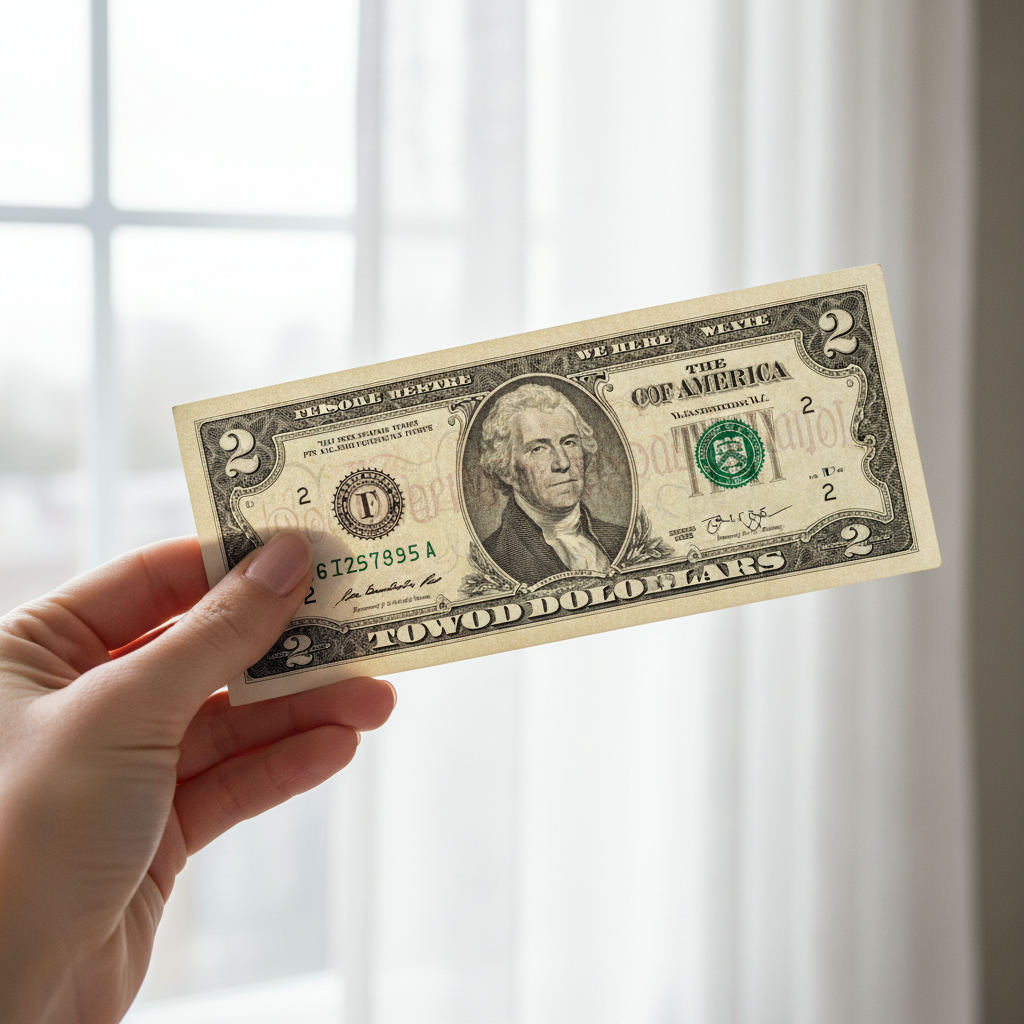
So, you're wondering, are 2 dollar bills worth anything more than their face value? The quick answer is yes, absolutely! While most two-dollar bills you find floating around are just that – worth two dollars – certain conditions, print runs, and special features can skyrocket their value into the hundreds, or even thousands, of dollars. It’s all about knowing what to look for, and I'm here to walk you through it. As a fellow reseller, I know the thrill of finding a hidden gem, and paper money collecting can be incredibly lucrative if you're armed with the right knowledge. We'll dive into what makes a 2 dollar bill valuable, where to check those crucial sold prices (not just what people *ask* for), and how tools like FlipAI can give you an instant valuation.
Related reading: Are They Worth Anything? Valuing Sets, Lots and Collections in 2026 · Two Dollar Bill Value in 2026 — Which Ones Are Actually Worth More · Is It Worth Anything? How to Tell in About 10 Seconds (2026)
Many people stash these bills away, thinking they are inherently rare, but actually, the U.S. Treasury still prints them! The key isn't rarity of the bill itself, but rather the rarity of specific *versions* of the bill. We'll cover everything from recent issues to antique notes, and by the end of this guide, you'll be a pro at spotting a valuable two dollar bill. Plus, I'll share my top tips for selling them for the maximum profit, whether you're a seasoned collector or just stumbled upon a curious note in your wallet. Ready to uncover some potential treasure?
Quick Answer: What's the Two Dollar Bill Value?
Alright, let's get straight to it. When asking, "are 2 dollar bills worth anything?" the realistic price range for a standard, circulated two-dollar bill from the modern era (1976 onwards) is exactly $2. Yep, face value. Don't be fooled by the myths that they're all super rare. However, once you start looking at older notes, uncirculated condition, or those with special characteristics, the two dollar bill value can jump significantly. For instance, an uncirculated 1976 series bill, fresh from the bank, might fetch anywhere from $2.50 to $10, especially with a desirable star note designation. Move back to the 1953 or 1963 series, and uncirculated examples can easily go for $15 to $50, sometimes more depending on the specific series letter (e.g., Series 1953B). Even more exciting, notes from the 1928 series in pristine condition can range from $50 to $200. And if you're incredibly lucky, you might stumble upon a high-grade 1862 "Legal Tender Note" or an 1890 "Treasury Note" (often called a 'coin note') that could be worth hundreds, or even thousands, of dollars – with some rare examples fetching upwards of $10,000 or more at auction! I've personally seen a well-preserved 1890 series "Red Seal" bill sell for over $2,000. It truly pays to know what you've got in your hands. But remember, condition is king in paper money collecting, which we'll discuss next.
Why the Price Varies for Your Two Dollar Bill Value
The price of a two-dollar bill isn't fixed; it's a dynamic thing influenced by several key factors. Understanding these elements is crucial for anyone diving into paper money collecting, or just trying to figure out if that old bill from Grandma's purse is worth more than face value. Here’s what makes the two dollar bill value fluctuate:
1. Condition, Condition, Condition
This is arguably the most important factor. Collectors are obsessed with condition, and for good reason. A crisp, uncirculated bill (meaning it's never been folded, creased, or handled) will always command a premium over a heavily circulated, worn, or damaged one. Think about it: a bill that looks like it just came off the press is much more appealing than one that's been through a hundred wallets. Grading services like PMG (Paper Money Guaranty) or PCGS Currency assign numerical grades (e.g., AU-58 for About Uncirculated, CU-65 for Choice Uncirculated) that drastically impact value. Even a slight fold or tear can knock hundreds of dollars off the value of a truly rare note. Always handle old bills by the edges to preserve their condition!
2. Rarity and Age
Older bills generally, but not always, tend to be rarer. The earlier series, especially from the 19th century (1862, 1869, 1875, 1880, 1890, 1891), were printed in much smaller quantities than modern notes. These older "Legal Tender Notes" or "United States Notes" often feature different designs and red or brown seals, making them distinctive. The 1928 series was the first small-sized $2 bill, and some of those are quite valuable. However, a relatively "newer" bill with a specific printing error or a "star note" (replacement note for a misprinted sheet, indicated by a star in the serial number) can also be quite rare and fetch a high price. The rarity of a specific print run or series is a huge driver of its worth. For instance, a 1928 G series star note in excellent condition can easily fetch hundreds, if not thousands, of dollars.
3. Special Features and Errors
- Star Notes: These are replacement notes printed when a sheet of currency has an error. They're much scarcer than regular notes and are highly sought after by collectors. A star note from a specific series can add significant value.
- Low Serial Numbers: Serial numbers like 00000001, 00000010, or even 00000100 are very desirable. The lower the number, the better!
- Fancy Serial Numbers: This includes solid numbers (e.g., 11111111), radar notes (same forwards and backward, e.g., 12344321), ladder notes (e.g., 12345678), and even repeating numbers (e.g., 12121212).
- Plate Errors: Sometimes, errors occur during the printing process, like misaligned cuts, ink smears, or missing print. These are genuinely rare and can command huge premiums.
- Red or Brown Seals: Many older two-dollar bills (especially prior to 1966) feature red or brown treasury seals and serial numbers instead of the green we see today. These older notes often have higher value.
Understanding these nuances is key to accurately assessing your rare currency value. This is where researching actual sold prices becomes absolutely critical. You can't just guess; you need data!
Where to Check Sold Prices, Not Asking Prices
Alright, this is where the rubber meets the road for any reseller, whether you're dealing with vintage clothing or rare paper money collecting. When you're trying to figure out the true two dollar bill value, the biggest mistake you can make is looking at asking prices. Anyone can ask for $10,000 for a regular 1976 $2 bill, but that doesn't mean it will ever sell for that! You need to see what buyers are actually paying. This is fundamental to reselling, and it's something I stress constantly when I'm sharing my reselling tips.
Top Spots for Sold Data:
- eBay Sold Listings: This is my go-to for almost anything. On eBay, when you search for an item, you can filter results to show only "Sold Items" and "Completed Items." This will show you exactly what specific two-dollar bills have sold for recently, their condition, and sometimes even the grading they received. This is a goldmine of real-world pricing data.
- Heritage Auctions & Stacks and Bowers Galleries: For truly rare currency value, especially older notes or high-grade examples, professional auction houses are where the big money changes hands. Their archives are public and searchable, providing detailed records of what significant notes have realized. This is where you’ll see the multi-thousand dollar transactions for those 19th-century rarities.
- Coin and Currency Forums/Communities: Online communities like those on Reddit (e.g., r/papermoney or r/currency) often have experienced collectors who share insights on recent sales or can offer guidance on specific notes. While not a definitive sold price source, they can point you in the right direction or help identify features you might have missed.
- FlipAI: And this is where my favorite tool comes in! For most items, FlipAI is incredibly efficient. While specialized currency grading is often needed for top-tier notes, FlipAI shines for quickly assessing general values and identifying if you have something special worth further investigation. I use it constantly for all sorts of items, and it's a huge time-saver for getting those initial comps.
It's vital to compare apples to apples. If your bill is circulated, don't compare it to an uncirculated one. If it's a regular note, don't compare it to a star note. Precision in your research will prevent disappointment and ensure you set realistic expectations for your rare currency value. Knowing where to look for accurate pricing information is a superpower for any reseller!
Best Platform to Sell It
Once you’ve done your research and you know your two dollar bill value, the next step is choosing the right platform to sell it. This can make a huge difference in the final price you get, as different platforms cater to different types of buyers and have varying fee structures. As a reseller, I’m all about maximizing profit, so here are my top picks:
1. eBay (Best for All Types, Especially Graded & Rare)
eBay is hands-down the leader for selling collectibles, including currency. You have access to a global audience of collectors who are specifically looking for paper money. For anything from uncirculated 1976 notes to truly rare, graded historical bills, eBay provides the visibility you need. Their auction format can drive up prices for highly desirable items, but you can also use "Buy It Now" for fixed prices. You'll pay an average of 13.25% in final value fees on the total sale amount (including shipping), which is competitive for the reach it provides. Just make sure to take excellent, clear photos and provide a detailed description of the bill's condition, series, and any unique features.
2. Specialized Coin and Currency Dealers/Auction Houses (Best for High-Value, Graded Notes)
If you're sitting on a legitimately high-value bill – something potentially worth hundreds or thousands, especially if it's already been professionally graded – then a specialized dealer or auction house like Heritage Auctions or Stacks and Bowers might be your best bet. They have established networks of serious collectors and handle all the marketing and authenticity verification. They will take a higher commission (often 10-20% or more), but they can also secure top dollar for the rarest items. This isn't for your average $2.50 bill, but for significant pieces of paper money collecting history.
3. Facebook Marketplace & Local Selling (Best for Face Value or Low-Value Notes)
For common $2 bills (like a circulated 1976 or newer note) or notes that might be worth just a few dollars over face value, local selling platforms like Facebook Marketplace or even community groups can be viable. You typically avoid selling fees, and you can arrange for local pickup. However, your audience is much smaller, and you're less likely to find a dedicated collector willing to pay a premium. It's usually best for bills where the shipping cost and eBay fees would eat up any potential profit.
4. Etsy (Niche for Unique/Craft Displays)
Etsy isn't a primary platform for paper currency, but some sellers do list themed items or display pieces that incorporate $2 bills. If you're selling a framed set of star notes or a craft item, it might fit. However, for serious collectors, Etsy isn't the first stop. Etsy charges a 6.5% transaction fee plus payment processing fees. Overall, eBay remains king for the most part when it comes to maximizing the two dollar bill value.
How FlipAI Shows Current eBay Asking Prices in Seconds
As a reseller, time is money, right? And when you're sifting through potential treasures, you need quick, accurate information to determine if something is worth your time and effort. That's exactly where FlipAI comes into play, especially for answering the question "are 2 dollar bills worth anything?" on the fly. Before I had FlipAI, I spent way too much time scrolling through eBay's market listings, hoping to find a comparable item, often striking out or just feeling overwhelmed.
But now? It's a game-changer. FlipAI lets you take a photo of any item or scan its barcode to instantly see current eBay asking prices (live listings, not sold prices) plus an AI estimate. No guessing. No Googling. Just point your camera at anything and know what it is actually worth in about 10 seconds. For something like a two-dollar bill, you can snap a pic of the bill – focusing on the date, series, and any unique features – and let our AI vision technology do its magic. It pulls up actual sold listings, giving you concrete evidence of what people are *paying*, not just what sellers are *asking* for. This is crucial for distinguishing between a common note and a genuine piece of rare currency value.
Imagine you're at an estate sale, and you spot a stack of old currency. Instead of wondering, "Are 2 dollar bills worth anything from this year?" and then pulling out your phone for a lengthy search, you can just use the FlipAI barcode scanner or photo scan feature. Our profit calculator can then help you quickly estimate your potential earnings after fees from various platforms, so you can make an informed buying decision on the spot. It really takes the guesswork out of scouting and helps you identify those hidden gems before someone else does. It's one of the best reseller tools for efficient sourcing!
Tips to Get the Best Price for Your Two Dollar Bills
Once you’ve confirmed the two dollar bill value and decided to sell, you want to make sure you get every penny it's worth. Here are my expert tips to ensure you maximize your profit:
1. High-Quality Photography is Non-Negotiable
This cannot be stressed enough. Clear, well-lit, high-resolution photos are critical. Take pictures of both the front and back of the bill. Highlight any unique features like the serial number (especially if it's low or fancy), the series date, the seal color, and any star notation. If there are any imperfections, photograph them clearly and honestly. Good photos build trust with potential buyers and show that you know what you're selling. Use a solid, contrasting background and natural light if possible.
2. Detailed and Accurate Descriptions
Be meticulous in your listing description. Include all relevant information:
- Series Date: (e.g., Series 1928, Series 1976)
- Federal Reserve Bank (if applicable): Indicated by a letter in the seal.
- Seal Color: Red, brown, or green.
- Condition: Be honest about circulation, folds, tears, or crispness. Use recognized grading terms if you know them (e.g., "About Uncirculated," "Fine").
- Serial Number: Especially if it's a fancy or low serial number.
- Star Note: Clearly state if it's a star note.
- Any Known Errors: Detail any misprints or anomalies.
- Provenance (if any): If you know the history of the bill, it can add appeal.
The more information you provide, the fewer questions you'll get, and the more confident buyers will be.
3. Consider Professional Grading for High-Value Notes
If you suspect your bill is genuinely valuable (e.g., an early series note in excellent condition, or a rare error note), it might be worth investing in professional grading from a service like PMG (Paper Money Guaranty) or PCGS Currency. A professional grade adds undeniable authenticity and ensures buyers are confident in the condition and rarity, often leading to significantly higher selling prices. This can turn a $200 bill into a $1,000 bill. For example, a 1928 $2 bill with a red seal, graded in Choice Uncirculated condition (CU-63 or higher), could easily sell for $300-$500, whereas an ungraded one in similar condition might only fetch $150-$250 because of buyer uncertainty. However, for lower-value notes, the cost of grading ($20-$50 per bill) will likely outweigh the potential increase in selling price.
4. Choose Your Platform Wisely and Price Competitively
As we discussed, eBay is usually best. However, always check recent sold comps on that specific platform. Price competitively – aim slightly above the lowest sold comps for similar condition, but don't overprice yourself out of the market. Offer reasonable shipping, and consider insuring higher-value items. Using the FlipAI profit calculator helps you factor in fees and shipping costs so you know your minimum acceptable price. Don't be afraid to utilize eBay's auction format for truly rare items to generate bidding excitement, but use "Buy It Now" for quicker sales of less rare notes.
5. Package Securely
When shipping, especially valuable currency, always use a rigid mailer or a padded envelope with stiff cardboard inserts to prevent bending. Place the bill in a soft sleeve and then a semi-rigid holder. Use tracking and consider insurance for anything over $50. Protecting the bill during transit is the last step to ensuring a happy buyer and a successful sale, keeping that rare currency value intact.
Try It Free: Unlock the Two Dollar Bill Value with FlipAI
So, there you have it! The honest answer to "are 2 dollar bills worth anything?" is a resounding yes, especially if you know what to look for. From understanding condition and rarity to knowing where to check actual sold prices, you're now equipped with the knowledge to potentially turn that forgotten two-dollar bill into a real profit. Whether you're a seasoned pro in paper money collecting or just starting out, the principles of research, accurate description, and smart selling apply. Remember, always verify the true market value by looking at *sold* prices, not just asking prices – that's the golden rule in reselling.
Don't leave money on the table or miss out on a valuable find because you're unsure of its worth. With tools like FlipAI, you can quickly assess items and make confident buying and selling decisions, keeping your profit margins healthy. It's the fastest way to get real-time market data across multiple platforms, saving you valuable time and effort. Ready to find out what your treasures are really worth? It's time to put your new knowledge to the test and see what hidden gems you can uncover.
Try FlipAI free with 10 lifetime scans — no credit card required.Frequently Asked Questions
Are all 2 dollar bills worth more than $2?
No, most modern two-dollar bills (especially those issued from 1976 onwards) are only worth their face value of $2, provided they are in circulated condition. While they are less common in daily transactions, they are not rare. Their value increases significantly with age, specific series, uncirculated condition, low or fancy serial numbers, or if they are 'star notes' or error notes.
How can I tell if my 2 dollar bill is valuable?
To determine value, check the series date first. Bills from before 1976, especially those from the 19th century or early 20th century (like 1928 series with red seals), tend to be more valuable. Look for the bill's condition (uncirculated is best), fancy or low serial numbers, and if there's a star next to the serial number (indicating a 'star note'). Error notes are also highly sought after.
What are 'star notes' and why are they worth more?
Star notes are replacement bills printed by the Bureau of Engraving and Printing when a sheet of currency has an error during production. Instead of disposing of the entire sheet, a replacement sheet is printed with a star in the serial number to indicate its replacement status. Because they are printed in much smaller quantities than regular notes, star notes are rarer and highly collectible, often fetching a premium over standard bills of the same series and condition.
Where is the best place to sell a valuable 2 dollar bill?
For most collectible two-dollar bills, eBay is the best platform due to its global reach and dedicated collector base. For extremely high-value or professionally graded notes, specialized coin and currency auction houses (like Heritage Auctions) can achieve the highest prices. For common or low-value bills, local selling options like Facebook Marketplace might be suitable to avoid shipping costs and fees.
Can FlipAI help me determine the value of my 2 dollar bill?
Yes, FlipAI is an excellent tool for quickly assessing the potential value of your two-dollar bill. By taking a photo of the bill or using its AI vision, FlipAI can instantly pull up real-time market prices from various platforms, helping you identify what similar bills have actually sold for. This helps you confirm if your bill has rare currency value or is simply worth face value, and can guide you on whether further professional appraisal is needed.