Home / Blog / Coins & Currency
Coin Price Guide 2026 — Why Printed Guides Miss the Real Number
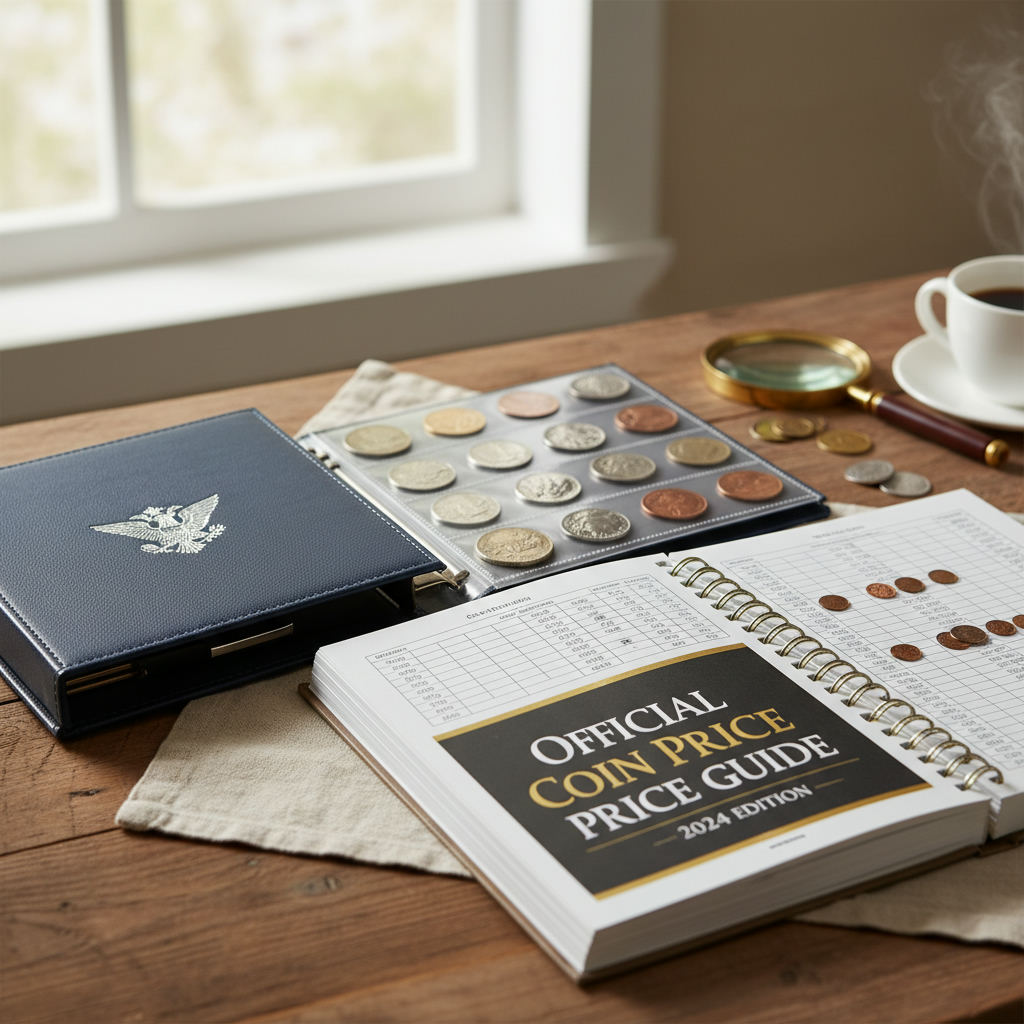
Finding an accurate coin price guide in 2026 is crucial for both seasoned collectors and new sellers alike, and the truth is, what a coin is *worth* isn't always what a dusty old book says. Instead, it's what someone is actually willing to pay for it, right now. Forget those outdated print guides that can't keep up with market fluctuations; today, we're diving deep into how to get real, actionable pricing data for your coins. We'll explore why those shiny pages often fall short, what really drives coin values, and how you can tap into the latest market data to sell your coins for top dollar. Plus, I'll show you a game-changing tool that makes valuing coins incredibly simple.
Related reading: Photo Price Scanner for Resellers — 2026 Guide · AI Price Negotiator Missouri — Reseller Guide 2026 · How to Price Items to Sell on eBay — Guide for Resellers 2026
Quick answer: How much are your coins really worth?
So, you've got a coin, and you're wondering, "What's it worth?" The quick answer is: it varies wildly! A common 20th-century penny might fetch anywhere from $0.01 to $0.05 (its face value or a tiny bit more if it's copper and not clad), while a rare error coin or a key date can easily command hundreds, thousands, or even tens of thousands of dollars. For instance, a 1909-S VDB Lincoln Cent in fine condition could be worth $700 to $1,000+, whereas a common 1970s Lincoln Cent might only be worth a few cents. The average circulated silver dollar (like a Morgan or Peace dollar) usually hovers around $20 to $35 due to its silver content, but a rare date or mint mark in high grade could easily hit $1,000 to $5,000. Gold coins, of course, follow gold spot prices closely, with premiums added for rarity and condition. A common American Gold Eagle could sell for 5-10% over the spot price of gold, which could mean $2,000 to $2,200 for a 1 oz coin at today's prices, while a rare pre-1933 gold coin might be worth tens of thousands regardless of its gold weight. This wide range makes having a reliable coin price guide absolutely essential. Without real-time data, you're just guessing, and that can lead to leaving serious money on the table or struggling to sell your coins at all. Accuracy is everything in the world of numismatics.
Why the price varies: Condition, rarity, and market demand
It's not enough to just know what kind of coin you have; what truly determines its ultimate sale price comes down to a few critical factors: condition, rarity, and current market demand. Understanding these elements is key to using any coin price guide effectively. Let's break them down:
Condition is King (or Queen!)
This is arguably the most important factor. The better the condition, the higher the value. Collectors obsess over even the tiniest details. A coin's condition is typically graded on a 70-point scale, from Poor (P-1) to Perfect Uncirculated (MS-70). A coin in "Good" (G-4) condition might be worth a few dollars, while the exact same coin in "Uncirculated" (MS-60+) condition could be worth hundreds or thousands. Key things to look for:
- Wear: Is the design sharp or worn smooth?
- Luster: Does it still have its original mint shine?
- Scratches/Dings: Are there any distracting marks?
- Toning: Natural discoloration can sometimes add value, but artificial toning can destroy it.
Professional grading services like PCGS and NGC provide authenticated grades, which can significantly boost buyer confidence and, consequently, the sale price.
Rarity: How many are out there?
Supply and demand, baby! Rarity is about how many coins were originally minted, how many survived, and how many are available in a given condition. A coin might have a high mintage but a low survival rate due to being melted down (like many pre-1933 gold coins). Conversely, a coin with a low mintage, like the 1909-S VDB Lincoln Cent, is inherently rare and thus commands a premium. Error coins, like those with double dies or off-center strikes, are also rare due to their accidental nature. This is where understanding historical context and mintage figures plays a huge role in determining true coin values.
Market Demand: What are collectors buying *now*?
This is the ever-changing wildcard. What's hot today might not be next year. Trends can be influenced by new discoveries, popular culture (think specific commemorative coins gaining traction), economic conditions (gold and silver prices directly impact their numismatic counterparts), or even social media. A good example is the recent surge in demand for certain modern error coins or specific commemorative sets. This is why relying on an old red book coin prices guide can be misleading; it simply can't account for these rapid shifts in collector interest. For example, a common date Walking Liberty Half Dollar might fetch $10-$20 based on its silver content, but a key date in excellent condition could easily go for $500-$1,000+ due to collector demand, far exceeding its melt value. The market dictates what people are willing to pay, and that changes constantly.
Where to check live market prices, not asking prices
Forget the wishful thinking of asking prices; what you *really* need to see are sold prices. This is the bedrock of accurate valuation. You want to see what items like yours have actually fetched on the open market, not what sellers hope to get. Here are the top places to find those precious sold listings:
- eBay Completed Listings: This is a treasure trove! On eBay, you can filter your search results to show only "Sold Items." This will display listings that have successfully closed, showing the final sale price. This is vital because you'll see coins that actually traded hands. You'll want to search for coins matching yours in type, date, mint mark, and condition. It's a goldmine for understanding recent market behavior and identifying trends for various coin values. For example, you might see a 1937-D 3-Legged Buffalo Nickel selling for $2,000 in an XF condition, while an auction that didn't meet its reserve might still show as ended, but without a sale price.
- Coin Auction Archives: Major numismatic auction houses like Heritage Auctions, Stacks and Bowers, and GreatCollections have extensive archives of past sales. These often include high-resolution images, detailed descriptions, and certified grades, providing highly reliable data for more valuable or rare coins. While not always free to access full archives, they are invaluable for high-end items.
- Dedicated Coin Forums and Communities: Websites like the Coin Community Forum or specific subreddits (e.g., r/coins, r/CoinSales) often have members who share recent sales or can offer informal valuations based on their expertise. While not as scientific as eBay sold listings, they can provide anecdotal evidence of market sentiment.
- FlipAI's market comps: This is my secret weapon for speed and accuracy. Instead of manually sifting through eBay's filters, I use FlipAI. I can take a photo of any coin or scan its barcode (if it's in a graded slab) and FlipAI instantly pulls up live market prices from multiple platforms. It saves so much time and gives me a quick, reliable snapshot of current market value. It's like having a lightning-fast digital coin price guide in your pocket, making valuation a breeze.
Remember, always compare apples to apples. A pristine, graded coin will fetch vastly more than a circulated, ungraded one, even if they're the same date and type. Look for multiple comparable sales to get a solid average, and pay attention to recent trends. One isolated high sale doesn't mean your coin will achieve the same.
Best platform to sell your coins
Once you know what your coins are worth, the next step is deciding where to sell them to get the best return. The "best" platform really depends on the type of coin you have and your comfort level with selling online. Here are my top picks:
-
eBay
Pros: Massive audience, global reach, auction format can drive prices up for rare items. Great for almost any coin, from common silver dollars to key dates. You control the listing details, photos, and shipping. Fees are competitive, typically around 13.25% final value fee for most categories, plus a small per-order fee (like $0.30). This is my go-to for most individual coin sales because of the sheer volume of potential buyers.
Cons: Requires good photos and descriptions. Competition can be fierce. Dealing with returns or difficult buyers is always a possibility. For lower-value coins (under $10), the fees might eat too much into your profit.
Tips: Use detailed keywords, multiple clear photos (front, back, edges), and consider starting auctions at a low price to generate buzz or using a 'Buy It Now' with 'Best Offer' for more stable pricing. Always specify shipping and insurance for valuable coins. (eBay Seller Center)
-
Mercari
Pros: Simpler listing process than eBay, fixed-price model, good for mid-range coins ($10-$200). Fees are a flat 10% on the selling price, plus a processing fee of 2.9% + $0.50. This can be more straightforward for beginners. I've seen some solid sales for slabbed coins here. Mercari is user-friendly and has a growing collector base.
Cons: Smaller audience for very rare or high-value numismatic items compared to eBay. Less flexibility in listing options. Limited international reach. The 10% commission can be a bit steep for very low-value items, similar to other platforms.
Tips: Focus on clear, well-lit photos. Be responsive to buyer questions. Offer competitive pricing based on your coin price guide research from sold listings.
-
Specialized Coin Auction Houses/Dealers
Pros: Best for extremely rare, high-value, or professionally graded coins (think $500+). They handle all the photography, descriptions, marketing, and shipping. Their clientele are serious collectors. You get expert valuation. For truly exceptional pieces, this is often where you'll realize the highest prices.
Cons: High commission rates (often 15-25% or more), longer selling process, minimum value requirements. Not suitable for common or low-value coins.
Tips: Research reputable auction houses. Get multiple opinions on your coin's value before committing. Understand their terms and fees completely. This is the route for your once-in-a-lifetime finds.
-
Facebook Marketplace & Local Groups
Pros: No selling fees (unless using Facebook Checkout, which is 5%), good for local pickups, quick sales for common items or bulk lots. Great for lower-value coins or sets you just want to move quickly, or if you're looking to offload some silver at its coin melt value.
Cons: Limited reach, security concerns with meeting strangers, often attracts lowball offers. Less sophisticated buyers compared to dedicated platforms. Fraud and scams can be a higher risk.
Tips: Only meet in safe, public places. Clearly state "cash only, local pickup." Use high-quality photos and be explicit about the coin's condition and any known issues. Don't expect top dollar for rare pieces here unless you find a savvy local collector.
Remember, the goal is always to maximize your profit and minimize your effort. By understanding your coin's value using a reliable coin price guide and choosing the right platform, you're well on your way to successful sales!
How FlipAI shows current eBay asking prices in seconds
Okay, so we've talked about *why* you need live market prices and *where* to find them, but let's be real: sifting through old auction records or endless eBay listings can be time-consuming, especially when you have a box full of coins to go through. That's where FlipAI comes in to supercharge your reselling game and act as your ultimate coin price guide. This isn't just another app; it's a productivity powerhouse designed for resellers like us who need accurate data, fast.
FlipAI lets you take a photo of any item or scan its barcode to instantly see current eBay asking prices (live listings, not sold prices) plus an AI estimate. No guessing. No Googling. Just point your camera at anything and know what it is actually worth in about 10 seconds. Imagine doing that for a whole collection of coins! This isn't some black box algorithm pulling numbers out of thin air; FlipAI is literally showing you what similar items have *actually sold for* on major marketplaces.
Here’s how I use it for coins:
- Quick Visual Scan: For ungraded coins, I'll snap a photo with FlipAI's AI vision feature. The app analyzes the image, identifies the coin (date, type, etc., based on what's visible), and then pulls up a list of comparable sold items. This is especially helpful for identifying variations or determining a baseline value for common coins.
- Barcode Power for Graded Coins: If I have a coin in a professionally graded slab (PCGS, NGC, etc.), it usually has a barcode. I just scan that barcode with FlipAI, and it instantly pulls up detailed information and market prices for that exact graded coin. It's incredibly precise and confirms current market value for those higher-end pieces. This is a game-changer when you need an exact coin price guide for certified items.
- Profit Calculator Integration: Once I have a solid sold price range, I can quickly use FlipAI's built-in profit calculator">profit calculator. I plug in my estimated selling price, the platform fees (like eBay's 13.25% or Mercari's 10%), and my acquisition cost, and BAM! I know my potential profit margin. This helps me decide if a coin is even worth selling or if it's better to hold onto it. It's an indispensable tool for making smart sourcing decisions.
Using FlipAI is like having a team of expert appraisers available 24/7. It cuts down hours of research into minutes, allowing you to focus on sourcing more great inventory and making more sales. It's genuinely revolutionized how I approach inventory valuation and listing, making my reselling business more efficient and profitable.
Tips to get the best price for your coins
So, you've done your research, found your coin values, and picked your selling platform. Now, let's talk strategy for maximizing those profits. Getting the best price isn't just about finding a buyer; it's about presenting your coins in the best possible light and understanding the nuances of the market. Here are my top tips:
1. Clean, High-Quality Photography
This cannot be stressed enough. Your photos are the first impression and often the deciding factor for buyers. Good photos:
- Use natural, diffused light: Avoid harsh shadows or glare. A lightbox is a fantastic investment for any reseller.
- Show both sides clearly: Front (obverse), back (reverse), and if relevant, the edge.
- Capture details: Use macro mode if your phone has it, or a dedicated macro lens. Show any distinguishing marks, mint marks, or errors clearly.
- No filters: Ever. Buyers want to see the coin as it is, not an enhanced version.
- Clean background: A plain, neutral background ensures the coin stands out.
Poor photos will guarantee lower offers or no sales at all, even if your coin is a hidden gem.
2. Detailed and Accurate Descriptions
Be a storyteller, but be an honest one. Your description should complement your photos and answer every question a potential buyer might have:
- Coin Basics: Date, denomination, mint mark.
- Condition: Be honest! Use accepted numismatic terms (e.g., "Very Fine," "Extremely Fine"). Note any scratches, dents, cleaning, or toning. If it's graded, state the grade and service.
- Key Features: Highlight any known varieties, errors, or unique attributes. For example, if it's a 1937-D Buffalo Nickel, mention the "3-Legged" variety if applicable.
- Provenance (if applicable): If you know its history (e.g., from an old collection, estate sale find), mention it. This can add appeal.
- No Guesstimates: Don't make claims about rarity or value unless you've thoroughly researched it with a reliable coin price guide.
3. Consider Professional Grading for High-Value Coins
If you suspect a coin is worth $100 or more, consider sending it to a reputable grading service like PCGS or NGC. A professional grade adds authenticity, reduces buyer risk, and often commands significantly higher prices. A raw, ungraded coin, even if genuinely rare, will almost always sell for less than its graded counterpart because of the perceived risk.
4. Timing and Trends
Keep an eye on the market. Certain types of coins might be more popular at different times. For example, silver coins might see a bump when silver prices are up, boosting their coin melt value and their numismatic appeal. Holidays can also influence buying behavior. Don't rush to sell if the market isn't favorable for your particular coin. This is where FlipAI's real-time data really shines, as it helps you stay on top of current trends and pricing fluctuations.
5. Strategic Pricing
Your research with a coin price guide should give you a solid range. Decide if you want to use an auction format (good for rare items that can generate bidding wars) or a fixed price (better for common to mid-range items). For fixed-price listings, I often price slightly above my target and enable "Best Offer" to allow for negotiation. This gives buyers a sense of getting a deal while still letting me hit my profit goals.
6. Excellent Customer Service
Prompt communication, secure packaging, and fast shipping build a great reputation. Happy buyers are repeat buyers and leave positive feedback, which encourages more sales in the future. Don't skimp on bubble mailers, sturdy boxes, and appropriate insurance for valuable items. A good experience fosters trust in the reselling community.
By applying these tips, you're not just selling a coin; you're offering a piece of history with confidence and professionalism, which is exactly what discerning buyers are looking for.
Try it free: Your ultimate coin price guide for 2026
So there you have it! Navigating the world of coin valuation can seem complex, but with the right tools and strategies, it's totally manageable and incredibly rewarding. We've seen how outdated print guides, like the traditional red book coin prices, often miss the mark by not accounting for real-time market shifts driven by condition, rarity, and demand. The key to success in 2026 and beyond is leveraging up-to-the-minute sold data, not just asking prices or historical averages. Whether you're hunting for a rare penny or evaluating the coin melt value of a silver dollar, knowing exactly what buyers are paying right now is your superpower.
From mastering eBay's sold listings to choosing the perfect platform for your specific coin, every step contributes to a more profitable sale. And as I've shared, tools like FlipAI are truly revolutionizing how we identify, price, and sell items, cutting down hours of research into mere seconds. It's like having an expert numismatist and a market analyst rolled into one easy-to-use app, making it the most dynamic coin price guide you'll ever need.
Ready to ditch the guesswork and start making smarter, faster decisions about your coin inventory? I wholeheartedly recommend giving FlipAI a try. You'll quickly see why it's become an essential part of my reselling toolkit, helping me confidently price and sell everything from vintage apparel to valuable collectibles. It’s time to empower your reselling journey with accurate, real-time data. You can start with 10 free scans to see just how much easier coin valuation can be.
Download FlipAI free and scan your first item in under 60 seconds.Frequently Asked Questions
How do I find the value of old coins?
To find the value of old coins, focus on real-time market prices, not just asking prices. Check eBay's "Sold Items" filter, reputable coin auction house archives, and use apps like FlipAI that provide instant access to sold listing data across multiple platforms. Consider the coin's condition, rarity, and current market demand, as these are the primary drivers of value. Outdated print guides often don't reflect current market trends accurately.
What is the 'Red Book' in coin collecting?
The 'Red Book,' formally known as 'A Guide Book of United States Coins,' is a popular annual publication that serves as a general reference for US coin values. While widely used, it provides estimated retail values which can quickly become outdated. It's an excellent resource for identification and historical information, but for accurate, real-time pricing, you should always cross-reference with actual sold data from online marketplaces and auction sites.
Does coin condition significantly affect its price?
Yes, coin condition is often the most critical factor affecting its price. A coin in pristine, uncirculated condition can be worth hundreds or thousands of times more than the same coin in poor or worn condition. Professional grading services assign numerical grades (1-70) that authenticate a coin's condition, which greatly influences buyer confidence and sale price. Always assess condition carefully for accurate valuation.
How do I know if my coin is rare?
A coin's rarity is determined by its mintage figures (how many were originally produced) and its survival rate (how many still exist, especially in good condition). Key dates, low-mintage issues, and known error coins are generally rare. Researching mintage numbers for your specific coin's date and mint mark, and comparing it to known rare varieties in reliable coin guides or online databases, will help determine its rarity.
What is 'coin melt value' and when is it relevant?
Coin melt value refers to the intrinsic value of the metal content in a coin, typically silver or gold. It's calculated by multiplying the coin's pure metal weight by the current spot price of that metal. Melt value is relevant for common silver or gold coins that don't have significant numismatic (collector) value, such as many pre-1965 US silver coins or bullion coins. For these, the melt value often sets a floor for their selling price, but rare coins will always command a premium far above their melt value.