How to find the best thrift stores near you — 2026 Guide
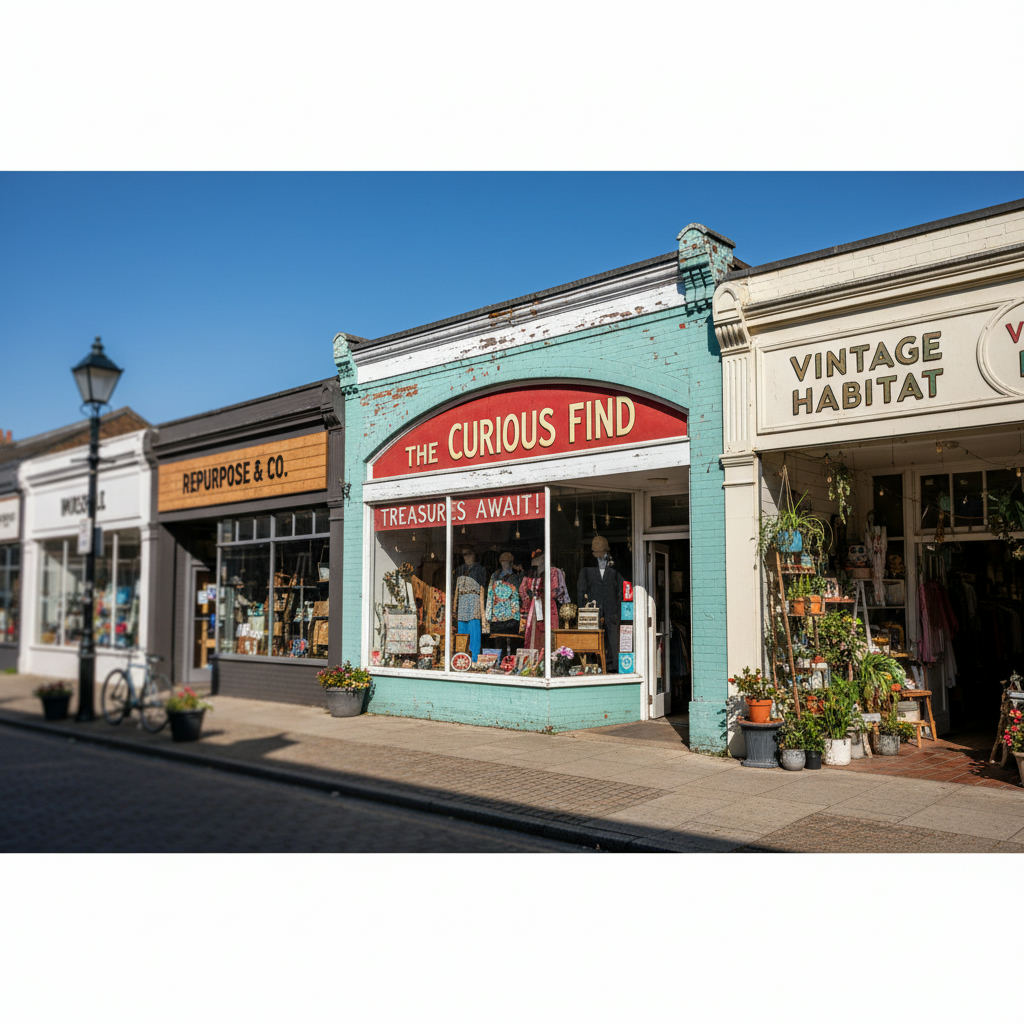
So, you want to know how to find the best thrift stores near you? It's not just about luck; it's about strategy, preparation, and knowing what to look for. Just last week, I stumbled into a local Goodwill that I’d never visited before, tucked away in a strip mall I usually ignored. On a whim, I decided to pop in. Within minutes, I found a pristine, vintage Coach handbag for $12.99! A quick scan with FlipAI confirmed it was authentic and easily selling for $150-$200 on Poshmark. That one find paid for my entire day of sourcing and then some. This guide will walk you through my proven methods for consistently finding those profitable gems, making sure you don't miss out on amazing flips. We'll cover everything from scouting locations to quickly identifying high-value items and leveraging tools like FlipAI to make your sourcing trips incredibly efficient. If you’re serious about thrifting for profit, stick with me – your reselling game is about to get a serious upgrade!
Related reading: How to Find Rummage Sales Near You in 2026 · How to Find the Value of Something You Own (2026 Step-by-Step) · How to Find the Value of Something You Own (2026 Step-by-Step)
Quick answer
The most profitable categories to source from thrift stores include vintage clothing (especially denim and designer items), collectible housewares (mid-century modern, unique ceramics), and certain electronics or small appliances. Realistic profit margins often range from 50% to over 500% on individual items, with average flips bringing in $20 to $100 per item after fees. Top resellers consistently turn $5-$20 thrift store finds into $50-$200 sales by targeting specific brands and conditions.
Why this is profitable right now
The reselling market is absolutely booming, making it an incredible time to master how to find the best thrift stores near you. There's a huge surge in demand for sustainable shopping, unique vintage pieces, and affordable alternatives to new retail, all of which thrift stores supply in spades. Platforms like eBay, Poshmark, Mercari, and even TikTok Shop have made it easier than ever to reach millions of potential buyers who are specifically looking for pre-owned items. People are tired of fast fashion and mass-produced goods; they want character, quality, and a story behind their purchases. This shift in consumer behavior directly translates to higher sell-through rates and better prices for well-sourced thrifted items.
Economically, thrifting remains a smart move for both buyers and sellers. With inflation impacting discretionary spending, more consumers are turning to the secondary market for everything from everyday clothing to specialty goods. For resellers, this means a steady stream of customers. Plus, the sheer volume of donations means thrift stores are constantly cycling new inventory. Unlike retail, where you're competing on price for new items, thrifting allows you to buy unique, undervalued items and set your own profit margins. The key is to be consistent, know what sells, and understand how to present your finds. Even with rising gas prices and slightly increased thrift store prices in some areas, the profit potential far outweighs the costs if you're strategic.
Furthermore, the digital tools available to resellers today, like FlipAI, have dramatically lowered the barrier to entry and increased efficiency. You no longer need to be an expert in every category; you just need to know how to research quickly. This technological advantage, combined with a robust online marketplace, makes 2026 an prime year for turning thrift store finds into serious cash. It's a low-overhead business model that can scale from a side hustle bringing in an extra $200-$500 per month to a full-time income if you put in the work and refine your sourcing skills.
What to look for
When you're out scouting for the best thrift stores near me, the initial focus isn't just on the items themselves, but on the environment. High-quality areas often yield higher-quality donations. Look for stores in more affluent neighborhoods or near areas with a strong community presence. These locations tend to receive donations of designer clothing, higher-end home goods, and items that were originally more expensive. However, don't discount stores in less obvious spots; sometimes these are hidden gems with less competition.
Once inside, your eyes should be scanning for specific categories and conditions. I always prioritize these:
- Apparel: Focus on brand names, natural fibers (silk, wool, linen, cashmere), unique vintage styles, and items in excellent condition. Look for activewear brands like Lululemon, Athleta, and Patagonia; denim from Levi's (especially vintage 501s), Madewell; and contemporary brands like Anthropologie, Free People, or Eileen Fisher. Don't forget accessories – high-quality leather bags, brand-name shoes (Allen Edmonds, high-end athletic sneakers), and unique jewelry can be goldmines.
- Housewares & Decor: Mid-century modern (MCM) pieces, unique art glass, specific ceramic brands (Fiestaware, Pyrex, specific pottery artists), vintage electronics (boomboxes, record players if tested), and anything with a distinct artistic or historical value. I've found everything from Le Creuset cookware to collectible Barbies in this section. Pay attention to labels, signatures, and country of origin.
- Books & Media: First editions, rare or out-of-print books, complete vintage board games, sealed video games, and sometimes even vinyl records if you know what to look for. Check condition carefully for books – dust jackets and pristine pages significantly increase value.
- Small Electronics & Appliances: Brand-name coffee makers (Keurig, Nespresso), blenders (Vitamix), stand mixers (KitchenAid), vintage cameras, or even unique gadgets can sell well, but always ensure they work before buying. If possible, bring a small battery pack to test electronics.
- Collectibles: This is a broad category but includes anything from vintage toys (Legos, action figures) to sports memorabilia. The key here is specific knowledge or quick research. Sometimes a rare trading card or a vintage comic book can be hiding in plain sight. For more on this, check out our guide on flipping sports cards.
Condition is paramount. Even a desirable brand won't sell if it's stained, torn, or broken. Always check zippers, seams, buttons, and for any major defects. Minor flaws might be acceptable if the item is very rare or high-value, but generally, look for items that require minimal to no cleaning or repair.
How to spot value quickly
Spotting value quickly is the superpower of any successful thrifter. It's not about endlessly browsing; it's about rapid assessment. My first trick is to train my eyes for certain colors, textures, and patterns that often indicate quality or brand. For instance, I look for the rich sheen of silk, the sturdy drape of linen, or the subtle texture of cashmere. Certain brand logos or tags also pop out to me after years of practice.
Here’s my rapid-fire checklist when I’m scanning racks or shelves:
- Brand Recognition: Develop a mental list of brands that consistently sell for good money. For clothing, think Lululemon, Patagonia, Free People, Madewell, Levi's (especially vintage), Eileen Fisher, higher-end denim brands, and any designer labels. For housewares, look for Le Creuset, Pyrex (specific patterns), FiestaWare, vintage CorningWare, or any mid-century modern design.
- Quality & Material: Touch everything. Is it real leather? Is it solid wood? Is the fabric silk, cashmere, merino wool, or linen? These natural fibers almost always hold more value than polyester blends. Look for sturdy construction, well-finished seams, and quality hardware (zippers, buttons).
- Condition: A quick visual scan for stains, tears, pilling, missing buttons, or major damage. If it's not perfect or near-perfect, it needs to be an incredibly rare or high-value item for me to consider it. Time is money, and cleaning/repairing eats into profits.
- Unique & Vintage Appeal: Is it a one-of-a-kind piece? Does it have a distinct vintage aesthetic that's currently trendy? Think 90s sportswear, 70s bohemian, or 60s mod. This often requires a good eye for current trends.
- Weight & Feel: Quality items often have a certain heft or feel. A heavy, well-made cast iron pan feels different from a flimsy one. A substantial ceramic piece feels different from cheap mass-produced pottery.
I also have a routine for navigating the store. I usually start in a high-turnover section like women's clothing, then hit housewares, and finish with electronics or collectibles. I don't dawdle in sections that historically haven't been profitable for me. By quickly assessing these factors, I can decide if an item warrants a closer inspection or a quick price check with my phone. This efficiency is crucial for maximizing your time when visiting multiple local thrift stores.
Average profit margins for this category
Understanding average profit margins is key to making smart buying decisions at local thrift stores. It's not just about the sale price, but what you pocket after all expenses. For thrifted items, margins can vary wildly depending on the item, its original value, and how much you paid. Generally, I aim for a minimum 3x markup on what I pay, but often I get much, much more.
Clothing & Accessories:
- High-end designer: If I snag a true designer item (e.g., a vintage Louis Vuitton bag, a Burberry trench coat) for $20-$50, I can often sell it for $200-$500+. After Poshmark's 20% fee (for items over $15) or eBay's 13.25% final value fee, my profit can be $100-$400, representing a 200%-1000% margin.
- Mid-tier brands (Lululemon, Madewell, Anthropologie): A pair of Lululemon leggings for $7-$10 can easily sell for $40-$60. On Mercari (10% fee), that's a $29-$47 profit, a 300%-600% margin.
- Vintage denim (Levi's 501s): If I find a good pair for $10-$15, they often fetch $50-$80. After a 10% Depop fee, I'm looking at $30-$60 profit, or 200%-500% margin.
Housewares & Collectibles:
- Collectible ceramics/glass (MCM, Pyrex): A unique vase for $5-$10 could sell for $40-$80. Assuming eBay's 13.25% fee and shipping costs, a $20 shipping label, you still net $25-$55, which is a 250%-500% margin.
- Small electronics/appliances: A working Nespresso machine for $15 can sell for $70-$100. After fees and a $25 shipping cost, that's $30-$50 profit, a 200%-300% margin.
It's crucial to factor in all costs: the purchase price, selling platform fees (eBay's 13.25%, Poshmark's 20% on sales over $15, Mercari's 10%, Depop's 10%), shipping supplies, and the time you spend cleaning/photographing/listing. My goal is always to find items where the profit margin is robust enough to absorb unexpected costs or slower sales. That's why quick valuation before buying is non-negotiable. For managing all these numbers, a profit calculator can be your best friend!
Check value before you buy
This is where the rubber meets the road, friends! You've found an item you think has potential at one of the best thrift stores near you. It looks good, the brand is right, the condition is excellent. Now what? You absolutely, positively *must* verify its market value *before* you head to the checkout. Guessing is for amateurs, and it leads to dead inventory and lost money.
My secret weapon for this crucial step? FlipAI, hands down. Forget standing in the aisle trying to type out long descriptions into Google and sift through endless results. That's slow, inefficient, and often inaccurate because you're seeing asking prices, not *sold* prices. The difference between what someone wants for an item and what someone actually pays can be huge.
This is where FlipAI shines. FlipAI lets you take a photo of any item or scan its barcode to instantly see current eBay asking prices (live listings, not sold prices) plus an AI estimate. No guessing. No Googling. Just point your camera at anything and know what it is actually worth in about 10 seconds. I can’t tell you how many times I’ve used FlipAI's AI vision to scan a unique piece of pottery or a vintage jacket, and instantly see its actual market comps. It helps me make an informed decision on the spot, telling me if that $8 thrift store find is a $20 flip or a $200 jackpot. It saves me from buying duds and ensures I don't leave money on the table by passing up a hidden gem.
In addition to checking sold comps, here’s how I quickly evaluate:
- Check multiple platforms: An item might sell better on Poshmark (fashion), eBay (collectibles, electronics), or Mercari (general goods). FlipAI shows you all of these so you can see where it performs best.
- Filter by condition: Make sure the sold listings you're comparing against match the condition of your item. A "new with tags" item will sell for more than a "gently used" one.
- Consider shipping: Factor in potential shipping costs when evaluating the profit. Heavier or oddly shaped items can eat into your margins.
- Seasonality: Is it a winter coat in July? It might sit longer, so factor that into your pricing strategy.
Never rely on intuition alone. Data is king, and FlipAI gives you that data instantly, empowering you to make profitable decisions every single time you source. This quick check is the difference between a successful reselling business and a cluttered garage.
Where to sell what you find
Once you’ve mastered how to find the best thrift stores near you and snatched up some fantastic inventory, the next crucial step is knowing where to sell it. The beautiful thing about the modern reselling landscape is the sheer number of platforms available, each with its own niche and advantages. The key is to match your item to the right marketplace for optimal exposure and profit. This is also where a tool like FlipAI, with its crosslisting feature, becomes incredibly powerful.
Here are my go-to platforms and what they're best for:
eBay
- Best for: Collectibles, vintage items, electronics, unique housewares, tools, and a wide variety of general merchandise. It has the largest audience and allows for both auction and fixed-price listings.
- Fees: Typically a 13.25% final value fee for most categories, plus a small insertion fee if you exceed your free listing quota.
- Tip: Great for items with an established secondary market value. Use good keywords and clear photos. You can learn more about selling successfully on eBay at eBay Seller Center.
Poshmark
- Best for: Fashion – women's, men's, and children's clothing, shoes, accessories (handbags, jewelry). It’s very community-driven.
- Fees: $2.95 for sales under $15; 20% for sales $15 and over. Simple, flat fee structure.
- Tip: High-quality photos are essential. Engage with the community by sharing and following. Poshmark provides a great guide at Poshmark's Seller Guide.
Mercari
- Best for: Almost anything. It's a general marketplace similar to eBay but with a slightly simpler interface and often attracts buyers looking for good deals.
- Fees: 10% selling fee, plus a processing fee (typically 2.9% + $0.50).
- Tip: Offers a “make an offer” feature, so price a bit higher to allow for negotiation.
Etsy
- Best for: Vintage items (must be at least 20 years old), handmade goods, craft supplies, unique decor.
- Fees: $0.20 listing fee per item, 6.5% transaction fee, plus payment processing fees.
- Tip: Focus on storytelling and aesthetic. A well-curated shop thrives here. Find out more at Etsy Sell.
Facebook Marketplace & TikTok Shop
- Best for: Local pickup items (furniture, large electronics) on Facebook. TikTok Shop is rapidly growing for trending fashion, beauty, and unique items often discovered through video content.
- Fees: Facebook Marketplace is generally free for local sales; shipping sales incur a 5% fee. TikTok Shop has varying commission rates.
- Tip: Great for quick, local sales. For TikTok, lean into short, engaging videos showcasing your items.
To maximize your sales and reach, I highly recommend cross-listing your items. This means listing the same item on multiple platforms (e.g., Poshmark, Mercari, eBay). FlipAI’s crosslisting tool makes this incredibly easy, saving you hours of manual input. Just remember to remove an item from all other platforms as soon as it sells on one to avoid double-selling! Expanding your reach across these platforms is a fundamental strategy for any serious reseller.
Get started
There you have it! Finding the best thrift stores near you is a skill that combines research, a keen eye, and smart tools. Remember, it's not just about luck; it's about consistently applying proven strategies: scouting locations in affluent areas, training your eye for valuable brands and materials, quickly assessing condition, and most importantly, verifying worth before you buy. My vintage Coach bag story is just one of many, and with FlipAI, you can create your own success stories every single time you source.
Start small, focus on categories you understand or are interested in, and don't be afraid to experiment. The more you practice, the better you'll get at spotting those hidden gems that others overlook. Every sourcing trip is a learning experience, and every successful flip builds your confidence and your bank account. Leverage the power of technology to give yourself an unfair advantage. FlipAI helps you confirm value, manage your inventory, and crosslist efficiently across all major platforms, turning casual thrifting into a serious business.
The secondary market is thriving, and there's never been a better time to jump in and start flipping. Your next big score is just a thrift store visit away! Start your 5-day free trial and flip smarter today.
Frequently Asked Questions
How do I find the best thrift stores near me?
To find the best thrift stores, start by researching stores located in more affluent neighborhoods, as they often receive higher-quality donations. Use online maps (Google Maps, Yelp) to find local options and read reviews for insights. Don't be afraid to visit smaller, less-known stores, as these can be hidden gems with less competition. Checking community forums or local Facebook groups can also reveal popular or under-the-radar spots.
What items are most profitable to flip from thrift stores?
Highly profitable items often include vintage clothing (especially designer pieces, denim like Levi's 501s, and natural fibers like cashmere or silk), collectible housewares (mid-century modern decor, specific ceramic brands like Fiestaware or Pyrex), small working electronics, and unique or rare books/media. Brand recognition, condition, and current market demand are key factors in determining profitability. Always check sold comps before buying.
How can I quickly check the value of an item at a thrift store?
The fastest and most reliable way to check an item's value is by using a dedicated reselling app like FlipAI. Simply take a photo of the item or scan its barcode, and the app will instantly show you real-time market prices from multiple platforms like eBay, Poshmark, and Mercari. This eliminates guessing and provides accurate market data within seconds, helping you make informed buying decisions on the spot.
What platforms are best for selling thrifted items?
The best selling platforms depend on the item. eBay is excellent for collectibles, vintage items, and electronics due to its broad audience. Poshmark excels for fashion, clothing, and accessories. Mercari is a versatile marketplace for almost any item, often attracting deal-seekers. Etsy is ideal for true vintage items (20+ years old) and unique handcrafted goods. For local sales, Facebook Marketplace is very effective for larger items like furniture.
What profit margins can I expect from reselling thrift store finds?
Profit margins from reselling thrifted items can vary significantly but are often quite high. Many resellers aim for a minimum 200-300% return on investment after all fees. For example, an item bought for $10 and sold for $50 (after fees) represents a 400% margin. High-value finds can yield 500-1000% margins or more. Always factor in the purchase price, selling platform fees, shipping costs, and your time when calculating your true profit.