Vintage Levi's Jeans Value: What Your Pair Is Really Worth in 2026
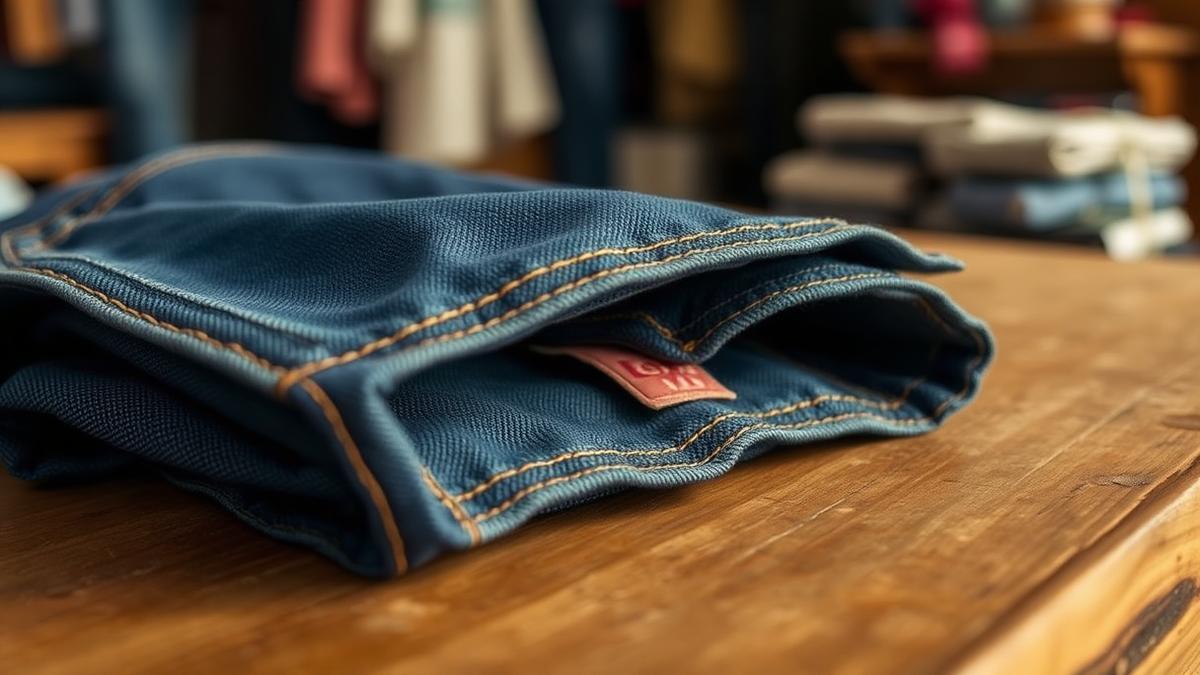
Start with the tab, not the label
The small fabric tab stitched into the seam of the back right pocket is the fastest and most important dating signal on any pair of Levi's jeans. Before you check anything else, examine this detail closely. It's the first gate in determining if you have a common pair or a collector's item.
- Big E ("LEVI'S") — used until roughly 1971. The brand name was stitched in all capital letters. Big E pairs are the ones that command real money, commonly fetching $150–$800 for wearable 501s and far more for rare cuts and early dates. The transition from Big E to small e was gradual, so you might find some overlap, but 1971 is the accepted cutoff.
- Small e ("Levi's") — 1971 onward. The brand name switched to a lowercase 'e'. The value of these pairs comes from the specific model, era, and condition rather than the tab itself. However, an early 1970s small-e selvedge pair can still be worth several hundred dollars.
- No tab — This could mean two very different things. Jeans made before 1936 did not have the red tab. If you find a pair with other very old characteristics (like a cinch back and suspender buttons), you may have an extremely valuable artifact. More commonly, it means the tab was cut off or it’s a non-Levi's garment. Verify with other markers before getting excited.
Understanding Tab Colors and Variations
While the red tab is iconic, Levi's used other colors to differentiate their product lines:
- Orange Tab: Introduced in the 1960s for more fashion-forward and experimental styles like boot-cut 517s and bell-bottoms. Orange tab items were generally more affordable than the mainline red tab items. While most aren't as valuable as Big E red tabs, certain rare models in good condition can sell for $80-$150.
- White Tab: Typically found on corduroy garments and the "Levi's for Gals" line. A white tab with a Big E "LEVI'S" is a desirable find.
- Black Tab with Gold Lettering: Used for their "Sta-Prest" line of wrinkle-resistant pants from the 1960s.
- Blank Tab: Some tabs only have the ® symbol and no "Levi's" lettering. This is not a defect or a fake. Levi's had to produce a certain percentage of tabs this way to protect their trademark on the tab's placement itself, not just the name on it. These appear on roughly 1 out of every 10 pairs.
Then check the care tag and the numbers
After the tab, the most crucial evidence is on the tags inside the jeans. Flip the inner waistband to find either a paper-like patch or a fabric care tag. A three-digit style number (501, 505, 517) plus a factory code and date is the single most useful piece of evidence you can photograph. Points that move price:
- Selvedge (self-edge) outseam — the tight woven edge, often with a red line (known as "redline"), on the inside leg seam when you flip the cuff. This indicates the jean was made on an old-style shuttle loom. Broadly pre-1983 on US-made 501s, its presence is a significant premium.
- Single-stitch back pockets — Check the top hem of the back pockets. If it's secured with a single line of stitching, it's a pre-1976 indicator. Later pairs use a double-felled chain stitch.
- Hidden rivets under the back pocket corners point to earlier production, a feature discontinued around 1966.
- "Made in USA" — a consistent premium over later offshore production, all else equal. Production began moving overseas in the 1980s and '90s.
- Button Stamps: The back of the top button often has a one, two, or three-digit number stamped on it. This is the factory code. Redline, #6 or #2 stamped buttons, and the shape of the arcuate stitching all help narrow the decade. A #6 stamp, for example, is a common indicator for Big E pairs from the late '60s.
Decoding the Inner Tags
The inner tags are a treasure map if you know the language. On pairs from the 1970s onwards, you'll typically find a small fabric care tag. This tag's design, content, and placement evolved over time.
For example, a care tag that says "SF 207" and has very simple washing instructions often points to the 1970s. The breakthrough for dating came in the 1980s and 90s with the introduction of a more detailed paper-like tag. It usually contains a series of numbers like: 552 113 501-0115 32x36. Here's a breakdown:
- First 3 digits (e.g., 552): The factory code. The number '555' indicates the famous Valencia Street factory in San Francisco, which is highly prized by collectors.
- Next 1-3 digits (e.g., 113): The date code. This can be tricky. A 3-digit code might be Month-Year (e.g., '113' could mean November 1993, November 1983, etc.). A 4-digit code is usually Month-Year (MMYY), so '0894' would be August 1994. Cross-reference with other details like the red tab type to confirm the decade.
- Style and Wash Code (e.g., 501-0115): The first part is the style (501), and the second is the fabric/wash code (0115 is a common code for a shrink-to-fit rinse).
- Size (e.g., 32x36): The tagged waist and inseam. Always measure this yourself, as vintage denim shrinks and may have been altered.
Beyond the 501: Valuing Other Levi's Models and Jackets
While the 501 is the undisputed king, other Levi's models and their iconic trucker jackets hold significant value, especially in early versions. Knowing these can open up a whole new category of profitable finds.
The Iconic Trucker Jackets (Type I, II, III)
- Type I (506XX): Produced from the 1930s to early 1950s. Key features: one front pocket, a cinch back (no waistband buttons), and a knife-pleated front. A Big E version in good condition is a $1,000+ item.
- Type II (507XX): The 1950s evolution. Key features: two front pockets and buttoned waistband adjusters (no cinch back). A Big E Type II is highly sought after, often valued at $800–$2,500 depending on size and condition.
- Type III (557XX / 70505): The classic design most people recognize, introduced around 1962. It features the pointed pocket flaps and V-seams. Big E Type III jackets (pre-1971) are very collectible, with prices from $200–$600. Later small-e versions from the 70s and 80s (especially Made in USA) still sell well, typically $75–$150.
Valuable Jean Models Besides the 501
- Levi's 505: The zippered version of the 501. A pre-1971 Big E 505 is almost as valuable as its 501 counterpart, often in the $250–$700 range.
- Levi's 517: The classic boot-cut jean, often found with an orange tab. While 90s pairs are common ($25-$50), a 1970s "Made in USA" selvedge version can be a surprising find worth $150+.
- Levi's 201: A more budget-friendly version of the 501 from the early 20th century. Paradoxically, their rarity today makes them extremely valuable, often fetching prices comparable to or exceeding old 501s at auction.
If you find a jacket or an unfamiliar jean model, don't guess. Using a tool like FlipAI, you can take a photo of the item, and its image recognition can help identify the model and provide a current market value estimate, saving you from passing on a rare Type I jacket you thought was a common 80s piece.
Realistic 2026 Price Bands by Era and Condition
These are the sold-price ranges resellers see most often for the classic 501 model. Treat them as brackets to check against real-time comps, not fixed prices. Condition and desirable sizing can push an item to the top of its range, or even past it.
| Era / Model | Key Identifiers | Common Price Range (USD) |
|---|---|---|
| 1990s-2000s, Offshore | Small 'e' tab, fabric care tag, made in Mexico, Colombia, etc. | $20–$45 |
| 1990s, Made in USA | Small 'e' tab, paper-like tag, "Made in USA" | $45–$90 |
| 1980s Selvedge 501 | Small 'e' tab, redline selvedge, paper tag, Made in USA | $120–$300 |
| 1970s Small 'e' Selvedge | Small 'e' tab, single stitch pockets (early 70s), redline selvedge | $200–$600 |
| Big E 501/505 (late 60s) | Big 'E' tab, V-stitch top button, selvedge, #6 button stamp | $300–$900 |
| 1950s-early 60s 501XX | Big 'E' tab, hidden rivets, leather-like 'Jacron' patch | $1,000–$3,000+ |
| Pre-1950s / Cinch Back | Cinch back, suspender buttons, no red tab (pre-36) | $2,000+, auction territory |
Two variables swing every band: size (a 32x32 sells for far more than a 44x30) and damage (crotch blowouts and rear pocket wear can cut a price in half, though heavy repairs sometimes add value in the collector market). A perfect fade or desirable wear pattern can significantly increase value, especially for Japanese buyers who prize the "wabi-sabi" aesthetic of beautifully worn denim.
Grading Condition: From Mint to Project Piece
The term "good condition" is subjective. Professional resellers use a more defined grading scale. Understanding these tiers is vital for accurate pricing and listing, preventing disputes and returns.
- Deadstock / New Old Stock (NOS): An item that is vintage but has never been worn, often with original tags attached. These are the rarest and most valuable, commanding a 1.5x to 3x premium over an excellent used equivalent.
- Mint / Near Mint: Appears to be unworn or worn only a handful of times. No visible flaws, stains, or fading. The denim is still dark and stiff.
- Excellent (EUC): Gently used with minor signs of wear. Light, even fading is acceptable. No major flaws like holes, stains, or structural damage. This is the sweet spot for high-value wearable vintage.
- Very Good (VGUC): Shows clear signs of wear, including noticeable fading (whiskers, honeycombs), but is structurally sound. May have small, professionally repaired holes or a few minor spots. Most vintage jeans fall into this category. The aesthetic appeal of the wear is key to its value.
- Good / Fair (Project Piece): Has significant structural issues like large holes, crotch blowouts, non-original repairs, or major staining. While value is diminished, these are often sold as "project pieces" for repair, harvesting fabric, or for a distressed punk look. Prices are low ($15-$40), but there's a market.
When you're out sourcing, you can use the FlipAI app on your phone to quickly snap a photo of the jeans. It helps you check what an item is worth by comparing it against similar items, but it also helps you identify the model number and approximate era from the tag photo, which is the first step to properly grading its condition.
How to price your specific pair in minutes
The theory above narrows the era. Live market prices tell you the exact market value today. The fastest route is to photograph the key details — tab, waistband tag, button, outseam — and let sold-comp data do the work.
A Step-by-Step Guide to Finding Comps
- Identify Key Features: Using the guide above, note your jean's model (e.g., 501), era (e.g., 1980s), key features (e.g., selvedge, Made in USA), and measured size (e.g., 33x31).
- Search on eBay: Go to eBay and search for a descriptive title, like "80s Levi's 501 selvedge USA".
- Filter by "Sold Items": This is the most crucial step. On the left-hand sidebar (on desktop) or under the "Filter" menu (on mobile), check the box for "Sold Items." This shows you what people actually paid, not what sellers are asking.
- Analyze the Results: Look for 5-10 listings that are a close match to your pair's condition and size. Ignore outlier prices (both very high and very low). Find the average. This is your target price range.
Worked Example: You find a pair of Made in USA Levi's 501s at a thrift store for $8. The tag says 34x32, but you measure them as 33x30. The red tab is small 'e'. The outseam is not selvedge. The care tag has a date code for 1991. You search eBay for "90s Levi's 501 USA" and filter by sold. You see pairs in similar condition and size selling consistently for $60-$75. You now have a data-backed price.
This manual process is effective but can take time. With FlipAI you can take a photo of any item or scan its barcode and get an estimated resale range built from millions of real market data points instantly, then sanity-check your margin before you buy. You can run the numbers in the free profit calculator to see your net profit after platform fees and shipping.
Where to sell vintage denim
Choosing the right platform is just as important as setting the right price. Each marketplace has a different audience, fee structure, and best practices.
eBay
- Target Audience: Global, diverse, with a strong contingent of serious vintage collectors, especially from Japan and Europe.
- Fee Structure: Roughly 13.25% on the total amount (including shipping) for most clothing categories, plus a $0.30 transaction fee.
- Best For: High-value, collector-grade items (Big E, selvedge, deadstock). The auction format can drive prices up for rare pieces, while "Buy It Now" with Best Offer works well for mid-tier vintage.
- Pro Tip: Use very descriptive titles with all key terms (e.g., "Vintage 70s Levis 501 Selvedge Redline Single Stitch Jeans 32x30 Big E"). Take at least 12 high-quality photos showing every detail mentioned in this guide.
Poshmark
- Target Audience: Primarily US-based women looking for stylish, wearable clothing. Strong for more recent vintage (80s-Y2K).
- Fee Structure: Simple and high: a flat $2.95 for sales under $15, and 20% for sales of $15 or more.
- Best For: Wearable 1990s and 2000s pairs, especially in popular sizes and fits (e.g., high-waisted "mom jeans").
- Pro Tip: Poshmark is a social platform. Share your listings frequently to keep them visible. Listing the measured waist, rise, and inseam is critical as buyers can't return for fit.
Depop / Grailed
- Target Audience: Younger (Gen Z, Millennial) buyers focused on curated aesthetics and streetwear trends. Grailed skews male and high-end; Depop skews female and eclectic.
- Fee Structure: Depop charges a 10% platform fee plus a transaction fee (around 3.5%). Grailed charges 9%.
- Best For: Styled and modeled 501s, 505s, and Type III jackets. Distressed and customized pairs can do very well here.
- Pro Tip: Photos are everything. Model the jeans or create a stylish flat-lay. Use trendy keywords in your description (#90s, #y2k, #vintagelevis).
Whichever platform you pick, measure flat and list the actual waist and inseam. Vintage denim shrinks, and mismatched tag sizes are the number one cause of returns. For more platform comparisons, check out our complete reseller guide.
Red flags that kill value
Some issues can turn a potential grail into a worthless piece. Be vigilant for these value-killers before you buy or sell.
- Reproduction Levi's Vintage Clothing (LVC): LVC creates high-quality, historically accurate reproductions. They are valuable in their own right ($100-$200+) but are sometimes misrepresented as original vintage. Look for an LVC-specific inner tag, often larger and more modern than a true vintage tag. They also use Big E tabs and selvedge denim, so checking all indicators is key. Use the FlipAI app to scan the tag and compare it against known vintage and LVC examples.
- Odor and Mildew: Musty smells from poor storage are extremely difficult to remove and are a valid reason for a buyer to return an item. Buyers return items for odor more often than for holes. If it smells bad, leave it behind.
- Irreversible Alterations: A pair that has been hemmed is less valuable than one with the original hem, especially if it's a chain-stitched selvedge pair. Tapered legs or a waist that's been taken in can destroy the value for a collector.
- Missing Key Features: A missing back patch or red tab on a pair being priced as collector-grade is a major problem. Replaced buttons, especially the top button, also significantly reduce value for purists.
- Extreme Damage in the Wrong Places: While fading and some wear are desirable, a completely blown-out crotch, torn belt loops, or broken zipper can render a pair almost worthless unless it's an extremely rare early model.
Bottom line
Mastering vintage Levi's value boils down to a sequence: Tab, Tag, Selvedge, Size, Condition — in that order. The red tab is your first filter: Big E means investigate further; small e means focus on the era and style. The inner tags provide the hard data—factory, date, and model. The presence of a selvedge outseam is your next major price multiplier. Finally, the true measured size and the specific condition, from fading to flaws, determine where it lands within its price bracket.
Most pairs you find in the wild will be 1990s or newer, landing between $20 and $90. This is still a fantastic flip on a $4 thrift store find. The rarer, triple-digit pairs announce themselves quickly if you know these four key checks, and using sold comps turns your educated guess into a confident, market-based price.
Related reading: What's it worth? The full value-lookup guide.
Frequently asked questions
How can I tell if my Levi's are 'Big E'?
Look at the small fabric tab on the back right pocket. If the name 'LEVI'S' is stitched in all capital letters, it is a 'Big E' pair. This style was used until 1971 and these jeans are significantly more valuable than the later 'small e' (Levi's) versions.
What does 'selvedge' mean on Levi's jeans?
Selvedge (or self-edge) refers to a clean, tightly woven edge on the outseam of the jeans, visible when you cuff the leg. It's often marked with a red thread, called 'redline'. It indicates the denim was made on an old-fashioned shuttle loom. On 501s, it's a key indicator of pre-1983 production and adds significant value.
Are 'Made in USA' Levi's always valuable?
Not always, but it's a strong indicator of higher quality and value compared to offshore production. A 'Made in USA' pair from the 1990s might be worth $45-$90, while a similar pair made overseas might be worth $20-$45. The highest value comes when 'Made in USA' is combined with other features like selvedge denim or a Big E tab.
What is the most expensive pair of vintage Levi's ever sold?
A pair of Levi's from the 1880s, known as the 'Calico' pair, was purchased by Levi Strauss & Co. itself for its archives for a reported $46,532. In a more recent public sale, a pair from the 1890s found in a mine sold for over $100,000 at auction.
How much do 1990s Levi's 501s sell for?
The value depends on where they were made and their condition. A common pair made offshore (e.g., in Mexico or the UK) typically sells for $20-$45. A pair that is 'Made in USA' is more desirable and usually sells for $45-$90, with prices higher for popular sizes and excellent condition.
Frequently Asked Questions
How can I tell if my Levi's are 'Big E'?
Look at the small fabric tab on the back right pocket. If the name 'LEVI'S' is stitched in all capital letters, it is a 'Big E' pair. This style was used until 1971 and these jeans are significantly more valuable than the later 'small e' (Levi's) versions.
What does 'selvedge' mean on Levi's jeans?
Selvedge (or self-edge) refers to a clean, tightly woven edge on the outseam of the jeans, visible when you cuff the leg. It's often marked with a red thread, called 'redline'. It indicates the denim was made on an old-fashioned shuttle loom. On 501s, it's a key indicator of pre-1983 production and adds significant value.
Are 'Made in USA' Levi's always valuable?
Not always, but it's a strong indicator of higher quality and value compared to offshore production. A 'Made in USA' pair from the 1990s might be worth $45-$90, while a similar pair made overseas might be worth $20-$45. The highest value comes when 'Made in USA' is combined with other features like selvedge denim or a Big E tab.
What is the most expensive pair of vintage Levi's ever sold?
A pair of Levi's from the 1880s, known as the 'Calico' pair, was purchased by Levi Strauss & Co. itself for its archives for a reported $46,532. In a more recent public sale, a pair from the 1890s found in a mine sold for over $100,000 at auction.
How much do 1990s Levi's 501s sell for?
The value depends on where they were made and their condition. A common pair made offshore (e.g., in Mexico or the UK) typically sells for $20-$45. A pair that is 'Made in USA' is more desirable and usually sells for $45-$90, with prices higher for popular sizes and excellent condition.