Home / Blog / Best Place to Sell
Selling Collectibles Locally vs Online: Which Is Better for You?
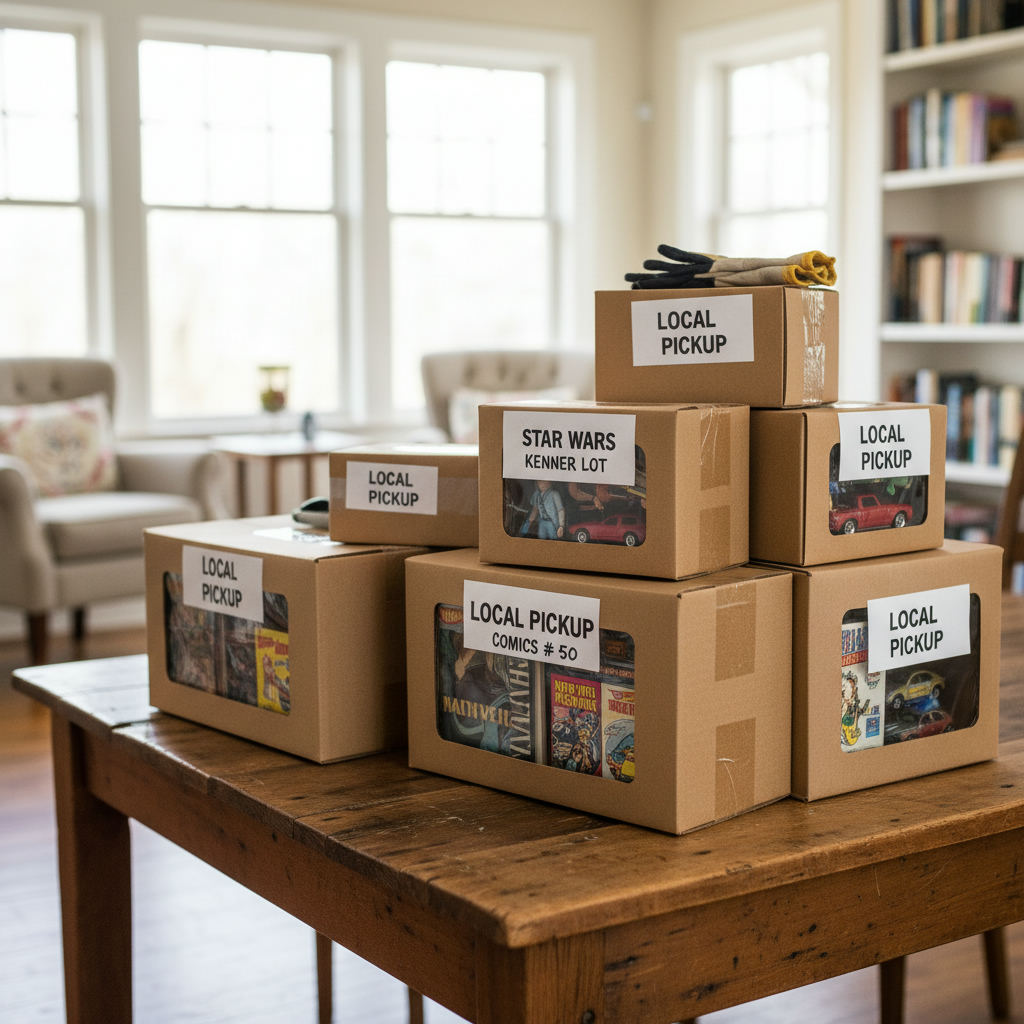
When you're looking to sell collectibles locally vs online, the best option really depends on your item's value, your urgency to sell, and how much effort you're willing to put in for the highest profit. Generally, online platforms offer a wider audience and potentially higher prices for niche items, while local sales can provide quick cash with no shipping hassle, though often at a slightly lower price point. Let's dive deep into making sure you get the most money for your treasures, whether they're vintage toys, rare comic books, sports memorabilia, or antique glassware. We'll explore the pros and cons of each method, break down the fees you can expect, and show you exactly how to maximize your after-fee payout in 2026.
Related reading: Best Place to Sell Pokemon Cards in Tennessee 2026 Guide · Best Place to Sell Sports Cards in 2026 · Where to Sell Collectibles Online in 2026: 9 Best Sites
Looking for the best sites by category? See our guide to where to sell collectibles online.
Quick Answer – Top 3 Places to Sell Collectibles in 2026
Alright, fellow flippers, let's get straight to it! When it comes to where to sell your prized collectibles, especially in 2026, you've got some fantastic options, each with its own vibe and audience. For maximum reach and often the highest prices on unique or rare items, online marketplaces are usually your best bet. If you're looking for quick cash and a more hands-on approach, local options can shine, especially for bulky items. Here are my top three recommendations:
- eBay: This is still the reigning king for many types of collectibles. With its massive global audience, you can reach buyers interested in everything from vintage action figures to rare coins. The auction format can drive up prices for highly sought-after items, and the fixed-price option works well for more common collectibles. As of October 2026, eBay charges 13.25% (coins, sports and non-sport cards, comics, card games) or 13.6% (most other categories, including toys) of the total sale up to $7,500, plus a per-order fee of $0.30 on orders of $10 or less or $0.40 on orders over $10 (eBay fees). However, for sheer volume and reach, it's tough to beat.
- Specialized Online Marketplaces (e.g., PSA for Cards, Etsy for Vintage/Handmade): For certain categories, going to a dedicated platform can net you higher prices because you're tapping into a super-focused buyer pool. For sports cards, sites like eBay are great, but getting cards graded by PSA (Professional Sports Authenticator) can significantly increase their value and make them easier to sell to serious collectors. For vintage toys, comic books, or unique artisan collectibles, platforms like Etsy or even specific forums can be goldmines. Fees vary widely here, but the specialized audience often justifies them.
- Local Online Groups (Facebook Marketplace, Craigslist): If you prefer to sell collectibles near me, without dealing with shipping or marketplace fees, these platforms are your go-to. They are fantastic for bulky items that would be expensive to ship, or for items where a local buyer vs shipping hassle is a clear winner. You arrange the pickup, negotiate directly, and often get cash in hand. While you might not get top dollar compared to a global audience, you save on fees entirely (usually), and the transaction is often quicker and simpler. It's especially good for lower-to-mid value items that don't warrant expensive shipping.
Remember, the goal is always to maximize your after fee payout, and sometimes that means diversifying where you list. Before you even think about listing, though, you need to know what your item is actually worth. That's where smart tools come into play, helping you quickly identify market value.
Platform-by-Platform Breakdown: Fees and Audience for Each
Alright, let's get into the nitty-gritty of where to sell your collectibles. Each platform has its own unique ecosystem, audience, and fee structure. Knowing these details is crucial for determining your potential after fee payout. I've broken down some of the most popular options for selling collectibles, both online and locally, so you can make an informed decision.
eBay
Audience: Massive and global, covering almost every niche imaginable. From rare comic books to vintage electronics, sports cards to antique furniture, you'll find a buyer here. Collectors often start their searches on eBay due to the sheer volume of listings. Fees (as of October 2026): eBay's fee is a percentage of the total sale. Coins & Paper Money (except bullion), Sports Trading Cards, Non-Sport Trading Cards, Comic Books & Memorabilia and Collectible Card Games pay 13.25% up to $7,500; most other categories, including toys and Funko Pops, pay 13.6% up to $7,500. Above $7,500, the rate on the extra amount is 2.35%. A per-order fee of $0.30 (orders of $10 or less) or $0.40 (orders over $10) is added. Source: eBay selling fees. Pros: Huge reach, auction format for high-demand items, robust seller protections. Cons: Fees can eat into profits, shipping can be a hassle, takes time to learn the platform.
Poshmark
Audience: Primarily fashion-focused (clothing, shoes, accessories), but it has a growing market for home goods, beauty, and even some collectibles like vintage accessories or brand-name toys. The audience is generally younger and highly engaged. Fees (as of October 2026): Poshmark's fee policy says it charges a "20% seller fee for sales over $15 and $2.95 for sales $15 and under" (Poshmark fee policy). That 20% can be steep, so Poshmark suits items where it still leaves you a healthy profit. If you sell a vintage purse for $50, Poshmark takes $10, leaving you $40. Pros: Easy listing process, built-in shipping label, social selling aspect. Cons: High fees, primarily fashion-driven, less ideal for very bulky or non-fashion collectibles.
Mercari
Audience: A general marketplace for almost anything. Mercari appeals to a broad audience looking for deals on new or used items, including a good variety of collectibles like action figures, video games, trading cards, and home decor. Fees (as of October 2026): Mercari sellers pay a flat 10% selling fee on the item price and buyer-paid shipping, with no separate payment processing fee; buyers pay a 3.6% Buyer Protection fee (Mercari fees). They also offer shipping options where the buyer pays, or you can offer free shipping and factor it into your price. Pros: Simple interface, good for many types of collectibles, clear fee structure. Cons: Buyers can be very price-sensitive, less reach than eBay for some niche items.
Etsy
Audience: Best for handmade, vintage (20+ years old), and craft supplies. If your collectibles fall into the vintage category—think antique jewelry, retro home decor, classic toys, or unique historical items—Etsy is fantastic. Its audience specifically seeks out unique, one-of-a-kind treasures. Fees (as of October 2026): Etsy charges a $0.20 listing fee per item and a 6.5% transaction fee on the item price plus the shipping and gift wrap you charge, plus payment processing fees (Etsy fees). If you run Etsy Ads, those are extra. Pros: Highly targeted audience for vintage items, strong community, unique branding opportunities. Cons: Not suitable for all types of collectibles, competitive market for popular vintage items.
Facebook Marketplace / Local Buy & Sell Groups
Audience: Local buyers within your geographic area. This is ideal when you want to sell collectibles near me. Excellent for items that are difficult or expensive to ship, or when you need cash quickly. The local buyer vs shipping question often pushes people here for convenience.
Fees (as of October 2026): In-person cash sales have no Facebook fee. If the buyer pays through Facebook, Facebook deducts a selling fee of 10% (or $0.80 minimum per order) from your payout (Facebook Marketplace selling fees). This is an attractive option when looking to avoid fees entirely.
Pros: No shipping costs or hassle, often no fees, quick cash possible, good for large or fragile items.
Cons: Limited audience, potential for no-shows or lowball offers, safety considerations for meeting strangers.
Understanding these fee structures is your first step to calculating your actual profit. Every dollar counts when you're flipping, right? And speaking of knowing your worth...
How to Know What Your Item is Worth Before You List
This is arguably the most critical step in successful reselling: accurate pricing. Without knowing what your collectible is actually worth in today's market, you're either leaving money on the table or setting unrealistic expectations and failing to sell. Guessing just isn't an option for serious resellers. You need cold, hard data, specifically "sold comps" – what similar items have *actually sold for* recently, not just what people are asking. Here’s how you can dig up that valuable info, ensuring your after fee payout is maximized:
- Check Sold Listings: The golden rule of pricing! Head to platforms like eBay, Poshmark, and Mercari and filter your searches by "Sold Listings" or "Completed Listings." This shows you exactly what buyers paid for items similar to yours. Look for items in comparable condition, with similar accessories or packaging. This is your most reliable source for current market value. For vintage items, check Etsy's sold listings too.
- Review Specialty Forums & Communities: For niche collectibles like sports cards, vintage action figures, or specific comic books, dedicated forums, Facebook groups, and even subreddits like r/Flipping or r/sportscards can offer incredible insights. Members often share recent sales, discuss market trends, and can even help identify rare variants. Be active, but don't blindly trust every opinion; always cross-reference.
- Utilize Grading Resources for Specifics: If you're dealing with high-value sports cards or comic books, professional grading services like PSA or Beckett for cards often have price guides or databases of graded items that have sold. A graded card can fetch significantly more than an ungraded one, so understanding its potential grade and corresponding value is key.
- Consider Condition and Rarity: Is your item mint in box (MIB)? Loose but complete? Heavily played with? Condition dramatically impacts value. Rarity also plays a huge role. A first edition comic book will be worth far more than a later printing, even if both are in similar condition. Factor these details into your comp research.
- Factor in Current Trends: The collectible market can be volatile. What was hot last year might not be this year, and vice versa. Keep an eye on pop culture trends, movie releases, and social media buzz that might temporarily boost or depress the value of certain items. A quick way to stay on top of this is by browsing social media for collector groups or even using Google Trends for specific collectible terms.
Doing this research can take time, especially if you have a lot of items. But what if I told you there’s a much faster, smarter way to get this information without all the manual searching? It’s a game-changer for your workflow and your wallet, ensuring you know the true value before you even consider if you want to sell collectibles locally vs online.
How FlipAI Prices Anything Instantly
Okay, so we've established that knowing an item's worth is paramount. But let's be real, manually researching every single item you find? That can be a huge time sink. As an expert reseller, I've seen firsthand how much time this tedious research can eat up. That's why I absolutely love FlipAI. It's a tool built by resellers, for resellers, to solve this exact problem, making sure your after fee payout is as high as possible.
FlipAI lets you take a photo of any item or scan its barcode to see current eBay asking prices (live listings, not sales) plus an AI estimate, in about 10 seconds. Imagine you're at a flea market, garage sale, or clearing out your attic, and you spot a vintage board game. Instead of typing long search queries, you open FlipAI, snap a picture, and get a quick starting point. Asking prices are not sale prices, so check eBay's sold or completed listings before you set your price.
FlipAI identifies your item from the photo and shows current eBay asking prices plus an AI estimate. It's a starting point, not an appraisal or a guaranteed value. FlipAI also has a profit calculator that helps you factor in platform fees, so you can estimate your after-fee payout before deciding whether to list online or sell locally.
Pro Tips for Getting More Money for Your Collectibles
You've done your research, you know your item's worth thanks to tools like FlipAI, and you've decided whether to sell collectibles locally vs online. Now, let's talk about squeezing every last dollar out of that sale! These pro tips are all about presentation, strategy, and smart selling practices to boost your after fee payout.
Photography is Everything
- Good Lighting: Natural light is your best friend. Take photos near a window, avoiding harsh shadows.
- Clean Background: A plain, uncluttered background (a white wall, a simple fabric) makes your item pop.
- Multiple Angles: Show every side of the item. Buyers want to see what they're getting.
- Highlight Flaws (Honestly!): Don't hide dings, scratches, or wear. Take clear pictures of any imperfections. This builds trust and prevents returns.
- Scale & Detail Shots: Include an item for scale (like a coin or ruler) and close-ups of important details, serial numbers, or unique features.
Craft Compelling Descriptions
- Be Detailed and Accurate: Include brand, model, year, material, dimensions, and any unique identifiers. The more info, the better.
- Use Keywords: Think like a buyer. What would they search for? Use those terms naturally in your title and description. This helps your item get discovered, especially on platforms like eBay or Etsy.
- Condition Report: Reiterate the item's condition in words, backing up your photos. "Excellent vintage condition with minor shelf wear consistent with age."
- Tell a Story (if applicable): For unique vintage or antique items, a little history or provenance can add perceived value. "This piece was part of a collection from..."
Strategic Pricing & Offers
- Start Strong with Your Asking Price: If you're confident in your research, price competitively, but leave a little room for negotiation.
- Consider "Best Offer" (Online): On platforms like eBay, enabling a "Best Offer" option can attract more buyers and lead to a quicker sale, even if it's slightly below your asking price.
- Bundle Items: If you have several related, lower-value collectibles, consider bundling them into a single listing. "Lot of 5 Vintage Star Wars Figures." This can increase the perceived value and justify shipping costs.
- Be Realistic: Don't overprice. An item sitting for months isn't making you money. If it's not selling, review your price, refresh your listing, or consider cross-listing to another platform. This also helps when you sell collectibles near me, as local buyers often expect a discount.
Smart Shipping & Logistics
- Package Securely: Especially for fragile collectibles! Use bubble wrap, packing peanuts, and sturdy boxes. Invest in good packing supplies. A broken item equals a lost sale and a refund.
- Accurate Shipping Costs: Don't undercharge and eat into your profit, but don't overcharge and deter buyers. Use a shipping calculator. For items sold locally, consider offering delivery for an extra fee, especially if it's a bulky item.
- Insure High-Value Items: For anything truly valuable, shipping insurance is a must. The small cost is worth the peace of mind.
- Crosslist Like a Pro: Don't put all your eggs in one basket. Use tools that allow you to list your collectibles on multiple platforms (eBay, Poshmark, Mercari, etc.) with ease. This dramatically increases your item's visibility and chances of selling. Crosslisting your collectibles is a powerful strategy to reach a broader audience, optimizing your chances for a quick sale and a higher profit margin.
By implementing these strategies, you're not just listing an item; you're marketing a treasure. These small efforts can lead to significantly higher sales prices and a more satisfying reselling experience. And remember, the more you learn about reselling, the better you become. Check out our complete reseller's guide for even more in-depth tips and tricks.
Get Started: Your Collectibles Await New Homes in 2026!
So, there you have it! Whether you're leaning towards the vast global reach of online marketplaces or the convenience of finding a local buyer vs shipping a bulky item, understanding the landscape is key. Choosing to sell collectibles locally vs online is a strategic decision that impacts your time, effort, and ultimately, your after fee payout. We've explored the ins and outs of various platforms, broken down their fee structures, and armed you with expert tips to maximize your profits in 2026. From making sure your item is pristine for photos to crafting compelling descriptions, every step contributes to a successful sale.
The most important takeaway, however, is this: never guess your item's worth. Always rely on sold data. That's where FlipAI truly shines as your indispensable reselling partner. By quickly identifying what items are worth with just a photo or barcode scan, you can confidently set prices that attract buyers and secure the best possible profit. It takes the guesswork out of pricing and frees up your time to find more awesome items. Stop leaving money on the table or wasting hours researching every single find. Take control of your reselling business.
Join thousands of resellers already using FlipAI.Frequently Asked Questions
What is the best platform to sell collectibles online in 2026?
For most collectibles, eBay remains the top choice due to its massive global audience and diverse categories. It allows for both auction-style listings for rare items and fixed-price sales. Specialized platforms like Etsy for vintage items or dedicated sports card sites can also be excellent, offering a more niche and engaged buyer pool, often leading to higher prices for specific types of collectibles. Each platform has different fees and audiences, so choosing the best one depends on the specific item.
How do I decide between selling collectibles locally vs shipping them?
The decision between selling collectibles locally vs online (which involves shipping) largely depends on the item's size, fragility, value, and your urgency to sell. Local sales via platforms like Facebook Marketplace are ideal for bulky, fragile, or lower-value items, as they eliminate shipping costs and hassle, and often provide quick cash with no fees. Online sales, while requiring shipping, offer a much wider audience, potentially fetching higher prices for rare or niche items. Always consider the potential after-fee payout, including estimated shipping costs, before deciding.
What fees should I expect when selling collectibles online?
As of October 2026: eBay charges 13.25% (coins, sports cards, comics) or 13.6% (most other categories, including toys) up to $7,500, plus $0.30 per order ($10 or less) or $0.40 (over $10). Poshmark charges a 20% seller fee for sales over $15 and $2.95 for sales $15 and under. Mercari sellers pay a flat 10% selling fee. Etsy charges a $0.20 listing fee and a 6.5% transaction fee, plus payment processing fees. In-person cash sales on Facebook Marketplace have no Facebook fee. Check each platform's official fee page before selling.
How can FlipAI help me sell my collectibles?
Take a photo of any item or scan its barcode, and FlipAI shows current eBay asking prices (live listings, not sales) plus an AI estimate. It's a quick starting point, not an appraisal. Its profit calculator helps you estimate your after-fee payout before deciding whether to sell locally or online.
What are the best practices for photographing collectibles for sale?
Excellent photography is crucial for selling collectibles. Always use good, natural lighting, preferably near a window, and ensure a clean, uncluttered background to make your item stand out. Take multiple photos from various angles, including close-ups of important details, unique features, and any flaws or imperfections. Being transparent about condition with clear photos builds buyer trust and prevents returns. For scale, include a common object like a coin next to your collectible in one of the shots.