Best Place to Sell Sports Cards in 2026
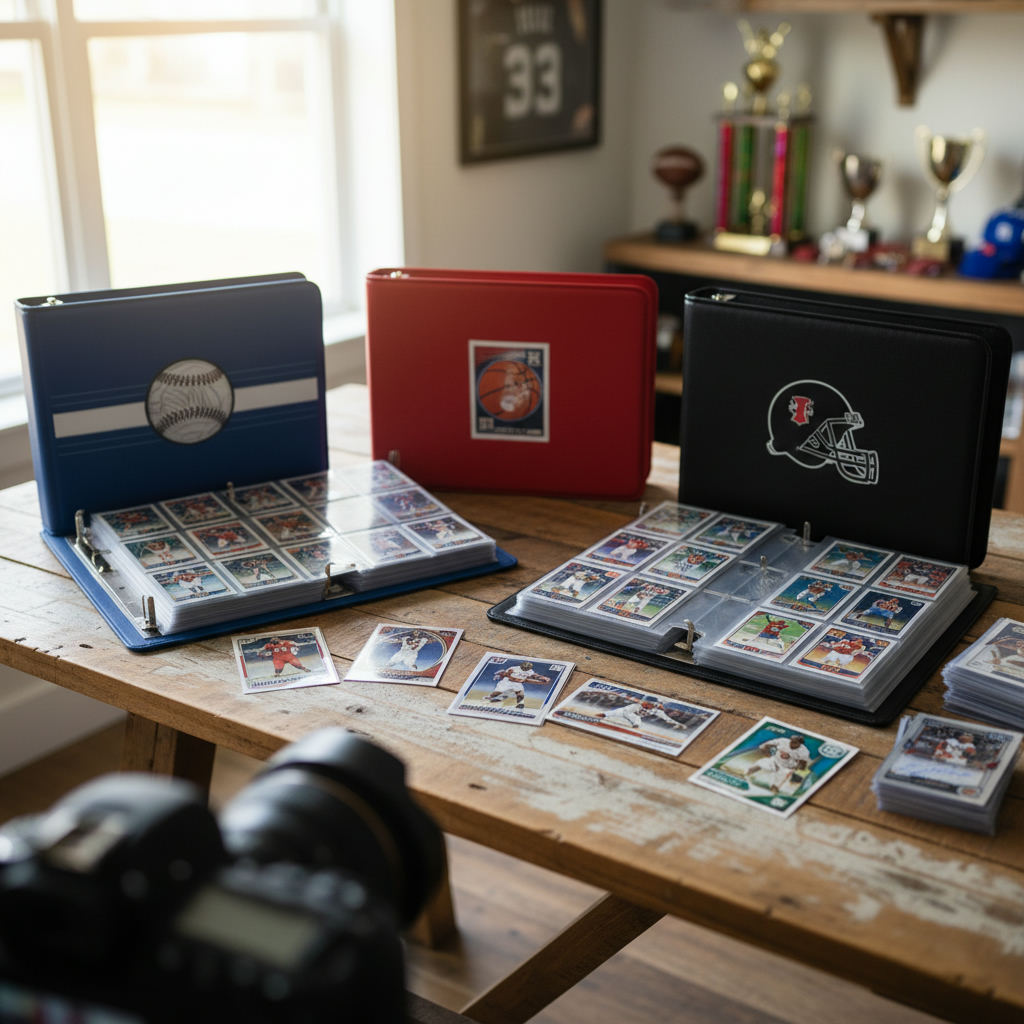
So, you've got a stack of sports cards and you're wondering, "What's the best place to sell sports cards to get the most bang for my buck?" You've come to the right spot! As an expert reseller, I know the card market inside and out, and I'm here to spill all the secrets for 2026. Whether you're holding onto a potential gem from your childhood collection or you've just picked up a fresh pull, knowing where and how to sell can make all the difference. We'll cover everything from valuing your cards like a pro to choosing the perfect platform, making sure you understand the fees involved, and maximizing your profit. Get ready to turn your cardboard into cash!
Related reading: Best Place to Sell Sports Cards in South Carolina 2026 Guide · Where to Sell Sports Cards Online in 2026 · Best Place to Sell NHL Hockey Cards in Virginia 2026 Guide
Quick answer: The Best Place to Sell Sports Cards in 2026
Alright, let's get straight to it! For most sports cards, especially those with established values, eBay remains king for accessibility and reach. It’s the go-to for cards ranging from a few dollars to hundreds. For high-value graded cards (think $500+), platforms like PWCC Marketplace or Goldin Auctions offer specialized auction environments that cater to serious collectors and can yield higher prices due to their curated audience and white-glove service. If you're dealing with lower-value, raw cards, especially local transactions, Facebook Marketplace can be surprisingly effective. Ultimately, the best place to sell sports cards depends on the card's value, condition, and your selling goals.
You can realistically expect to make anywhere from a few dollars for common modern base cards to hundreds, or even thousands, for rare, graded vintage or rookie cards. For example, a common modern rookie card might fetch $5-$10, while a limited print run, autographed parallel of the same player could bring in $50-$200. A vintage Hall of Famer's rookie card, professionally graded, could easily hit $500 to several thousand dollars. Understanding the market is crucial, and that's where tools like FlipAI come in handy. It’s like having a superpower to quickly check live market prices and know what your cards are truly worth. This isn't just about listing your cards; it's about strategic selling to maximize your earnings, whether you're aiming for an extra $200-$500 per week or liquidating a high-value collection.
What Drives Sports Card Value?
Understanding what makes a sports card valuable is the first step to becoming a savvy seller. It's not just about how cool the card looks! There's a complex interplay of factors that dictate a card's worth, and knowing these will help you identify your potential treasures and accurately price them. This knowledge is your superpower in the world of card marketplaces.
Player Popularity & Performance
- The Superstar Factor: Cards featuring iconic players like Michael Jordan, Tom Brady, or LeBron James consistently command higher prices. Current superstars and rising rookies also drive significant demand. Their performance, milestones, and championship wins directly impact card values.
- Rookie Cards: These are often the most coveted cards for any player, especially those from their first professional season. A player's rookie card can soar in value if they go on to have a legendary career.
Card Attributes: Year, Set, Parallel, Print Run
- Year: Older, vintage cards often have historical significance, but modern cards from specific years where a player had an iconic season can also be highly valued.
- Set/Brand: Certain brands and sets are more desirable than others. Topps Chrome, Bowman Chrome, Panini Prizm, and Upper Deck SP Authentic are just a few examples of popular sets known for their high-quality designs and potential for valuable parallels and autographs.
- Parallel Cards: These are variations of a base card, often identified by a different color border, holofoil, or serial numbering (e.g., /99, /25, 1/1). The rarer the parallel, the higher the value.
- Short Prints (SP) & Super Short Prints (SSP): Cards produced in very limited quantities, not necessarily numbered but known to be scarce, can be extremely valuable.
- Autographs & Memorabilia: On-card autographs (signed directly on the card) are generally more desirable than sticker autographs. Game-worn patches or relic pieces embedded in cards also add significant value.
Condition and Grade (PSA/BGS/SGC)
This is arguably the most critical factor for higher-value cards. A card's condition is assessed by professional grading companies like PSA (Professional Sports Authenticator), BGS (Beckett Grading Services), and SGC (Sportscard Guaranty Corporation). They assign a numerical grade (typically on a 1-10 scale, with 10 being 'Gem Mint' or 'Pristine') based on factors like centering, corners, edges, and surface. A card that grades a 'PSA 10' can be worth exponentially more than the exact same card in 'PSA 8' condition. The difference between a raw, ungraded card and a professionally graded one can be hundreds or even thousands of dollars. It's vital to protect your cards with sleeves and top loaders to preserve their condition.
How to Check live market Comps for Sports Cards
Before you even think about where the best place to sell sports cards is, you need to know what your cards are *actually* worth. This is where checking "sold comps" (comparable sales) comes in. It's not about what someone is asking for their card, but what buyers have actually paid. This step is non-negotiable for accurate pricing.
1. The eBay Sold Listings Method (Manual)
eBay is the largest marketplace for sports cards, and its sold listings are the gold standard for comping. Here's how to do it manually:
- Go to eBay: Head over to eBay.com.
- Search Specifics: Enter as much detail as possible for your card. This includes: player name, year, brand/set, card number, parallel (e.g., "Prizm Silver"), autograph status, and grade (if applicable, e.g., "PSA 9"). The more specific, the better. For example: "LeBron James 2003 Topps Chrome Rookie PSA 9" or "Patrick Mahomes 2017 Panini Prizm Silver Auto /25".
- Filter by "Sold Items": On the left-hand sidebar (or under "Filter" on mobile), scroll down and check the box for "Sold Items." You might also want to check "Completed Items" to see items that ended without selling, which can also inform your pricing.
- Analyze Results: Look at recent sales of identical or nearly identical cards. Pay attention to the date of sale, the price, and the condition/grade. If your card is raw, look at raw sales. If it's graded, only compare it to cards with the exact same grade from the same company.
Realistic eBay Sold Examples:
- Example 1: A "2018 Topps Chrome Ronald Acuña Jr. Rookie Refractor Auto PSA 9" might show recent sales around $450 - $600. (Approximate)
- Example 2: A "2020 Panini Prizm Justin Herbert Base Rookie Card (Raw)" might have recent sales around $30 - $50. (Approximate)
This manual process can be time-consuming, especially if you have a lot of cards or less common ones. You might spend significant time refining your search terms to get accurate results. That's where technology really shines!
2. The FlipAI Instant Valuation Method (Faster & Smarter)
This is where I tell you about my secret weapon, FlipAI! For busy resellers, or even just folks who want to quickly know what their cards are worth, FlipAI changes the game. Instead of hours of manual searching, you can get accurate valuations in seconds. This is especially helpful for sports cards where slight variations can mean huge price differences. It’s a core component of any reseller's toolkit.
You can literally take a photo of any item or scan its barcode to instantly see current eBay asking prices (live listings, not sold prices) plus an AI estimate. No guessing. No Googling. Just point your camera at anything and know what it is actually worth in about 10 seconds. For cards, FlipAI's AI vision can often detect player, year, set, and even identify common parallels, giving you a lightning-fast comp. This saves a ton of time and helps you accurately price your cards for any of the card marketplaces you choose.
Best Places to Sell Sports Cards
Choosing the right platform is critical to maximizing your profits and reaching the right buyers. Different cards and different selling styles call for different strategies. Let’s break down the top options for the best place to sell sports cards in 2026.
1. eBay: The King of Card Marketplaces
For most sports cards, especially those with an established value (from $10 to several hundred dollars), eBay remains the dominant platform. Its massive user base and sophisticated search functions mean your cards will be seen by millions of potential buyers worldwide.
- Pros: Largest reach, established collector base, auction and "Buy It Now" options, detailed sold data. You can sell everything from single cards to large lots.
- Cons: Fees can add up. eBay charges a Final Value Fee (FVF), typically around 13.25% for most sports cards (including shipping costs). There are also PayPal or managed payments processing fees. Competition can be fierce.
- Best For: Individual cards, mid-to-high value raw cards, graded cards under $500, and larger lots.
- Tips: Use clear, high-quality photos, detailed descriptions, and accurate keywords. Consider running auctions for popular, in-demand cards and "Buy It Now" for more consistent sales.
2. PWCC Marketplace & Goldin Auctions: For High-Value Graded Cards
If you're looking to sell graded cards that are truly high-end (typically $500 and up), these platforms offer a premium experience with a white-glove approach.
- PWCC Marketplace: Specializes in graded cards and collectibles, offering both weekly auctions and a fixed-price marketplace. They handle authentication, storage, and shipping.
- Goldin Auctions: Known for setting record-breaking prices on ultra-rare collectibles. They offer curated auctions for elite items.
- Pros: Access to serious, high-spending collectors; expert authentication and presentation; higher potential sale prices for top-tier items.
- Cons: Higher commission fees (can range from 5-20% depending on sale price and item), stricter submission criteria, slower payout times compared to eBay.
- Best For: Graded cards valued at $500+, rare vintage, and truly iconic modern cards.
3. Facebook Marketplace & Local Groups: For Lower Value & Bulk
For raw, lower-value cards, especially if you want to avoid shipping or fees, local options can be surprisingly effective.
- Pros: No selling fees, direct interaction with buyers, no shipping costs (if local pickup), good for selling lots or bundles of common cards.
- Cons: Limited reach, dealing with "tire kickers," safety concerns for high-value transactions, less protection for sellers.
- Best For: Bulk lots of common cards, raw cards under $20, local transactions, and building relationships within your local collector community.
4. Other Online Marketplaces: Mercari, Poshmark, TikTok Shop
While not primarily card-focused, these platforms are gaining traction and can be useful for certain types of cards or as part of a multi-platform strategy using tools like FlipAI's crosslisting feature.
- Mercari: Charges a flat 10% selling fee and a processing fee. Good for single cards up to mid-value.
- Poshmark: Primarily fashion, but some sports collectibles find a home. Charges 20% on sales over $15, $2.95 for sales under $15.
- TikTok Shop: a growing option for video and live sellers; check TikTok's current seller fees before listing.
- Etsy & Amazon: Less common for single cards, but some sellers do well with custom card art, supplies, or unique vintage pieces. Amazon has a more structured seller account process.
Remember, diversifying where you sell, especially with FlipAI's crosslisting, can significantly increase your sell-through rate!
How FlipAI Values Cards in Seconds
I know I mentioned it before, but FlipAI is seriously a game-changer when you're trying to figure out the best place to sell sports cards. One of the biggest challenges for any reseller, especially with sports cards, is accurate pricing. Get it wrong, and you either leave money on the table or your card sits unsold forever. That's where FlipAI steps in as your ultimate valuation partner.
Here's how FlipAI makes valuing your sports cards incredibly simple:
FlipAI lets you take a photo of any item or scan its barcode to instantly see current eBay asking prices (live listings, not sold prices) plus an AI estimate. No guessing. No Googling. Just point your camera at anything and know what it is actually worth in about 10 seconds.
For sports cards specifically, FlipAI leverages advanced AI vision technology. You don't need to manually type in "2003 Topps Chrome LeBron James Rookie PSA 9" and then filter. Instead, you:
- Open the FlipAI app: Tap the camera icon.
- Point and Shoot: Position your card in front of your phone's camera. FlipAI's AI vision rapidly processes the image.
- Instant Recognition: The app works to identify key features of your card: the player, the year, the set, the card number, and even if it's a rookie card or a specific parallel. If it's graded, it can often detect the grading company and the assigned grade.
- Real-Time Comps: Within seconds, FlipAI pulls up recent market listings for identical or highly similar cards from various card marketplaces. This gives you a true, data-backed understanding of what your card has actually sold for.
Imagine being at a flea market or a card show, spotting a promising card, and instantly knowing its market value before you even make an offer. Or, going through your old collection and not having to spend hours on manual research for each card. This precision and speed mean you can confidently price your items, know when you're getting a good deal, and move your inventory quickly and profitably. It’s an essential tool for any serious card reseller looking to maximize their earning potential without the guesswork.
Grading: Is It Worth It or Not?
The decision to get your sports cards professionally graded is a significant one, and it can dramatically impact a card's value and where the best place to sell sports cards might be. But is it always worth the time and expense?
When Grading IS Worth It:
- High-Value Cards: For vintage cards of Hall of Famers, iconic modern rookie cards, rare parallels, or cards with on-card autographs that are likely to fetch $100 or more, grading is almost always recommended. A PSA 10 or BGS 9.5 can increase the value by 3x, 5x, or even 10x compared to a raw card.
- Condition: If your card is truly in excellent to near-mint condition (or better), grading can authenticate that condition and unlock its full potential value. Centering, sharp corners, clean edges, and a blemish-free surface are key indicators.
- Authentication: Grading companies like PSA, BGS, and SGC not only assign a numerical grade but also authenticate the card, protecting against counterfeits. This adds a layer of trust and security for buyers, especially for high-value items.
- Market Preference: Many serious collectors, particularly those buying high-end cards, strongly prefer graded cards. They offer peace of mind and consistency in condition assessment. This is especially true for those looking to sell graded cards.
When Grading Might NOT Be Worth It:
- Lower-Value Cards: If a card is only worth $5-$20 raw, the cost of grading (which can range from $15-$50+ per card, plus shipping and insurance) will likely outweigh any potential increase in value. You'll lose money or barely break even.
- Poor Condition: A card with obvious flaws like creasing, heavy corner wear, surface scratches, or poor centering will likely receive a low grade (e.g., PSA 5 or lower). While it will still be authenticated, the low grade might not significantly increase its value and could even make it harder to sell compared to an ungraded card where buyers can visually assess.
- Common Base Cards: Mass-produced base cards of non-superstar players, even if in perfect condition, rarely see a significant return on investment from grading. The market demand just isn't there.
- Time & Patience: Grading can take weeks or even months, especially if you choose economical service levels. If you need to sell quickly, grading might not be the right path.
Before submitting, use FlipAI or manually check comps for graded versions of your card. Compare the potential graded value against the raw value, subtracting grading costs, to make an informed decision. This strategic thinking will put you ahead in the game, whether you're at a card show or listing online.
Get Started Selling Your Sports Cards Today!
You've now got the playbook for navigating the exciting world of selling sports cards in 2026! We've covered everything from what makes a card valuable – the player, year, set, and crucial grade – to the nitty-gritty of checking live market comps. We explored the best platforms for every type of card, from eBay for the masses to specialized auction houses for those ultra-rare, high-value graded gems. Remember, whether you're offloading some raw cards on Facebook Marketplace or submitting a vintage icon to Goldin, understanding your options is key.
The journey from finding a card to cashing in on it doesn't have to be guesswork. With the right tools and knowledge, you can confidently identify, price, and sell your cards for maximum profit. This isn't just about making a sale; it's about making smart sales. Don't let your valuable cards collect dust when they could be earning you money. Start putting these strategies into action and transform your collection into capital!
Ready to make your card selling journey faster and more profitable? There’s no better partner than FlipAI to help you quickly identify what your cards are worth and simplify your listing process. Knowing the best place to sell sports cards is just the beginning.
Try FlipAI free with 10 lifetime scans — no credit card required.Frequently Asked Questions
What is the best platform to sell sports cards quickly?
For most sports cards, eBay is generally the best platform for quick sales due to its vast audience and high traffic from collectors. Using a 'Buy It Now' option with a competitive price, informed by recent sold comps, can move cards fast. Local options like Facebook Marketplace are also quick for lower-value items if you're willing to meet in person, avoiding shipping time and fees.
How do I determine the value of my sports cards?
The most accurate way to determine your cards' value is by checking 'sold comps' – what identical or very similar cards have actually sold for recently. Websites like eBay (using their 'Sold Items' filter) are excellent for this. Tools like FlipAI can also rapidly scan your card and provide instant market price data across multiple platforms, saving you significant research time.
Are there any fees for selling sports cards online?
Yes, almost all online platforms charge fees. eBay typically charges around 13.25% in final value fees, including shipping. Mercari charges a 10% selling fee plus a processing fee. Poshmark charges 20% on sales over $15. Specialized auction houses like PWCC or Goldin have varying commission structures, often higher for lower-value items but potentially lower for high-ticket sales. Always factor these into your pricing.
Should I get my sports cards graded before selling?
Grading is generally recommended for high-value cards (typically $100+) that are in excellent condition. A professional grade from companies like PSA or BGS can significantly increase a card's value and buyer trust. However, for lower-value cards or those in poor condition, the cost of grading often outweighs the potential increase in sale price, making it less worthwhile.
What details should I include when listing a sports card for sale?
To attract buyers and ensure accurate pricing, include comprehensive details: player name, card year, brand/set (e.g., Panini Prizm, Topps Chrome), card number, any parallels (e.g., 'Silver Prizm,' '/99'), autograph presence, and especially its condition or professional grade (e.g., 'PSA 9'). High-quality, clear photos showing the front, back, and any imperfections are also crucial.