Home / Blog / Best Place to Sell
Selling Cards to a Local Card Shop in 2026 — What They Really Pay
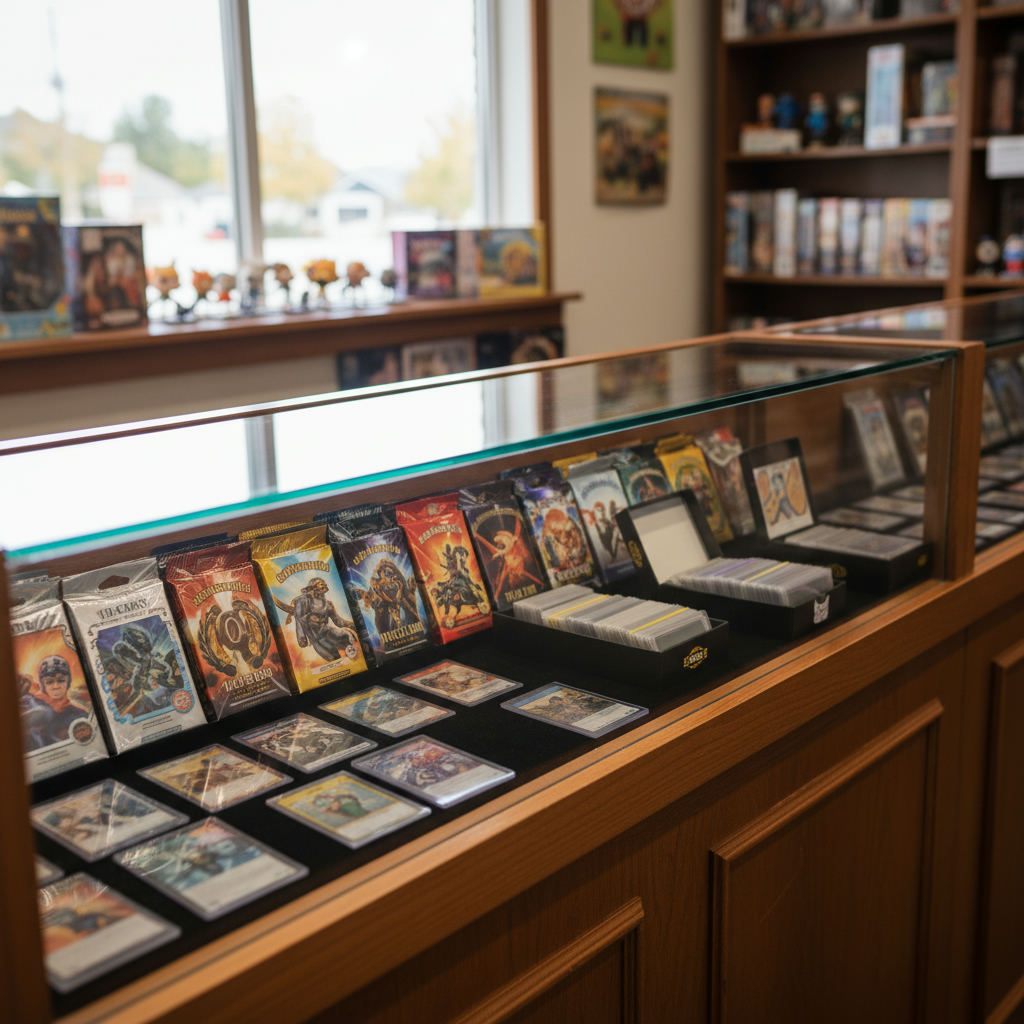
When you want to sell cards to a local card shop in 2026, you can absolutely do it, but it’s crucial to understand their business model and how that impacts the payout you'll receive. They need to make a profit, so they'll always offer you less than the card's market value. Knowing your card's actual worth before you even walk in the door is your superpower here. I've been in the reselling game for years, and trust me, there's nothing quite like the rush of finding a hidden gem.
Related reading: Best Place to Sell Sports Cards in 2026 · Best Place to Sell NHL Hockey Cards in Virginia 2026 Guide · Best Place to Sell NFL Cards in Wisconsin 2026 Guide
Just last month, I was at an estate sale, sifting through a dusty box of old baseball cards. Most were junk wax, but then, tucked away in the back, I spotted it: a 1989 Upper Deck Ken Griffey Jr. rookie card, perfectly centered, sharp corners, looking like it had just been pulled from a pack yesterday. My heart did a little flutter! I quickly whipped out my phone, opened FlipAI, took a photo, and boom – real-time market comps instantly appeared. This beauty was consistently selling for $150-$200 in that condition. Imagine my excitement! Without FlipAI, I might have just bought it as a throw-in, maybe sold it for $50 and been happy, but knowing its true value gave me the confidence to list it properly and get top dollar. This guide will help you understand the best ways to sell your cards, what to expect from a local card shop, and how to maximize your profits, just like I did with that Griffey Jr. rookie.
Quick answer – top 3 places to sell cards in 2026
Alright, let's cut to the chase! You've got cards, and you want to turn them into cash. The best place for you depends on how much time you have, how much risk you're willing to take, and how much money you want to make. Generally speaking, to sell cards to a local card shop will give you the quickest cash, but likely the lowest payout. Here are my top three recommendations for selling your cards in 2026, offering a mix of convenience and profitability:
- Online Marketplaces (eBay, TCGPlayer, COMC): For individual cards, especially higher-value ones, online marketplaces are king. You'll get the closest to market value here because you're selling directly to collectors. The downside? You're responsible for listing, shipping, and handling potential returns. Platforms like eBay are fantastic because of their massive audience. For sports cards, eBay is generally the go-to, while TCGPlayer dominates for Magic: The Gathering, Pokémon, and Yu-Gi-Oh! cards. You'll deal with fees (typically 10-13% on eBay, plus payment processing) but often higher net profit than local options.
- Local Card Shops: If you need fast cash and convenience is your priority, a local card shop is a solid option. They'll buy your cards on the spot, no listing or shipping required. However, remember they're running a business. They need to buy low enough to cover their overhead, marketing, and still make a profit when they resell your cards. Expect to receive 40-60% of the card's current market value, depending on the card's desirability, condition, and their current inventory needs. It’s a great way to liquidate a large collection quickly, but don’t expect retail prices. This is often the best option for lower-value bulk cards that would be too time-consuming to list individually online.
- Consignment Sellers/Auction Houses: For truly high-value, graded, or extremely rare cards (think thousands or tens of thousands of dollars), consignment sellers or reputable auction houses can be an excellent choice. They handle all the marketing, photography, and buyer communication for a percentage of the final sale price (typically 10-25%). While you wait longer for payment, their expertise and reach can often net you a higher price than you might achieve selling yourself, especially for pieces that require specialized authentication or a very targeted buyer base. This is less about quick cash and more about maximizing the return on a significant investment.
Each of these options has its pros and cons, and the best strategy often involves a mix. For instance, you might sell your high-value cards on eBay, your mid-tier cards to a local card shop, and bulk commons to a shop or even donate them. The key is to know your options and, most importantly, know the value of what you're selling. For more in-depth strategies on profitable reselling, check out our complete reseller guide.
Platform-by-platform breakdown for selling cards
Choosing the right platform is critical to maximizing your profit when you sell cards. Each one has its own ecosystem, fees, and audience. Understanding these nuances will help you make informed decisions, whether you're offloading a single rare find or an entire collection. Don't just blindly post; think strategically about where your cards will fetch the best price.
Selling Cards on eBay
eBay is arguably the largest and most diverse marketplace for trading cards, especially sports cards. You'll find everything from common base cards to ultra-rare autographed rookies. The sheer volume of buyers means your card is likely to find a home, but it also means more competition. For individual cards, especially those with established values, eBay is often the gold standard. You can opt for auction-style listings to let the market decide the price, or "Buy It Now" for fixed-price sales. You'll need to create detailed listings with clear photos and accurate descriptions of the card's condition. Authentication services like eBay Authenticity Guarantee for cards over $250 add a layer of trust for high-value sales. This service helps prevent disputes and scams, which is a huge plus for both buyers and sellers.
- Fees: eBay charges a Final Value Fee (FVF) based on the total sale amount (item price + shipping). For most trading cards, this is around 13.25% up to $7,500, with a reduced percentage for amounts above that. There's also a small insertion fee for listings beyond a certain free monthly limit.
- Audience: Massive global audience of collectors for all types of trading cards, heavily skewed towards sports cards.
- Pros: Largest reach, potential for highest selling prices, buyer protections, authenticity services for high-value items.
- Cons: Time-consuming listing process, shipping logistics, potential for buyer returns/scams (though protections are in place), fees can eat into profits.
Selling Cards on TCGPlayer (Magic: The Gathering, Pokémon, Yu-Gi-Oh!)
If you're into collectible card games (CCGs) like Magic: The Gathering, Pokémon, or Yu-Gi-Oh!, TCGPlayer is your go-to platform. It's a specialized marketplace where sellers list individual cards, and the platform provides a robust pricing guide based on recent sales. This makes it incredibly easy to price your cards competitively. The system is designed for high-volume, low-margin sales, but it also handles high-value singles extremely well. For sellers, TCGPlayer streamlines the process significantly, especially if you have many individual cards to sell. They have a system for direct sales and a "buylist" feature where you can sell to stores for a slightly lower price for immediate cash.
- Fees: TCGPlayer charges various fees depending on your seller level. For most individual sellers, it's around 10.25% of the total sale price (including shipping) for standard sales. There are additional fees for payment processing and potential upgrades.
- Audience: Highly targeted audience of CCG players and collectors.
- Pros: Excellent pricing tools, easy bulk listing, built-in buyer trust, streamlined shipping for small orders, specific to CCGs.
- Cons: Fees can still add up, primarily for CCGs, not suitable for sports cards, learning curve for new sellers.
Selling Cards to a Local Card Shop
When you decide to sell cards to a local card shop, you're trading potential profit for immediate convenience. This is a fantastic option if you need quick cash, want to unload a large collection without the hassle of individual listings, or have bulk commons that aren't worth the time to sell online. Local shops are always looking for inventory, but they need to buy at a wholesale price to account for their overhead (rent, utilities, employees) and profit margin. They might offer more for highly desirable cards that they know they can flip quickly, or less for cards they already have in abundance or perceive as slow movers. Always call ahead to see if they're buying and what types of cards they're currently interested in. Don't be afraid to visit a few different shops to compare offers, but remember, every shop has different inventory needs.
- Fees: No direct fees, but the "fee" is the difference between what they offer you and what the card sells for at retail. You'll typically receive 40-60% of the card's market value.
- Audience: The shop owner, who is an experienced buyer.
- Pros: Immediate cash, no listing or shipping, easy for bulk sales, supports local business.
- Cons: Lowest payout percentage compared to selling directly to collectors, offers vary widely.
Other Online Marketplaces (Poshmark, Mercari, Facebook Marketplace)
While not primarily card-selling platforms, Poshmark, Mercari, and Facebook Marketplace can still be viable options, especially for certain niches or if you're already selling other items there. Poshmark is excellent for graded sports cards or sealed boxes, leveraging its fashion-focused audience for high-end collectibles. Mercari has a broad base and is good for mid-tier cards, while Facebook Marketplace excels for local, in-person cash transactions, eliminating shipping costs and fees for local pickups. Be mindful of their fee structures and buyer protections.
- Poshmark Fees: 20% for sales over $15, flat $2.95 for sales under $15.
- Mercari Fees: 10% selling fee, plus a processing fee of 2.9% + $0.50.
- Facebook Marketplace Fees: Generally no selling fees for local pickup, but 5% (minimum $0.40) for shipped items.
Each platform serves a different purpose, and the savvy reseller often uses a combination to cover all their bases. The question of "card shop vs eBay" ultimately comes down to your personal priorities: speed vs. profit.
How to know what your item is worth before you list
This is arguably the most critical step in successful reselling, especially for trading cards. Walking into a deal, whether with a local card shop or listing online, without knowing your item's true value is like playing poker without looking at your hand – you're almost guaranteed to lose. The market for trading cards is incredibly dynamic; prices can fluctuate daily based on player performance, set releases, scarcity, and overall collector demand. Therefore, relying on old price guides or just guessing isn't going to cut it in 2026.
The best way to determine a card's value is by checking its "sold comps," which are recently completed sales of identical items in similar condition. This isn't just about looking at asking prices; anyone can ask for a million dollars, but what did it actually *sell* for? That's the real data you need. For sports cards, eBay's advanced search feature allows you to filter for "Sold Items," which is invaluable. For CCGs, TCGPlayer has an extensive database of sold prices. You'll want to pay close attention to several factors when comparing:
- Card Condition: This is paramount. A Mint (GEM-MT 10) card can be worth 10x or even 100x more than a Heavily Played version. Look for crisp corners, clean edges, proper centering, and a blemish-free surface. If your card is graded by a professional service like PSA, Beckett, or SGC, its value is typically much higher and more consistent. Learn how to grade raw cards yourself to get a ballpark idea.
- Grading Company & Grade: If your card is professionally graded, the specific grading company (PSA, BGS, SGC) and the numerical grade (e.g., PSA 9, BGS 9.5) are crucial. Different companies can have different market premiums, and even a half-point difference in grade can mean hundreds or thousands of dollars.
- Rarity & Scarcity: Is it a base card, a parallel, an insert, or a low-numbered serial print? Limited print runs naturally command higher prices. Autographs and relic cards (with a piece of jersey or bat) also add significant value.
- Player/Character Popularity: The market follows hype. A player having a breakout season, a character appearing in a new movie, or a retro trend can send values soaring. Conversely, injuries or controversies can cause prices to plummet. Stay current with news in the hobby.
- Edition/Set: First editions, shadowless Pokémon cards, or specific vintage sets often carry a premium over later reprints or less desirable sets.
Manually checking all these data points across multiple platforms can be incredibly time-consuming, especially if you have a large collection. That's where smart tools come in handy. Before you even think about how to sell cards to a local card shop, or list them online, arm yourself with this knowledge. This informed approach not only helps you set fair prices but also protects you from being undervalued. And speaking of smart tools, let me tell you about a game-changer.
How FlipAI prices anything instantly for card collectors
Alright, let’s get real. Researching every single card you own, checking comps, sifting through eBay sold listings for hours – it's a grind, right? That's where FlipAI comes in to rescue your precious time and maximize your profits. As a reseller, I live by the motto: time is money. And FlipAI gives me both back in spades. It's the ultimate sidekick for anyone looking to sell cards, antiques, electronics, or anything in between.
Here's the magic trick: FlipAI lets you take a photo of any item or scan its barcode to instantly see current eBay asking prices (live listings, not sold prices) plus an AI estimate. No guessing. No Googling. Just point your camera at anything and know what it is actually worth in about 10 seconds. Imagine doing that for a whole box of cards! The AI vision technology can identify cards, even if they're ungraded, and pull up relevant comps. This means you can quickly determine which cards are worth listing individually online and which ones might be better suited to sell cards to a local card shop for a bulk deal.
But it doesn't stop there. Beyond instant pricing, FlipAI includes a profit calculator that helps you factor in fees, shipping costs, and your initial purchase price, so you always know your true net profit. No more nasty surprises when you get your payout. It’s about making informed decisions, not just quick ones. If you're serious about reselling, especially if you're navigating the complex world of trading cards, FlipAI is an essential tool. It eliminates the guesswork, speeds up your research, and ultimately helps you make more money. It's like having a team of expert researchers in your pocket, ready to price out your inventory on demand.
Pro tips for getting more money when selling cards in 2026
Okay, so you know what your cards are worth, and you've got your platforms picked out. Now, how do you squeeze every last dollar out of your collection? It's all about presentation, strategic selling, and a little bit of hustle. These tips are born from years of experience turning everyday finds into significant profits.
- Clean and Protect Your Cards: This might sound basic, but you'd be amazed at how many sellers neglect it. Gently wipe down cards with a microfiber cloth to remove dust or fingerprints. Then, immediately place them in penny sleeves and toploaders or semi-rigid holders. For higher-value cards, consider sending them in for professional grading by PSA, Beckett, or SGC. A graded card almost always sells for more, often significantly more, than its raw equivalent, even if the grade is modest. It provides authentication and a universally recognized condition standard, boosting buyer confidence.
- Take High-Quality Photos: Whether you're selling online or preparing to sell cards to a local card shop, clear, well-lit photos are non-negotiable. Use good lighting (natural light is best), a plain background, and capture both the front and back of the card. Highlight any imperfections honestly, but also showcase its best features. For online listings, take multiple angles, close-ups of corners, and any unique identifiers. Good photos build trust and get more eyes on your listings.
- Write Detailed and Honest Descriptions: For online sales, be meticulous. Include the player/character name, year, set, card number, rarity, and a thorough description of the condition. If it's graded, include the grading company and grade. If it's raw, clearly state that and describe any flaws. Honesty prevents returns and disputes, which cost you time and money. Use relevant keywords to help buyers find your listing.
- Bundle Lower-Value Cards Strategically: You've got a stack of cards that are only worth a few bucks each? Listing them individually online might not be worth the shipping and listing fees. Instead, create themed bundles. "10 Michael Jordan Inserts," "Complete Pokémon Base Set Common Lot," or "5 Rookie QBs from 2025." This increases the perceived value and makes it more attractive for buyers to justify shipping costs.
- Be Prepared to Negotiate (Especially with Local Shops): When you decide to sell cards to a local card shop, remember they're going to haggle. They're trying to make a profit. Know your bottom line, be polite, and don't be afraid to walk away if the offer isn't fair. Having your FlipAI comps handy can give you leverage. You can say, "I know this card sells for $150 consistently; can we get closer to 70%?"
- Leverage Cross-Listing Tools: Don't limit yourself to just one platform for online sales. Using a cross-listing tool, like FlipAI's cross-listing feature, allows you to list your cards on multiple platforms (eBay, Poshmark, Mercari, etc.) with just a few clicks. This dramatically increases your reach and the chances of a quicker sale at a higher price. Just be diligent about delisting from other platforms once an item sells! Learn more about efficient multi-platform selling with our cross-listing guide.
- Stay Informed: The card market is always moving. Follow card news, player performance updates, and new set releases. A hot player today might be lukewarm tomorrow. Being knowledgeable helps you buy low and sell high. Communities like r/Flipping and r/sportscards on Reddit are great resources for real-time market sentiment and discussion.
By implementing these pro tips, you're not just selling cards; you're building a reputation as a smart, reliable seller, which can lead to repeat business and higher profits in the long run. Don't leave money on the table!
Get started selling your cards today!
Whether you're looking to clear out a childhood collection, fund a new hobby, or simply make some extra cash, understanding the best way to sell cards is essential. We've covered everything from comparing platforms like eBay and TCGPlayer to the nuances of selling to a local card shop. The key takeaway remains: knowledge is power. Knowing the true market value of your cards before you engage in any transaction, whether in person or online, will always put you in the strongest position to maximize your returns. In 2026, with the dynamic nature of the card market, relying on instant, accurate data is more crucial than ever.
Remember that Ken Griffey Jr. rookie? Knowing its exact value allowed me to confidently list it for top dollar online, netting me a fantastic profit. This experience underscores why tools like FlipAI are indispensable for today's resellers. It simplifies the pricing process, giving you confidence and saving you countless hours. Don't let your valuable cards sit in a box, or worse, sell them for less than they're worth. Take control of your reselling journey and empower yourself with the right tools and knowledge. Getting started with selling cards, especially when you sell cards to a local card shop, means doing your homework first. You've got this!
Frequently Asked Questions
What percentage do card shops pay for cards?
Most local card shops typically pay between 40% to 60% of a card's current retail market value. This percentage can vary based on the card's popularity, condition, rarity, and the shop's current inventory needs. They need to buy at a wholesale price to cover their operational costs, marketing, and ensure a profit margin when they resell the card to a collector. Always research your card's value beforehand to negotiate effectively.
Is it better to sell cards to a card shop or on eBay?
The choice between selling to a card shop or on eBay depends on your priorities. Selling to a local card shop offers immediate cash and convenience, especially for bulk or lower-value cards, but at a lower payout. Selling on eBay (or other online marketplaces) generally yields a higher profit closer to market value because you're selling directly to collectors, but it requires more effort in listing, shipping, and managing transactions. For high-value, desirable cards, eBay often provides a better return despite fees.
How do I know what my sports cards are worth in 2026?
To determine your sports cards' worth in 2026, you must check 'sold comps' – actual prices identical cards in similar condition have recently sold for. Use platforms like eBay's 'Sold Items' filter, TCGPlayer for CCGs, or specialized apps like FlipAI to instantly scan and find current market values. Key factors affecting value include card condition (especially if graded by PSA, Beckett, or SGC), player popularity, rarity, and the specific set/edition. Always focus on actual sold data, not just asking prices.
Do card shops buy Pokemon cards locally?
Yes, many local card shops do buy Pokémon cards locally, especially if they specialize in trading card games or have a strong demand for them. They are often interested in rare, holographic, first edition, or graded Pokémon cards. They may also buy bulk commons or uncommons if they have a buylist program. It's always best to call ahead or visit the shop to inquire about their buying policies and current needs, as their inventory requirements can change.
What's the best way to get the most money when I sell my cards?
To get the most money for your cards, follow these steps: 1) Accurately determine their value using sold comps (FlipAI is great for this). 2) Ensure cards are clean and protected; consider professional grading for high-value items. 3) Take high-quality photos and write detailed, honest descriptions for online listings. 4) Sell high-value individual cards on specialized online marketplaces like eBay or TCGPlayer. 5) Bundle lower-value cards for better online sales. 6) Be prepared to negotiate if selling to a local card shop. 7) Use cross-listing tools to reach a wider audience.