Pokemon Card Value — How to Check What Yours Are Worth in 2026
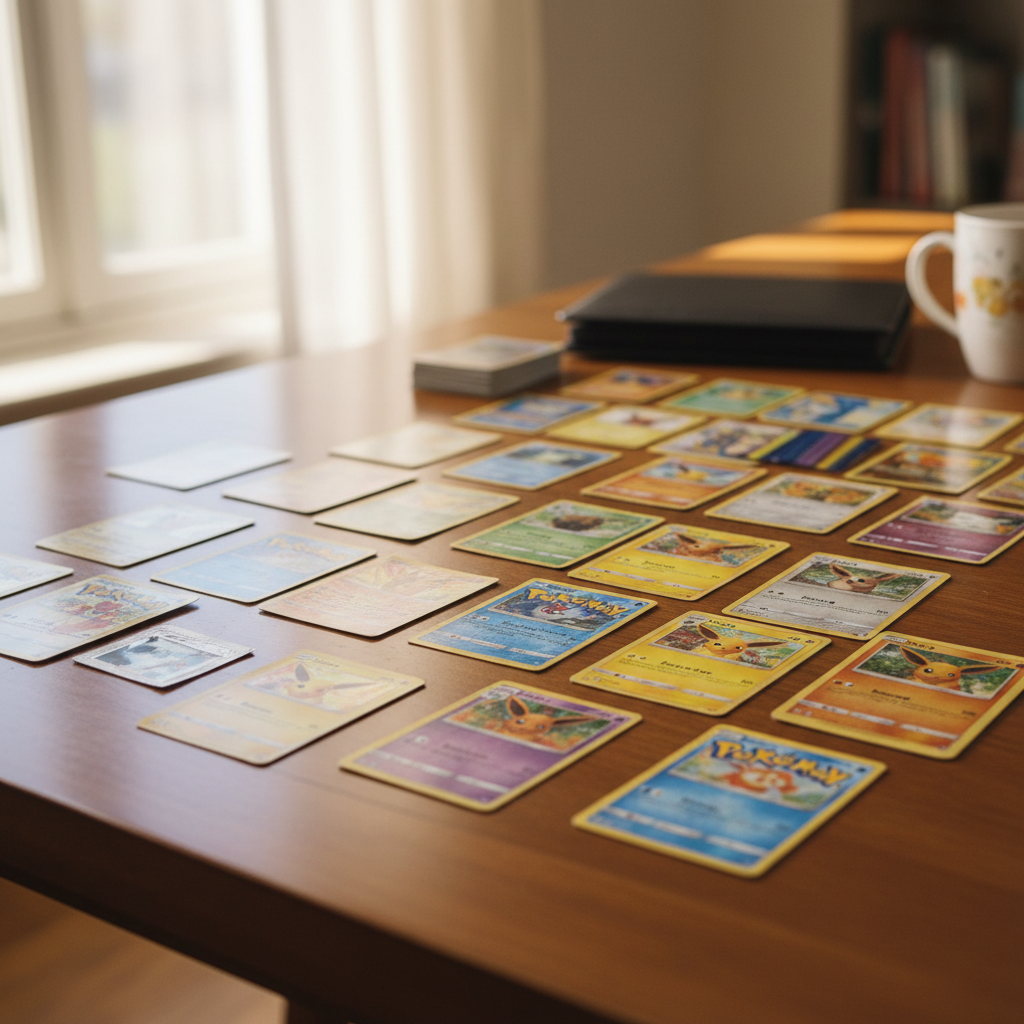
Pokemon Card Value — How to Check What Yours Are Worth in 2026
Finding the true pokemon card value in 2026 can feel like searching for a shiny Charizard in the wild – exciting, but sometimes challenging! Whether you've stumbled upon an old collection in your attic or you're an active collector, knowing what your cards are actually worth is the first step to making smart selling decisions. I've been in the reselling game for years, and I've seen firsthand how a little knowledge (and the right tools!) can turn forgotten cardboard into serious cash.
Related reading: Trading Card Value Guide for Alabama Resellers 2026 · Best Place to Sell Pokemon Cards in Iowa 2026 Guide · Trading Card Value Guide for West Virginia Resellers 2026
In this comprehensive guide, I'll walk you through everything you need to know about determining your pokemon card values, from understanding what factors drive prices to using the best tools for accurate assessments. We'll explore real-world examples, dive into the nuances of grading, and even touch on the best platforms to sell your treasures. By the end, you'll be an expert at identifying high-value cards and confidently navigating the market. Ready to turn your cards into coin? Let's go!
Quick Answer: Realistic Pokemon Card Value Ranges
So, you've got a stack of Pokémon cards and you're wondering, "What's the quick scoop on their value?" The truth is, pokemon card value can range from practically nothing to tens of thousands of dollars, depending on a host of factors. Most common, ungraded cards from modern sets are worth pennies, perhaps $0.05 to $0.50 each, especially if they're standard commons or uncommons. However, holographic rares, full-art cards, and certain promotional cards can easily fetch anywhere from $5 to $50.
When you start looking at older, rarer, or professionally graded cards, the numbers jump significantly. For instance, a first edition holographic Charizard from the Base Set, even in moderately played condition, could be worth hundreds or even thousands. A PSA 10 Gem Mint example of that same card? We're talking six figures. Other notable high-value cards include rare promos like Illustrator Pikachu or certain tournament prize cards, which can command prices well over $100,000. It’s critical to understand that condition is king, and even a slight crease can drastically reduce a card's potential value. Don't underestimate the power of a pristine card! Knowing where to start can be tricky, but using a tool that quickly assesses value, like FlipAI, can give you an instant ballpark figure on your sports cards.
What Drives Pokemon Card Values: Key Factors
Understanding what makes one Pokémon card a dime and another a diamond is crucial for any reseller. There isn't just one magic bullet; it's a combination of elements that dictate pokemon card values. Let's break down the most impactful factors:
- The Pokémon Itself: Iconic Pokémon like Charizard, Pikachu, Mewtwo, and legendary Pokémon generally command higher prices due to their popularity and nostalgic appeal. However, even less popular Pokémon can be valuable if the card is rare enough.
- Rarity & Set: Is it a common, uncommon, rare, holographic rare, secret rare, or a special promo? First Edition cards (especially from the Base Set, Jungle, or Fossil) are often significantly more valuable than unlimited print runs. Japanese cards, especially vintage ones, also have unique value considerations. Look for symbols like a small black star for rare, or a star H for holographic rare.
- Card Condition (Grading): This is arguably the most significant factor. A card's condition is assessed by professional grading companies like PSA, Beckett (BGS), or SGC on a scale of 1 to 10 (with 10 being Gem Mint). A PSA 10 Charizard could be worth 100x more than a PSA 7 version of the same card. Even a tiny scratch, ding, or centering issue can drop a grade dramatically, impacting value by hundreds or even thousands of dollars.
- Print Run & Parallel Variations: Limited print runs naturally lead to higher demand and value. Parallel cards (like reverse holographics, rainbow rares, or full-art cards) are rarer versions of standard cards and often fetch premium prices. Look for unique textures, patterns, or borders that distinguish them from regular versions.
- Rookie Cards & Key Releases: While not as prevalent in Pokémon as in traditional sports cards, some early set cards are considered 'key' or 'first appearance' cards and carry extra weight, especially for popular Pokémon.
Paying attention to these details can help you spot a hidden gem in your collection. It’s like being a detective; every detail matters when assessing a card's worth.
How to Check live market Comps for Pokemon Card Prices
When trying to figure out pokemon card prices, the absolute best way to get an accurate assessment is to look at "sold comps" – recently completed sales of identical items. Don't rely on active listings, as those are just asking prices and might not reflect what buyers are actually willing to pay. Here's how I typically do it, focusing on eBay, which is a treasure trove of historical sales data:
Using eBay's Sold Listings Feature
- Go to eBay: Head over to eBay.com.
- Search Specifics: Be as specific as possible in your search. Don't just type "Charizard." Instead, use "Charizard Base Set 1st Edition Holo PSA 9" or "Pikachu VMAX Rainbow Rare Sword & Shield." Include the Pokémon name, set name, card number (if visible), rarity (e.g., holo, reverse holo), and importantly, the condition or grade.
- Filter by "Sold Items": On the left-hand sidebar (or under the 'Filter' options on mobile), scroll down and check the box for "Sold Items." You can also check "Completed Items" to see listings that ended without a sale, which can be just as informative to know what didn't sell.
- Analyze Results: Look for recent sales of cards identical to yours in terms of condition, edition, and set. Pay attention to the date of the sale; older sales might not reflect current market trends. Average out a few similar sales to get a good estimate.
Real-World eBay Sold Examples (Approximate)
- Example 1: Charizard, Base Set, 1st Edition, Holo, PSA 7. I recently saw one of these sell for approximately $2,800. This iconic card from the original Base Set holds significant value, even at a lower PSA grade, due to its rarity and immense popularity.
- Example 2: Pikachu VMAX, Rainbow Rare, Sword & Shield (Vivid Voltage), Ungraded (Near Mint). A raw, near-mint copy of this vibrant card can fetch around $70-$90. While not vintage, its rarity within modern sets and striking appearance make it a desirable pull for collectors.
This process of checking sold comps is fundamental to accurate pricing. Tools like FlipAI take the guesswork out of this by automating the search for you, which is a massive time-saver for busy resellers. When I'm at an estate sale or flea market, I don't have time to manually search eBay for every single card; that's where a card value scanner truly shines.
Best Places to Sell Your Pokemon Cards
Once you've got a good handle on your pokemon card value, the next step is finding the right platform to sell them. The best place depends heavily on the card's value, your comfort level with different selling methods, and the fees involved. Here's my breakdown:
Online Marketplaces
- eBay: For most cards, especially anything valued over $10, eBay is your go-to. It has the largest audience of collectors and provides the best avenue for reaching serious buyers. Their fees typically range around 13.25% of the final sale price for most collectibles, plus a small transaction fee. Listing your cards with clear, well-lit photos and detailed descriptions is key to maximizing your sale price.
- Mercari: Good for mid-range cards ($5-$50) or even lower-value bundles. Mercari's fee structure is 10% of the sale price plus a processing fee, making it slightly more attractive than eBay for some items. It's often easier to list quickly here.
- Poshmark: While primarily known for fashion, Poshmark has a growing collectibles section. It's a bit different – you're more likely to sell bundles of lower-value cards here than individual high-end pieces. Poshmark takes a flat $2.95 commission for sales under $15 and 20% for sales $15 and over.
- Facebook Marketplace / Collectible Groups: Excellent for selling lower-value raw cards ($1-$20) locally to avoid shipping costs, or for connecting with niche collectors in specific Pokémon groups. Fees are typically non-existent if you handle local cash transactions, but be mindful of meeting safely.
High-End Auction Houses
For professionally graded cards valued over $500, especially those in the thousands or tens of thousands, consider specialized auction houses like PWCC Marketplace or Goldin Auctions. These platforms cater to serious investors and collectors, offering white-glove service, professional photography, and extensive marketing. Their fees vary but are generally competitive for high-value items, often a percentage of the sale or a flat fee, which can be worthwhile for reaching the right audience for your top-tier cards.
Choosing the right platform can significantly impact your net profit. Don't be afraid to experiment, but always start with understanding your card's true worth before listing it anywhere.
How FlipAI Values Cards in Seconds
This is where the magic happens, folks! Manual research for every single card in a collection can be incredibly time-consuming, especially if you're like me and constantly sourcing. That's why I rely on tools that streamline the process. FlipAI lets you take a photo of any item or scan its barcode to instantly see current eBay asking prices (live listings, not sold prices) plus an AI estimate. No guessing. No Googling. Just point your camera at anything and know what it is actually worth in about 10 seconds.
For Pokémon cards specifically, FlipAI's AI vision technology is a game-changer. Imagine walking through a garage sale or a flea market. Instead of pulling out your phone, typing in a lengthy search query for a specific card, and sifting through active listings, you simply open the FlipAI app. You point your camera at the card – it could be an ungraded Charizard from the early days, or a modern full-art VMAX. FlipAI's AI instantly analyzes the card, identifying key features:
- Pokémon Name: Instantly recognizes the character.
- Set & Edition: Determines which set the card belongs to (e.g., Base Set, Jungle, Fusion Strike) and if it's a 1st Edition, Shadowless, etc.
- Card Number & Rarity: Identifies the specific card number and its rarity symbol.
- Condition/Grade: While not a professional grader, the AI can often provide a preliminary assessment of condition and highlight obvious flaws. If it's a graded slab, it will read the grading company and grade.
- Parallel/Holo Type: Distinguishes between different holographic patterns or parallel versions.
Within seconds, you get a compilation of recent sold prices for that exact card, giving you an immediate, real-world understanding of its pokemon card prices. This is invaluable for making quick buying or selling decisions on the fly. It saves hours of research and helps you avoid missing out on profitable flips. Plus, with FlipAI's profit calculator, you can instantly see your potential earnings after fees!
Grading: Is it Worth it for Your Pokemon Card Value?
The question of whether to get a card graded is a big one, and the answer directly impacts its pokemon card value. For many common or moderately rare cards, grading might not be worth the investment. Grading services from companies like PSA, Beckett (BGS), or SGC can cost anywhere from $20 to hundreds of dollars per card, plus shipping and insurance, and can take months to return. So, when does it make sense?
When to Consider Grading:
- High-Value Cards: If your card is already known to be rare and valuable (e.g., a vintage holographic Charizard, a rare promo card, or a highly sought-after modern chase card), grading can significantly increase its value and liquidity. A PSA 9 or 10 of a valuable card can easily sell for 2x-10x what an ungraded (raw) near-mint copy would.
- Excellent Condition: Only consider grading cards that are in near-mint to gem-mint condition. Even a small scratch, ding, or centering issue can drop a card's grade significantly, potentially making the grading fee a wasted expense. Carefully inspect your card under good lighting before submitting.
- Authenticity and Protection: Grading authenticates your card and encapsulates it in a tamper-evident slab, protecting it from further damage. This provides peace of mind for both seller and buyer.
- Investment Potential: For cards you believe will appreciate in value, grading can be a long-term investment.
When to Skip Grading:
- Common or Low-Value Cards: If an ungraded card is only worth a few dollars, the grading fee will almost certainly exceed any potential increase in value.
- Damaged Cards: Cards with significant wear, creases, tears, or heavy whitening will likely receive a low grade (e.g., PSA 1-5). While still authentic, a low grade usually doesn't add enough value to justify the cost.
- Time and Cost: If you need to sell quickly or have a limited budget, the time and financial investment of grading might not be practical.
My advice? Use FlipAI or do thorough sold comp research first. If a raw, near-mint version of your card regularly sells for $100+, then start thinking about grading. Otherwise, it might be better to sell it raw or in a small bundle.
Get Started: Maximizing Your Pokemon Card Profits in 2026
Phew! We've covered a lot of ground today on how to determine your pokemon card value in 2026. From understanding the intricate factors that drive rarity and demand to effectively using sold comps and deciding on grading, you're now equipped with the knowledge to confidently assess your collection. Remember, the key to successful reselling is always accurate pricing and efficient sourcing.
Whether you're uncovering childhood treasures or actively hunting for flips at local markets, knowing what you have and what it's worth is paramount. Tools like FlipAI are designed to make this process incredibly simple, fast, and accurate, freeing you up to focus on the fun part – finding those profitable deals! With its ability to quickly scan and provide real-time sold prices across multiple platforms, you'll never be guessing what your Pokémon cards are truly worth again. Ready to transform your card collection into cash?
Start your 5-day free trial and flip smarter today.Frequently Asked Questions
How do I check the value of my old Pokémon cards?
To check the value of your old Pokémon cards, the best method is to search for recently sold listings (sold comps) on platforms like eBay. Be very specific in your search query, including the Pokémon's name, the set name (e.g., Base Set, Jungle), whether it's holographic, and its condition or professional grade (e.g., PSA 8). Tools like FlipAI can also quickly scan your card and provide instant market price data from multiple marketplaces, saving you a lot of time.
Which Pokémon cards are the most valuable?
Generally, the most valuable Pokémon cards are rare, vintage holographic cards, especially first edition cards from the original Base Set (like Charizard, Blastoise, Venusaur). Promo cards, error cards, and certain tournament prize cards can also be extremely valuable. Condition is crucial, with professionally graded cards in Gem Mint (PSA 10) condition fetching the highest prices. Even modern chase cards, like certain full-art VMAX or Secret Rare cards, can be quite valuable if they are popular and in pristine condition.
Is it worth grading my Pokémon cards?
Grading your Pokémon cards is generally worth it for high-value cards that are in excellent (near-mint to gem-mint) condition. Professional grading by companies like PSA or BGS can significantly increase a card's market value, confirm authenticity, and protect it. For common or moderately played cards, the cost of grading often outweighs the potential increase in value, making it less worthwhile. Always do your research on sold comps first to determine if a card's raw value justifies the grading expense.
What is the best way to sell high-value Pokémon cards?
For high-value Pokémon cards, especially those that are professionally graded and worth hundreds or thousands, specialized auction houses like PWCC Marketplace or Goldin Auctions are often the best choice. These platforms cater to serious collectors and investors, offering secure transactions, professional presentation, and broad exposure. For cards in the $50-$500 range, eBay is usually the most effective platform due to its vast audience and established collector base. Always ensure your listings have clear photos and detailed descriptions.
How can I quickly find the real-time pokemon card prices?
To quickly find real-time Pokémon card prices, you'll want to use tools that aggregate sold listing data. Manually searching eBay's 'Sold Items' filter for specific card details is effective but time-consuming. For immediate insights, I recommend using the FlipAI app. You simply take a photo of your Pokémon card or scan its barcode, and FlipAI instantly shows you recent market prices from multiple platforms like eBay, Poshmark, and Mercari, giving you an accurate valuation in about 10 seconds.