Hot Wheels Value Guide 2026: Which Cars Are Actually Worth Money
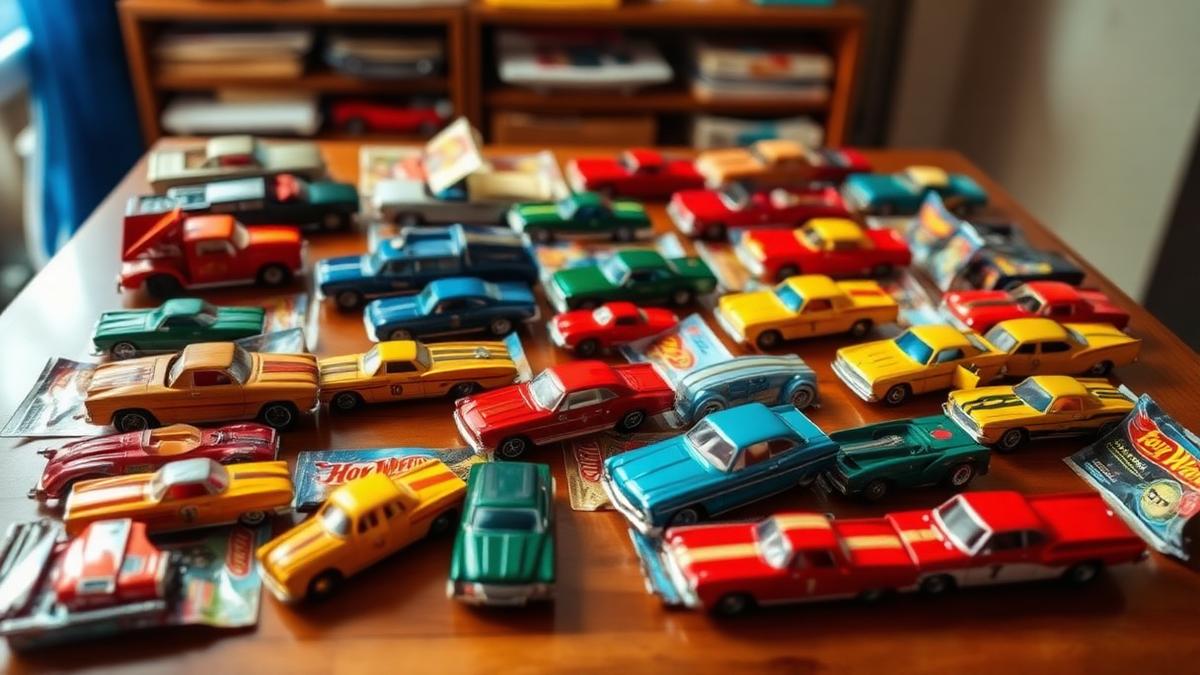
Most Hot Wheels are worth about a dollar. A small slice are worth hundreds, and a handful are worth more than a brand-new car. This Hot Wheels value guide shows the four things that separate the treasure from the trunk fillers, so you can sort a bin fast instead of listing 200 cars that nobody bids on.
1. Redlines are the first sort
Cars made from 1968 to 1977 have a thin red stripe on the tire sidewall. That stripe is the single biggest value divider in the hobby, separating the vintage classics from the modern mainlines. These first ten years of production, known as the Redline era, represent the golden age for many collectors.
- Loose redline, played-with: $10–$40
- Loose redline, sharp paint: $40–$150
- Carded redline: $200–$1,500+ depending on casting and card grade
- Post-1977 mainline: typically $1–$3 loose
Spectraflame paint (a translucent finish over a polished zinc-alloy body) is another early marker and usually a premium over later enamel paints. Not all Redlines are Spectraflame, but all Spectraflame cars from this era are Redlines.
How to Spot a Genuine Redline
When sorting a large collection, your eyes should be trained to spot these key features. First, the wheels: look for that distinct red circle on the tire's sidewall. Second, check the base of the car. Early models are stamped with "Made in U.S.A.," while later ones may say "Made in Hong Kong." Third, look at the overall construction. These early cars have a heavier, more solid feel than modern Hot Wheels. Finally, many (but not all) will have that beautiful, deep Spectraflame paint job that looks very different from the opaque enamel or metalflake paints of later years.
Understanding Redline Condition and Value
A car's condition, or "grade," dramatically impacts its price. A "played-with" car will have noticeable flaws like paint chips (often called "flea bites"), worn wheels where the chrome has rubbed off, and potentially bent axles that cause the car to wobble. A car with "sharp paint" is considered near-mint; it might have one or two minuscule chips only visible on close inspection, but the paint is otherwise vibrant and intact, and the wheels and axles are perfect. For example, a common Custom Fleetside in played-with condition might fetch $20, while a near-mint example could easily sell for over $100.
2. Treasure Hunts and Super Treasure Hunts
Since 1995, Mattel has hidden limited-edition cars in regular cases sent to retailers. These "chase" cars are the reliable money-makers of the modern era and what most collectors are looking for on store pegs today.
- Treasure Hunt (TH): Look for the flame-in-circle logo on the card behind the car and often on the car's deco. Usually valued between $8–$30.
- Super Treasure Hunt (STH): Features Spectraflame paint, Real Riders rubber tires, and a small "TH" logo on the car itself, plus a gold flame logo on the card. Commonly $25–$150, but much more for popular castings like the Datsun 510, Porsche 993 GT2, and Volkswagen models.
- 1995–1999 originals: The very first Treasure Hunts, identifiable by a green bar on the card, carry the strongest prices of the entire TH series.
The rubber-tire check is the fastest STH tell from a distance — if the tires are hard plastic, it is not a Super Treasure Hunt, no matter how shiny the paint is.
A Step-by-Step Guide to Identifying an STH
Isolating a Super Treasure Hunt from thousands of similar-looking mainlines is a skill. Follow these steps:
- Check the Paint: STH paint is Spectraflame, a deep, glossy, candy-like finish. Mainlines have standard enamel or metallic flake paint. In the store, the STH will look richer and more vibrant under the lights than the cars around it.
- Check the Tires: This is the easiest confirmation. STHs use "Real Riders," which are two-piece wheels with soft rubber tires. Mainline cars use one-piece hard plastic wheels. You can tell the difference by feel and by seeing the tread detail on the rubber.
- Look for the Logo on the Car: Somewhere on the car's decoration (its "tampo"), there will be a small "TH" logo. It can be subtle, so look carefully.
- Confirm with the Card Logo: Behind the car, printed on the card itself, there will be a flame-in-a-circle logo. For an STH, this logo is typically gold. For a regular Treasure Hunt, it's silver.
3. Understanding Hot Wheels Eras Beyond Redlines
The 40+ years between the Redline era and today saw many changes in Hot Wheels production. While most cars from this period are common, knowing the major eras helps identify less-common variations and understand the evolution of the brand.
Blackwalls and the End of an Era (1977–1990s)
In 1977, to cut costs, Mattel stopped painting the red stripe on the tires, creating the "Blackwall" era. The earliest Blackwall cars, known as "transitional" models, are sometimes found with leftover Redline wheels, making them a rare and valuable find. For the most part, Blackwall-era cars are valued at $1 to $5, but specific castings in mint condition can be worth more to completist collectors. The bases were still often metal during this period, before a widespread switch to plastic.
The Blue Card Era and the Birth of Modern Collecting (1989-1999)
The introduction of the iconic blue and white card in 1989 signaled a shift. Mattel began to recognize the adult collector market. This is the era when the first Treasure Hunts were introduced in 1995, forever changing the hobby. While most Blue Card mainlines are worth little, they represent a key part of Hot Wheels history. The very first releases of a new car model, labeled "First Edition," also started gaining collector interest during this time.
4. A Deeper Dive into Castings: Why Some Models Are Kings
In Hot Wheels terminology, the "casting" is the mold for a specific car model. While there are thousands of castings, a select few are consistently more popular and valuable than others. This is almost always driven by real-world car culture. If you're not sure what kind of car you're looking at, the FlipAI app can help you identify it; just take a quick photo to check the casting and its current market value.
The JDM (Japanese Domestic Market) Craze
Models of Japanese cars, particularly from the 80s and 90s, are arguably the hottest segment of modern Hot Wheels collecting. Driven by tuner culture and movie franchises, castings like the Nissan Skyline (R32, R34), Datsun Bluebird 510, and Honda Civic EF are hugely sought after. An STH version of a popular JDM car can be worth hundreds of dollars right off the pegs. For example, the 2020 Nissan Skyline GT-R (BNR34) Super Treasure Hunt regularly sells for over $200.
Classic American Muscle and Hot Rods
The original audience for Hot Wheels grew up with American muscle. Castings of the '67 Camaro, '69 Ford Mustang, and various Mopar models are perennial favorites. The '55 Chevy Bel Air Gasser is a modern legend, with its STH version fetching over $250 and even some mainline versions commanding a premium.
Volkswagen and Porsche: The European Legends
Ever since the original Beach Bomb became the hobby's holy grail, Volkswagens have held a special place. The VW Drag Bus and Kool Kombi castings are incredibly popular, with limited releases selling for hundreds. Similarly, Porsche models like the 911 GT3 RS, 934.5, and 993 GT2 are collector royalty. A Super Treasure Hunt of a desirable Porsche can easily be a $150-$300 car.
5. Errors and variations
Factory mistakes are where sleeper value hides: wrong wheels, unpainted (ZAMAC) bodies, missing tampos (the painted-on decorations), mirrored decals, or even two cars in one blister pack. Verified errors on desirable castings regularly clear $50–$300. Photograph the error clearly and state exactly what is wrong in the title — error buyers search for the specific fault.
Common vs. Valuable Errors
A small paint smudge or a slightly misaligned tempo might add a dollar or two in value, but they are too common to be significant. Major errors are what collectors hunt for. The most prized errors include:
- Wrong Wheels: A mainline car that was accidentally fitted with premium Real Riders wheels is a top-tier error.
- Unspun: The car's base and body were never riveted together at the factory.
- No Tampos: A car that completely missed the decoration station. This is more valuable than just a missing side decal.
- Old-Style Wheels: A new car released with wheels from a much older series is a rare find.
What is a ZAMAC?
You may see cars listed as "ZAMAC." This is not an error but a planned variation. ZAMAC is the acronym for the metal alloy Hot Wheels are made from (Zinc, Aluminum, Magnesium, And Copper). A ZAMAC car is simply one that has been released with a raw, unpainted metal body, often as a Walmart-exclusive series. They carry a small premium over their mainline counterparts, typically selling for $3-$10.
6. Packaging condition decides the top end
For carded cars, the blister and card matter as much as the vehicle inside. Creases, yellowing, price-sticker residue, and a lifted blister can cut a collector price by half or more. Graded examples from services like AFA sit at the very top of the market. If a card is already damaged, opening it rarely helps the value — sell it as-is and be sure to describe the flaws honestly.
Self-Grading Your Cards and Blisters
Before selling, assess your packaging. A C10 or "Gem Mint" card is flawless: sharp corners, no creases or "veins," perfect gloss, and a crystal-clear, perfectly sealed blister. This is rare. More common conditions include:
- C9 (Mint): May have one tiny imperfection, like a very slightly soft corner.
- C8 (Near Mint): May have a soft corner or two, or a very light vein on the back of the card that doesn't break the color on the front.
- C7 (Excellent): A more noticeable flaw, like a vein across the card or minor edge wear, but still displays well.
- C6 and below: Have significant flaws like heavy creasing, tears, or a crushed/yellowed blister. Price accordingly.
Professional Grading: When Is It Worth It?
Companies like the Action Figure Authority (AFA) and Collector Grade Authority (CGA) authenticate and grade collectibles, encasing them in sealed acrylic cases. The cost for this service can range from $30 to over $100 per car depending on the value and turnaround time. This is only worthwhile for exceptionally rare and valuable cars—think mint-condition Redlines, very desirable Super Treasure Hunts, or verified rare errors. A high grade (e.g., AFA 85 or higher) can double or triple the value of an already expensive car, providing a certified guarantee of its condition and authenticity.
7. The famous ones (and why you probably do not have them)
The 1969 pink rear-loading Volkswagen Beach Bomb prototype is the six-figure legend of the hobby, and only a couple of dozen are known to exist. It was a prototype that proved too narrow and top-heavy, and was redesigned with side-mounted surfboards for the production run. Other genuinely rare pieces include early Custom Camaro prototypes in rare colors, the aforementioned Over Chrome Antifreeze Camaro, and some 1970 "Mad Maverick" castings. The Mad Maverick was based on the 1969 Ford Maverick, and its name was quickly changed to "Mighty Maverick," making original "Mad Maverick" bases extremely rare. If you think you have one of these holy grails, do not clean it, do not open it, and get it professionally verified before even thinking about selling.
8. How to price a bin quickly
Sorting a giant bin of mixed Hot Wheels is the bottleneck, not pricing. A practical workflow will save you hours of effort:
- First Pass - The Obvious Hits: Scan every car and pull out anything with Redline tires. For carded cars, pull anything with a flame logo on the card or a green bar. This is your "A" pile.
- Second Pass - Potential Supers: Go through the remaining cars. Look for the tell-tale signs of a Super Treasure Hunt: rubbery Real Riders tires and the deeper shine of Spectraflame paint. This is your "B" pile.
- Value Your Keepers: Now focus on your A and B piles. This is where you need accurate, real-time data. You can take a photo of any item or scan its barcode with FlipAI to get an estimated resale range from recently sold listings. This is much more reliable than looking at active asking prices.
- Bulk-Lot Everything Else: The hundreds of remaining loose mainline cars are your "C" pile. These sell far better in bulk lots than individually. Group them into lots of 50 or 100. You can increase their value by sorting them into desirable themes like "JDM Lot," "Muscle Car Lot," or "Truck Lot."
Before you list, run the numbers in a free profit calculator — on a $6 car, shipping costs and platform fees can easily eat your entire margin, so it's critical to know if a flip is worth the packing time.
9. Shipping without eating the profit
Improper shipping can destroy your profit and your seller reputation. A single loose car ships safely in a small box or a well-padded bubble mailer for a few dollars. Carded cars are more fragile and demand more care.
Packing a Single Carded Car
Never ship a carded collector car in just a bubble mailer. The card will get bent. The best practice is to place the car in a plastic "Protector Pack." Then, sandwich it between two pieces of rigid cardboard and place it inside a bubble mailer or a small, form-fitting box. This ensures the card and blister arrive in the same condition they left in. A bent card is a common reason for a refund request.
Shipping Large Lots
For lots, weight is the critical factor. Weigh the final, packed box before you set a price or calculate shipping. 100 loose cars can weigh between 6 and 8 pounds. 50 carded cars in a box can easily top 10 pounds. Use a service like USPS Ground Advantage or UPS Ground for these heavier packages, as they are almost always cheaper than Priority Mail. Pack the box tightly with packing paper or bubble wrap so the cars don't slam against each other in transit.
Bottom line
For efficient Hot Wheels flipping, focus your energy where the value is. Check tires first, cards second, and errors third. Redlines, Super Treasure Hunts, and verified major errors are where the real money is; everything else is likely lot material. Solid research using sold comps turns a hunch into a price, and using a tool like FlipAI to get that data from a photo is much faster than manually searching through spreadsheets and listings. To learn more about maximizing your returns on collectibles, check out our comprehensive reseller guide for more tips and strategies.
Related reading: What's it worth? The full value-lookup guide and the collectibles value hub.
Frequently asked questions
What is the rarest Hot Wheels car?
The rarest and most valuable Hot Wheels car is the 1969 pink rear-loading Volkswagen Beach Bomb prototype. Only a few dozen are known to exist, and its value is estimated at over $150,000.
How can I tell if my Hot Wheels has Real Riders?
Real Riders tires are made of soft, pliable rubber, not hard plastic. You can feel the difference by gently squeezing them. They also have realistic tread details, unlike the smooth or minimally detailed surface of a basic plastic wheel.
Are Hot Wheels from McDonald's worth anything?
Generally, no. Hot Wheels produced for McDonald's Happy Meals and other promotional giveaways were mass-produced in enormous quantities. While there are a few minor exceptions, they are typically worth only $1-$2.
What does 'ZAMAC' mean on a Hot Wheels car?
ZAMAC is an acronym for the alloy the car's body is made from (Zinc, Aluminum, Magnesium, and Copper). In the Hot Wheels world, a 'ZAMAC' car is a limited-edition version that is released with an unpainted, raw metal finish. They are usually retailer-exclusives and are worth slightly more than their standard mainline counterparts.
Do I need to keep Hot Wheels in the package to be valuable?
For modern cars (post-1980s), yes, the packaging is a huge part of the collector value. For vintage Redlines (1968-1977), loose cars in mint condition can still be very valuable ($50-$150+), but a version still in its original blister pack is always worth significantly more.
Frequently Asked Questions
What is the rarest Hot Wheels car?
The rarest and most valuable Hot Wheels car is the 1969 pink rear-loading Volkswagen Beach Bomb prototype. Only a few dozen are known to exist, and its value is estimated at over $150,000.
How can I tell if my Hot Wheels has Real Riders?
Real Riders tires are made of soft, pliable rubber, not hard plastic. You can feel the difference by gently squeezing them. They also have realistic tread details, unlike the smooth or minimally detailed surface of a basic plastic wheel.
Are Hot Wheels from McDonald's worth anything?
Generally, no. Hot Wheels produced for McDonald's Happy Meals and other promotional giveaways were mass-produced in enormous quantities. While there are a few minor exceptions, they are typically worth only $1-$2.
What does 'ZAMAC' mean on a Hot Wheels car?
ZAMAC is an acronym for the alloy the car's body is made from (Zinc, Aluminum, Magnesium, and Copper). In the Hot Wheels world, a 'ZAMAC' car is a limited-edition version that is released with an unpainted, raw metal finish. They are usually retailer-exclusives and are worth slightly more than their standard mainline counterparts.
Do I need to keep Hot Wheels in the package to be valuable?
For modern cars (post-1980s), yes, the packaging is a huge part of the collector value. For vintage Redlines (1968-1977), loose cars in mint condition can still be very valuable ($50-$150+), but a version still in its original blister pack is always worth significantly more.