Best Sports Card Price Scanner App for 2026
Best Sports Card Price Scanner App for 2026
Finding the best sports card price scanner app for 2026 is crucial for any serious collector or reseller, and the good news is you don't have to guess anymore. I'm here to tell you that with the right tools, you can accurately value your cards and turn them into serious cash. As an experienced reseller, I've seen firsthand how quickly the market changes, and having real-time data is a game-changer. Forget about endless forum scrolling or outdated price guides; today's technology lets you know what your cards are truly worth in seconds. This article will walk you through how to pinpoint the value of your sports cards, understand what makes them valuable, and where to sell them for top dollar, all while highlighting how cutting-edge apps make this process incredibly simple. Let's dive in!
Related reading: Where to Sell Sports Cards Online in 2026 · Best Place to Sell Sports Cards in South Carolina 2026 Guide · Best Place to Sell Sports Cards in Nebraska 2026 Guide
Quick answer: What's My Card Worth? Realistic Value Ranges
So, you've got a sports card in your hand and you're thinking, "What's this thing worth?" The quick answer is: it depends, but with a good card scanner app, you can get a realistic value range instantly. Most raw, ungraded modern cards (think recent releases, common players) are likely in the $1-$20 range. Even a star player's base card from a standard set might only fetch $5-$15. However, if you're holding a rare parallel, a low-numbered insert, or a rookie card of a top-tier player, that value can jump significantly, often into the $50-$500+ range, especially if it's in pristine condition or professionally graded. Vintage cards (pre-1980) also operate on a different scale; even common players can command $10-$50 if well-preserved, while Hall of Famers can easily hit hundreds or thousands. For example, a raw, ungraded Michael Jordan 1986 Fleer rookie card in decent condition could sell for $1,000-$3,000, while a perfectly graded PSA 10 version might hit $20,000+. Knowing these realistic ranges helps set expectations and guides your next steps. Before you do anything, you need to establish a baseline value, and that's where tools like FlipAI come in handy to give you an accurate starting point. For more general reselling wisdom, check out my reseller's ultimate guide.
What Drives Card Value: Player, Year, Set, Parallel, Print Run, Grade
Understanding what makes a sports card valuable is like cracking a secret code, but once you know the key factors, it's pretty straightforward. It's not just about who's on the card; a whole constellation of elements contributes to its market price. Let's break it down:
- Player Popularity and Performance: This is fundamental. A rookie card of a future Hall of Famer like LeBron James or Patrick Mahomes will always command more than a journeyman's card. Current performance, recent championships, and milestone achievements can cause short-term price spikes.
- Year of Release: Older, vintage cards often have higher values due to scarcity and historical significance. Rookie cards, especially from iconic sets, are particularly sought after.
- Set and Brand: Certain brands and sets are more prestigious. Topps Chrome, Bowman Chrome, Panini Prizm, and Upper Deck SP Authentic are known for producing highly collectible and valuable cards. The design, photography, and rarity within a set play a big role.
- Parallel and Variation: This is where things get interesting! Base cards are common, but parallels (cards with different colors, textures, or patterns) are much rarer. Rainbow parallels, refractors, numbered parallels (e.g., /99, /25, 1/1), and error variations can significantly boost value.
- Print Run/Scarcity: The fewer copies of a card that exist, the higher its potential value. Cards serial-numbered out of 25 are inherently more valuable than cards numbered out of 999. A 1/1 card (one of one) is usually among the most valuable in any set.
- Condition and Grade (PSA/BGS/SGC): This is arguably the single most impactful factor for higher-value cards. A card's condition is assessed by professional grading companies like PSA, BGS (Beckett Grading Services), and SGC. They assign a numerical grade from 1 to 10 (with 10 being Gem Mint/Pristine). A card graded PSA 10 will sell for many multiples more than the exact same card graded PSA 8, even if the difference in appearance is barely noticeable to the untrained eye. For example, a raw card might be worth $100, but a PSA 10 version could be $1,000-$2,000.
Understanding these drivers helps you identify potential gems in your collection and informs your strategy for buying and selling.
How to Check live market Comps: Your Secret Weapon
When I talk about real money in reselling, I'm talking about sold card comps – comparable sales. This is the absolute gold standard for valuing anything, not just sports cards. You don't want to know what someone is asking for a card; you need to know what people have actually paid for it. This is why a good card price check tool is indispensable.
My go-to strategy for checking comps has always centered around completed sales on major platforms, especially eBay. Here’s how you do it, and what you’re looking for:
- Use Advanced Search on eBay: Go to eBay, type in your card's details (Player Name, Year, Set, Card Number, and any Parallel/Rarity). Then, critically, scroll down on the left-hand sidebar and check the box for "Sold Items." This filters out all the active listings and only shows you what people have successfully purchased.
- Analyze the Results: Look for cards that match yours as closely as possible. Pay attention to:
- Condition: Is it raw or graded? If graded, what's the grade (PSA 9, BGS 9.5, etc.)? A PSA 8 will sell for significantly less than a PSA 10.
- Listing Format: Did it sell via auction or "Buy It Now"? Auction prices can sometimes be lower or higher depending on bidding wars.
- Timeframe: Look at recent sales (last 30-90 days) as markets can shift rapidly.
- Average It Out: Don't just pick the highest or lowest. Look for a cluster of similar sales and take an average to get a realistic market value.
Realistic eBay Sold Examples:
- Example 1: A raw, ungraded 2018 Panini Prizm Luka Doncic Rookie Card (Base #199) in Near Mint condition sold for approximately $120-$150. However, a PSA 10 version of the exact same card often sells for $500-$700. This clearly illustrates the huge impact of grading.
- Example 2: A raw, ungraded 2000 Tom Brady Playoff Contenders Rookie Card (Autograph, Championship Ticket #144) sold for approximately $3,000-$5,000. A graded version (BGS 9) of this card can fetch upwards of $10,000-$15,000, while a BGS 9.5 can command hundreds of thousands. (Note: This card is notoriously difficult to find in high grades.)
This manual process, while effective, can be time-consuming, especially if you have a lot of cards. That’s why I rely on tools that streamline this process. Speaking of streamlining, checking comps is the first step to knowing your potential profit; the next is finding good deals, maybe at a flea market app.
Best Places to Sell Cards: Maximize Your Profits
Once you've done your card price check and know what your cards are worth, the next step is finding the right platform to sell them. Different cards appeal to different buyers, and knowing where to list can significantly impact your final sale price and the fees you pay.
eBay for the Masses (and High-End):
For most sports cards, from raw commons to high-value graded gems, eBay is king. It has the largest audience of collectors and resellers. You can list auctions for rare items to generate bidding wars, or use "Buy It Now" for fixed prices. eBay's fees can vary, but generally, expect to pay a final value fee of around 13.25% for most trading cards (including shipping costs) for amounts up to $7,500, with a lower percentage on the portion above that. It's the best for getting maximum exposure and hitting those top comps.
Facebook Marketplace/Groups for Low-Value Raw:
For raw, ungraded cards valued under $20-$30, especially if you want to avoid shipping costs and fees, Facebook Marketplace and specific sports card collector groups are excellent. You can often arrange local pickup, saving you time and money. Fees are usually zero or very low if transactions are handled through secure payment apps like PayPal (goods and services) or Venmo (business profile). Just be cautious and always meet in safe, public places for transactions.
PWCC/Goldin/Heritage for Graded Over $500:
For professionally graded cards (PSA, BGS, SGC) with a value exceeding $500, consignment houses like PWCC Marketplace, Goldin Auctions, or Heritage Auctions are fantastic options. They cater specifically to high-end collectors, offer professional photography, marketing, and handle all the logistics (shipping, payment, authentication). While they charge a commission (which can range from 10-20% depending on the item's value), their reach often results in higher sale prices, making it worthwhile for truly premium items. They also deal with authenticated memorabilia, which can be a whole different ballgame. For more information on card grading, you can check out resources like PSA's website.
Poshmark/Mercari for Some Collectibles (Less Ideal for Sports Cards):
While platforms like Poshmark (20% commission on sales over $15) and Mercari (10% selling fee plus a processing fee) are great for fashion and general goods, they aren't typically the first choice for dedicated sports card collectors. However, you might find some success with unique, non-sports trading cards or sealed hobby boxes on these platforms if you're already crosslisting other items. Just be aware that the audience isn't as specialized.
Choosing the right venue for your cards is just as important as accurately pricing them. It's all about getting your valuable items in front of the right buyers.
How FlipAI Values Cards in Seconds: Your AI Advantage
Okay, so we've talked about the manual grind of checking comps, and you're probably thinking, "There has to be a faster way!" And there is! This is precisely where FlipAI shines as your ultimate sports card price scanner for 2026. I've used it countless times, and it's changed how I approach sourcing and valuing. Forget the tedious searching and manual data entry; FlipAI brings the future of reselling to your fingertips.
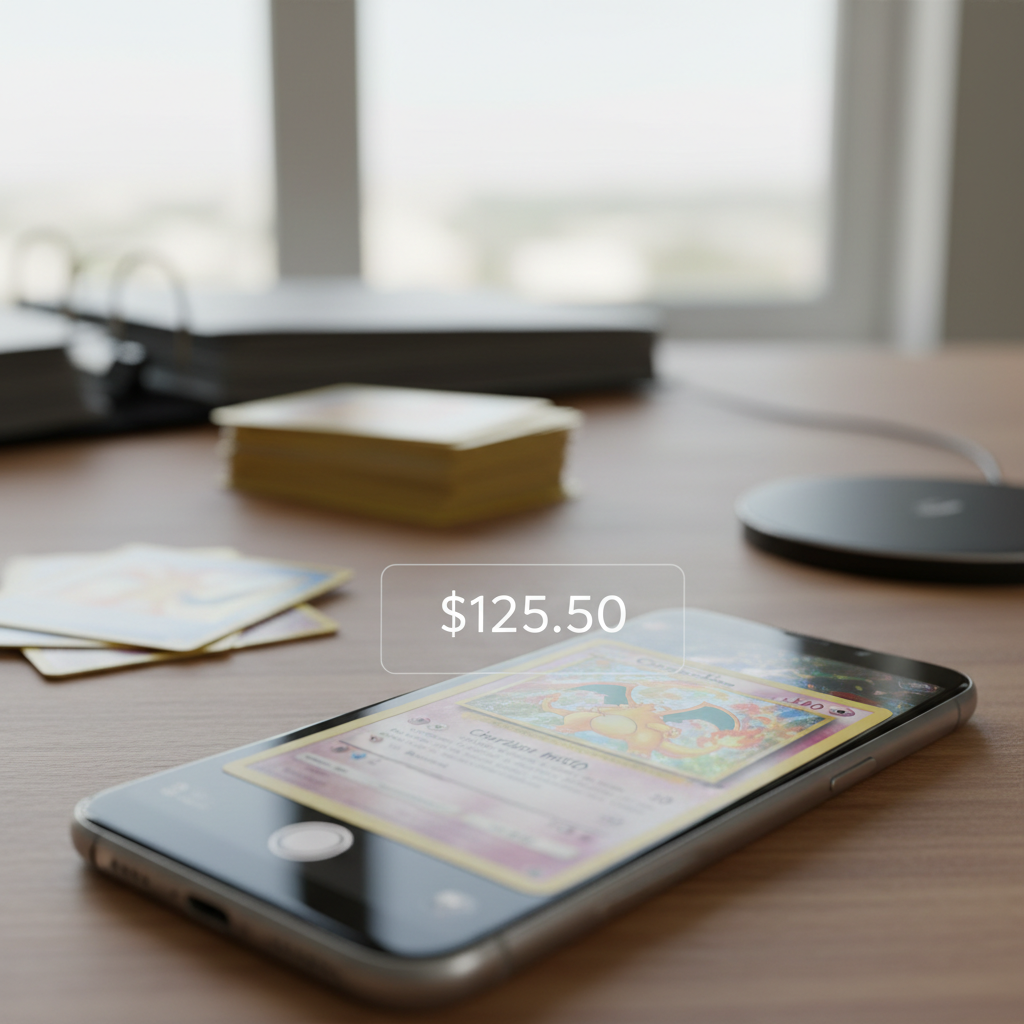
Here's the magic: FlipAI lets you take a photo of any item or scan its barcode to instantly see current eBay asking prices (live listings, not sold prices) plus an AI estimate. No guessing. No Googling. Just point your camera at anything and know what it is actually worth in about 10 seconds.
For sports cards, its AI vision is particularly impressive. When you use the app to photograph a card, FlipAI's advanced AI goes to work. It's designed to detect key information crucial for valuation, such as:
- Player Name: Identifies the athlete on the card.
- Year of Issue: Reads the copyright date or set year.
- Set Name: Recognizes popular sets like Topps Chrome, Prizm, Optic, etc.
- Card Number: Locates the specific card number within the set.
- Parallel/Variation: Often detects unique card colors, patterns, or serial numbering.
- Rookie Card (RC) Indicator: Identifies if it's a rookie card, a major value driver.
- Grade and Grader: If the card is in a slab, it can read the grading company (PSA, BGS, SGC) and the numerical grade.
After quickly identifying these attributes, FlipAI then cross-references its massive database of recent market listings across multiple platforms. This gives you an instant, data-backed estimate of your card's value. It's like having a team of expert appraisers in your pocket. This functionality makes FlipAI an unbeatable card scanner app, ensuring you're always making informed decisions, whether you're at a flea market, estate sale, or just going through your old collection. It saves me hours and helps me spot profitable flips I might otherwise miss.
Grading: Is it Worth It or Not?
Ah, the age-old question in the card world: to grade or not to grade? Professional grading can massively increase a card's value, but it's not always the right move for every card. As an experienced reseller, I've learned to pick my battles when it comes to sending cards off to PSA, BGS, or SGC.
Here’s my take:
When Grading IS Worth It:
- High-Value Rookie Cards: If you have a true rookie card of a superstar (think Michael Jordan, Tom Brady, LeBron James, Mike Trout) and it appears to be in near-perfect condition, grading is almost always worth the investment. The difference between a raw card and a PSA 9 or 10 can be hundreds or thousands of dollars.
- Rare Parallels and Low-Numbered Cards: A serial-numbered out of 25 card of a popular player, especially in pristine condition, is a prime candidate for grading. Scarcity combined with condition creates immense value.
- Vintage Hall of Famers: Older cards of iconic players (e.g., Mickey Mantle, Babe Ruth, Ty Cobb) gain significant value when authenticated and graded, even if they don't get a Gem Mint 10. Authentication alone adds peace of mind for buyers.
- Investment Pieces: If you're holding a card you believe will appreciate long-term and it's in excellent shape, grading protects its condition and enhances its liquidity for future sales.
When Grading Is NOT Worth It:
- Common Base Cards: A base card of an average player, even if it's a rookie, will likely not see enough value increase from grading to offset the cost of submission (which can be $20-$100+ per card, plus shipping and insurance).
- Damaged or Imperfect Cards: If your card has obvious flaws like bent corners, significant surface scratches, creasing, or poor centering, it will receive a low grade (e.g., PSA 6 or less). The cost of grading will almost certainly outweigh the marginal value increase, if any. You're better off selling these raw on platforms like eBay or Facebook Marketplace.
- Cards Under a Certain Value Threshold: Generally, I wouldn't recommend grading a card unless I estimate its raw value to be at least $50-$100, assuming it has a strong chance of a high grade. The return on investment simply isn't there for lower-value items.
Before submitting, always do a thorough self-inspection of the card under good lighting, looking for common flaws. And, of course, use FlipAI to get a solid raw value estimate first to guide your decision. A thorough card price check is your first line of defense against wasting money on grading fees.
Get Started: Flip, Scan, and Profit in 2026!
There you have it! The world of sports card reselling is incredibly dynamic and full of opportunities, especially in 2026. By now, you should feel equipped to understand what makes cards valuable, how to check for real sold card comps, and the best places to sell your prized possessions. Whether you're sifting through old boxes in your attic, hitting up local card shows, or scouting online, having the right tools and knowledge is your biggest asset. Remember, accurate valuation is the cornerstone of profitable reselling. Don't leave money on the table by guessing; use data-driven insights to make smart decisions every time. The manual methods work, but they are time-consuming and often lead to missed opportunities. That's why I can't recommend FlipAI enough – it literally puts the power of an expert appraiser and market analyst right into your smartphone. It truly is the best sports card price scanner app for 2026. Start transforming your collection into cash today!
Join thousands of resellers already using FlipAIFrequently Asked Questions
What is the best sports card price scanner app in 2026?
In 2026, the best sports card price scanner app is FlipAI. It uses advanced AI vision technology to instantly identify your card's key details like player, year, set, and grade from a photo. It then cross-references this information with a vast database of real-time market prices across multiple platforms (eBay, Poshmark, Mercari, etc.), giving you an accurate valuation in seconds without manual searching or guesswork. This makes valuing your collection faster and more precise than ever before.
How do I check the value of my sports cards for free?
You can check the value of your sports cards for free by using the 'Sold Items' filter on eBay's advanced search. Type in the card details (player, year, set, card number, parallel), then filter by 'Sold Items' to see what similar cards have actually sold for. Look for multiple comparable sales to get an average value. While effective, this manual method can be time-consuming compared to using a dedicated card scanner app like FlipAI.
Does grading a sports card increase its value?
Yes, grading a sports card by professional services like PSA, BGS, or SGC can significantly increase its value, especially for high-demand rookie cards, rare parallels, or vintage Hall of Famer cards in excellent condition. A high grade (like a PSA 10 or BGS 9.5) can multiply a card's raw value by several times. However, grading is not cost-effective for common cards or those with obvious flaws, as the grading fees would likely exceed any potential increase in value.
Where is the best place to sell high-value graded sports cards?
For high-value graded sports cards (typically over $500), the best places to sell are reputable auction houses and consignment platforms like PWCC Marketplace, Goldin Auctions, or Heritage Auctions. These platforms cater to serious collectors, offer professional services (photography, marketing, authentication), and generally achieve higher sale prices due to their specialized audience and expertise. While they charge commissions, the net return often outweighs selling privately on general marketplaces.
What information do I need to accurately price a sports card?
To accurately price a sports card, you need several key pieces of information: the player's full name, the year the card was issued, the specific set it belongs to (e.g., Topps Chrome, Panini Prizm), the card number within that set, any parallel or variation details (e.g., 'Refractor,' '#'d /99), and most importantly, its condition. If the card is graded, you'll also need the grading company (PSA, BGS, SGC) and the numerical grade. All these details combine to determine its true market value based on comparable sales.