Retail Arbitrage on Amazon in 2026 — Fees, Gating and Real Margins
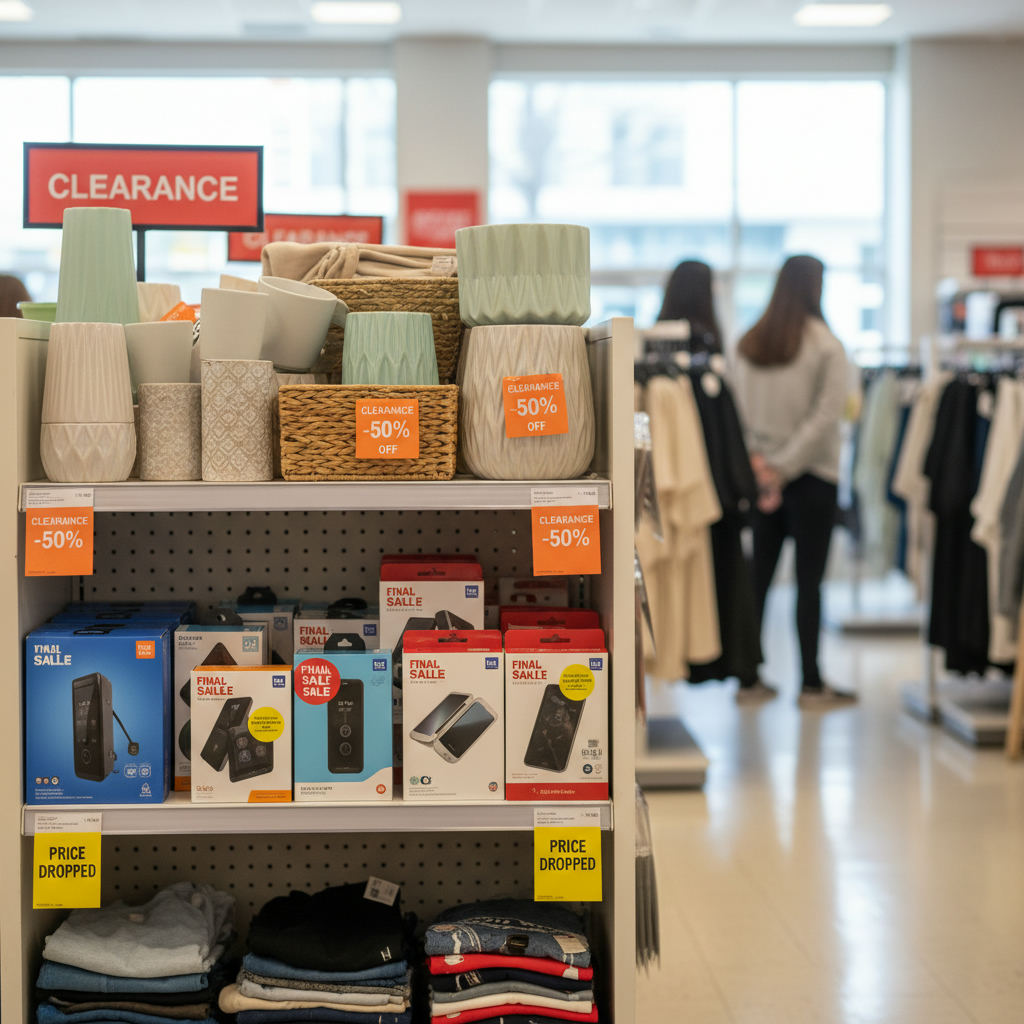
Retail arbitrage on Amazon in 2026 is absolutely a profitable venture if you approach it with solid data and a smart strategy. I remember the rush of finding a brand-new, still-sealed LEGO set at a local clearance aisle for $30, only to discover it was selling consistently for $120 on Amazon. My heart practically did a backflip! That’s the magic of retail arbitrage, and it's totally achievable for you too. This guide will walk you through the essential steps, from identifying profitable products to understanding fees and avoiding common pitfalls, ensuring you can replicate those 'aha!' moments.
Related reading: Amazon Retail Arbitrage for Beginners — First 30 Days (2026) · Rummage Sale Near Me — A Reseller's Sourcing Playbook (2026) · Retail Arbitrage vs Online Arbitrage — Which Wins in 2026?
It’s all about knowing what to look for and, crucially, how to quickly and accurately assess an item's true market value before you even touch your wallet. That LEGO set? I didn’t just guess; I had the data right there on my phone, confirming my profit before I even got to the checkout. We’ll cover everything you need to know to make your retail arbitrage journey successful, whether you're just starting out or looking to refine your process. Get ready to turn everyday finds into serious profit!
Quick answer
Retail arbitrage on Amazon involves buying products from local retail stores at a discount and reselling them for a profit on Amazon. The process typically includes using a scanning app to find items with a high sales rank and a good profit margin, listing them, and often utilizing Amazon's FBA (Fulfillment by Amazon) service for shipping and customer service. Success hinges on precise product identification, accurate profit calculations accounting for Amazon FBA fees, and understanding the Amazon Buy Box price dynamics.
Step 1: Identify the item exactly
Before you can even dream about profit, you need to be an absolute detective when it comes to product identification. This isn't just about grabbing a "video game" off the shelf; it's about pinpointing the exact version. Is it the Nintendo Switch version, the PS5 version, or the Xbox Series X? Is it a standard edition, a collector's edition, or a regional variant? Does it come with any bonus content or DLC codes? What about the specific model number for electronics, the size and color for clothing, or the specific year and artist for collectibles?
Many Amazon listings are highly specific. Listing the wrong variant could lead to customer complaints, returns, and even account suspension. For example, a "Limited Edition" action figure will command a vastly different price than its standard counterpart, even if they look similar at first glance. The same goes for books – hardcover versus paperback, first edition versus later prints. Even a minor difference in packaging or a slight variation in the UPC can mean the difference between a quick sale and a shelf warmer. Always check for serial numbers, model numbers, UPCs, EANs, ISBNs, and any other identifying marks. Take your time here; precision in identification is your first line of defense against unprofitable buys and unhappy customers. Get this step right, and you're well on your way to successful retail arbitrage on Amazon in 2026.
Step 2: Find recent completed sales
This is where the rubber meets the road for understanding true market value. Never, ever, EVER rely on active asking prices. Seriously, I can't stress this enough! Someone asking $500 for a used coffee mug doesn't mean it will sell for $500. It just means they're *asking* for it. Your goal is to find what items have *actually sold* for. On Amazon, this is a bit trickier than on platforms like eBay, but it’s crucial for FBA arbitrage. You'll want to look at the sales rank (a lower number means it sells faster) and then use tools to estimate the sales volume and average selling price. Many third-party Amazon seller tools can show you historical sales data, including the lowest 'Buy Box' price an item has sold at consistently.
Ideally, you want to see at least three recent completed sales that align with the condition of the item you're looking at. More comps are always better. If an item has only sold once in the last six months, it might be a slow mover, regardless of the high price it fetched. You're looking for items that move consistently and at a predictable price point. This data-driven approach minimizes risk and maximizes your chances of a quick, profitable flip. Without solid sold comps, you're just guessing, and in the world of reselling, guessing often leads to losing money. This step is non-negotiable for anyone serious about retail arbitrage on Amazon.
Step 3: Adjust for condition and completeness
So, you’ve found your item, identified it perfectly, and even got some solid sold comps. Awesome! But wait, there’s another crucial layer: condition and completeness. A "new in box" item will always fetch a higher price than a "used – good condition" item. This is especially true for electronics, collectibles, and even household goods. If your comparison sold for $100 as "new with tags," but your item is "used – like new" with a missing original box, you can't expect the same $100. You need to mentally (or, even better, physically in a spreadsheet) adjust that sold price downwards.
Completeness is just as vital. Is everything there? All the accessories, manuals, cables, original packaging, and even the tiny plastic twist ties? Missing a single small component can significantly reduce the item's value and deter potential buyers. For example, a vintage action figure might sell for $50 complete with all its accessories, but only $20 if it's missing its tiny, easy-to-lose weapon. Be brutally honest with yourself about the item's condition. Overstating it will lead to returns and negative feedback, while understating it could leave money on the table. A good rule of thumb is to price conservatively for any imperfections, giving yourself a buffer and ensuring buyer satisfaction. This meticulous attention to detail is a hallmark of successful retail arbitrage on Amazon in 2026.
Step 4: Subtract fees and shipping
Okay, this is where many new resellers get tripped up. The sticker price you see on Amazon isn't what lands in your pocket. You absolutely must factor in all the fees and shipping costs. On Amazon, these can be complex, especially with FBA. For most categories, Amazon charges a referral fee (a percentage of the selling price, typically ranging from 8% to 15%, but it can vary). For example, electronics accessories are 15%, while apparel is 17%. Then, if you're using FBA, there are fulfillment fees (picking, packing, shipping, handling), storage fees, and potentially long-term storage fees. You'll also have a variable closing fee for media items and a per-item fee for individual sellers if you're not on the professional plan.
Let’s put some numbers to it. Say you find an item for $10 that sells for $40 on Amazon. If the referral fee is 15% ($6), the FBA fulfillment fee is $5, and inbound shipping to Amazon is $1, your net profit before your initial cost is $40 - $6 - $5 - $1 = $28. Subtract your $10 cost, and you're left with $18. That's a good flip! But if the FBA fees were higher, say $10, your profit drops to $13. Every dollar counts. Don't forget the cost of packaging materials if you're shipping yourself, or even the gas to get to the store and then to the shipping carrier. These small costs add up. Platforms like eBay might charge a 13.25% final value fee, Poshmark 20% on items over $15, Mercari 10%, and Depop 10% on top of payment processing fees. Always use a profit calculator to get a realistic estimate of your take-home pay. Ignoring these costs is a surefire way to lose money in retail arbitrage.
The fast way: scan it
After all those steps, you might be thinking, "Wow, that's a lot to do while standing in a store aisle!" And you're right! Trying to manually research every single item using Amazon's app, checking sales ranks, and calculating fees on the fly can be incredibly time-consuming and prone to errors. That's where smart tools come in. I use FlipAI to cut through all that guesswork. When I’m at a discount store or even a garage sale, I just whip out my phone. It’s a total game-changer for anyone doing retail arbitrage">retail arbitrage on Amazon or any other platform.
FlipAI lets you take a photo of any item or scan its barcode to instantly see current eBay asking prices (live listings, not sold prices) plus an AI estimate. No guessing. No Googling. Just point your camera at anything and know what it is actually worth in about 10 seconds. Its AI vision can even identify items without a barcode, giving me the sold comps I need to make an informed decision right there and then. This speed and accuracy are crucial when you're competing for deals or trying to source hundreds of items for your FBA arbitrage business. It helps me focus on finding the next great flip instead of getting bogged down in manual research.
Common mistakes
New and even experienced resellers fall into several traps when doing retail arbitrage. Avoiding these common mistakes can save you a ton of time, money, and frustration. Here are the big ones:
Using retail price as a guide
Just because an item is marked down from $100 to $20 at a clearance sale doesn't automatically mean it's a good flip. The original retail price is often irrelevant. What matters is the current market demand and what people are *actually paying* for it today. An item might be clearance for a reason – perhaps it's an old model, no longer popular, or simply overstocked everywhere. Always refer to sold comps, not the original MSRP. That $100 item might now only sell for $25 on Amazon, leaving you with zero or negative profit after fees.
Using active asking prices
This is probably the most common mistake. I see it all the time. People check what others are *asking* for an item on eBay or Amazon and assume that’s its value. An active listing for $300 on an item that typically sells for $50 is a fantasy, not data. Always filter your searches to show only "sold" or "completed" listings. This is the only way to see what buyers are truly willing to pay. Ignoring this step is like planning your budget based on winning the lottery – it's a pipe dream.
Ignoring variants and specific models
As we discussed in Step 1, ignoring the specific variant or model is a recipe for disaster. A "Sony PlayStation 4" is not just a "Sony PlayStation 4." Is it a PS4 Slim, a PS4 Pro, a launch model, or a special edition? Each has vastly different values. The same applies to clothing (size, color, material), electronics (storage capacity, generation), and collectibles (condition, completeness, specific edition). One letter or number difference in a model number can change a $50 profit into a $5 loss. Always confirm the exact model number, UPC, and any other identifying features.
Not accounting for all fees and shipping
This was covered in Step 4, but it bears repeating because it's so critical. Many new sellers look at a $50 selling price and a $10 purchase price and think they've made $40. They forget Amazon's referral fees, FBA fees, storage fees, shipping costs, and even the cost of packing supplies. Before you buy, have a clear understanding of your net profit. Use a reliable profit calculator. There's nothing worse than thinking you've made a great flip only to realize you broke even or even lost money once all the fees are tallied up.
Buying gated brands or categories
Amazon has restrictions, known as "gating," on certain brands and categories to protect against counterfeits and ensure quality. If a brand is gated, you won't be able to sell it without specific authorization from Amazon and often the brand itself. Many popular brands (Nike, LEGO, Disney, etc.) are gated. Always check if you're approved to sell a product before you buy it. You can do this through your Seller Central account. Buying gated products means you'll have inventory you can't sell on Amazon, turning your potential profit into dead stock. Don't make this mistake!
Ignoring sales velocity/rank
An item might sell for a high price, but if its sales rank is incredibly high (meaning it sells very infrequently), you could be sitting on that item for months, tying up your capital. You want items that sell consistently. A good sales rank on Amazon (e.g., in the top 1% or 5% for its category) indicates frequent sales. Balance profit margin with sales velocity. A lower profit on an item that sells daily is often better than a high profit on an item that sells once a year. This is key for maintaining cash flow in your retail arbitrage business.
Buying too much of one item
Unless you are absolutely certain of consistent demand and a deep profit margin, resist the urge to clear the shelf. Test the waters with a few units first. Markets can change quickly, competitors can drop prices, or Amazon's fees might unexpectedly shift. Buying 50 units of an item that then tanks in price or becomes oversupplied by other sellers is a huge headache. Start small, verify your numbers, and then scale up if the item proves to be a consistent winner.
Not inspecting items thoroughly
Even for "new" items, inspect the packaging for damage, tears, or tampering. For used items, be meticulously thorough. Does it power on? Are all parts present? Is there any cosmetic damage not apparent at first glance? A quick inspection can prevent a costly return or negative review down the line. Remember, customer satisfaction is crucial for maintaining a healthy Amazon seller account.
Get started
Ready to jump into the exciting world of retail arbitrage on Amazon in 2026? It’s a fantastic way to generate income, whether you're looking for a side hustle or building a full-time reselling business. The thrill of finding that hidden gem, calculating your potential profit, and seeing it sell for a healthy return is incredibly rewarding. Remember, success in this game is all about data-driven decisions, careful calculations, and avoiding those common pitfalls we just discussed.
Start small, focus on learning, and don't be afraid to make mistakes – they're part of the learning curve! With the right tools and a smart approach, you'll be consistently finding profitable items and growing your retail arbitrage business">retail arbitrage Amazon business. The clearance aisles and discount racks are calling your name!
Ready to make your sourcing trips faster and smarter? Download FlipAI today and experience how easy it is to find profitable flips. Try FlipAI free with 10 lifetime scans — no credit card required.
Frequently Asked Questions
What is retail arbitrage on Amazon?
Retail arbitrage on Amazon is the process of buying products from brick-and-mortar retail stores (often on clearance or sale) and reselling them for a higher price on Amazon. Sellers typically look for price discrepancies between local store prices and Amazon's online selling prices, aiming for a profitable margin after accounting for all fees. It's a popular method for new sellers due to its relatively low barrier to entry.
Is retail arbitrage on Amazon still profitable in 2026?
Yes, retail arbitrage on Amazon remains profitable in 2026, but it requires smart sourcing, accurate profit calculations, and attention to Amazon's policies. While competition exists, opportunities still abound in various niches and categories. Tools like FlipAI help streamline the process by quickly identifying profitable items and checking real-time market data, making it easier to find those lucrative flips.
What are the main fees for selling on Amazon FBA?
The main fees for selling on Amazon FBA (Fulfillment by Amazon) include referral fees (a percentage of the selling price, typically 8-15% depending on the category), FBA fulfillment fees (covering picking, packing, shipping, and handling), and storage fees (monthly fees based on volume). There can also be variable closing fees for media items and per-item fees for individual sellers. Always factor in all these costs for accurate profit estimation.
How do I avoid buying 'gated' products on Amazon?
To avoid buying 'gated' products, always check your Amazon Seller Central account before purchasing inventory. Within Seller Central, you can attempt to 'add a product' and see if you are approved to sell that specific brand or category. If it's restricted, Amazon will notify you. Buying gated products means you won't be able to list them for sale, leading to dead stock and lost capital. It's a critical step in retail arbitrage.
What is the 'Amazon Buy Box' price and why is it important?
The Amazon Buy Box price is the price displayed on a product detail page that customers can click to add the item directly to their cart. It's crucial because a vast majority of Amazon sales go through the Buy Box. Winning the Buy Box (meaning your offer is featured) is essential for consistent sales. Many factors determine Buy Box eligibility, including price, seller performance, and FBA usage. When researching comps, look for items that consistently sell at a good Buy Box price.